Arabfields, Lamia Cherifa, Special Economic Correspondent, Moscow, Russia — The landlocked Central Asian state of Kazakhstan is looking to deepen its presence in Africa by opening a new market for its wheat in sub-Saharan Africa, as exporters seek to diversify beyond traditional destinations.
The initiative comes as African countries continue to rely heavily on imported cereals to meet growing food demand. For Kazakhstan, the move could provide an opportunity to turn its expanding grain production into a broader export strategy, while for African buyers it could add another supplier to a market increasingly exposed to price volatility and disruptions in global food trade.
Kazakhstan harvested around 27.1 million tonnes of grain in 2025, including approximately 20.3 million tonnes of wheat. The scale of production gives the country significant export potential, but its geographical position remains a challenge. Unlike major maritime grain exporters, Kazakhstan has no direct access to the sea and must rely on rail networks, transit countries and distant ports to reach overseas customers.
The country has already been strengthening its position in North Africa. Algeria, Morocco and Egypt have emerged as important destinations for Kazakh wheat, demonstrating that logistical barriers can be overcome when commercial demand and transport arrangements are sufficiently attractive.
The next step could be sub-Saharan Africa.
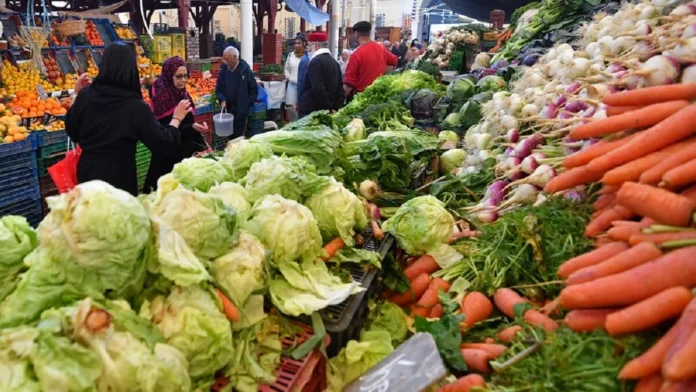
For African importers, the arrival of another supplier could have practical implications. Wheat is a staple ingredient for millions of households, particularly through bread, pasta and other flour-based products. In markets where consumers are already sensitive to food prices, even relatively small changes in import costs can quickly be felt by families.
A miller in an African city does not necessarily see the issue in geopolitical terms. The calculation is more immediate: how much does a tonne cost when it arrives at the port, how reliably can it be delivered and how does that price translate into the cost of flour and bread?
That commercial test will determine whether Kazakhstan can establish a lasting presence.
The country has already shown that it can compete in African markets. Kazakhstan supplied about 390,000 tonnes of wheat to Algeria between January and November 2025, according to figures cited by Kazakh authorities. It has also expanded commercial links with Morocco, where new export arrangements have created an additional route into the African market.
A successful move into sub-Saharan Africa would therefore represent more than a single new destination. It would be a test of whether Kazakh grain can compete further south despite the additional transport costs associated with moving wheat across several borders and, in some cases, through maritime transit points.
Logistics are likely to remain the biggest constraint. Freight rates, railway capacity, port handling, insurance and border procedures can determine whether Kazakh wheat remains competitive once it reaches an African buyer. Any deterioration in transport conditions could quickly erase the price advantage created at the farm or export terminal.
Yet the longer-term outlook is encouraging.
Africa’s population is projected to continue expanding rapidly over the coming decades, while urbanisation is changing food consumption patterns. Demand for wheat products is expected to remain strong in many countries, particularly where domestic production cannot keep pace with consumption.
This creates an opening for exporters with sufficient production capacity and reliable logistics.
For Kazakhstan, sub-Saharan Africa could become a strategic diversification market rather than an immediate replacement for its established customers in Central Asia, China and North Africa. Countries with structural grain deficits and growing urban populations are likely to attract increasing attention from Kazakh exporters.
The potential gains for African consumers are less certain. A new supplier can strengthen food security by reducing dependence on a limited number of origins, but only if its wheat can reach the market at competitive prices. If transport costs remain too high, the commercial opportunity may remain limited to occasional shipments.
The coming years will therefore be important for both sides. Kazakhstan has the grain, while African markets have growing demand. The challenge is connecting the two at a price that works for exporters, importers, millers and ultimately consumers.
If the first commercial shipments succeed, the move could mark the beginning of a wider grain corridor between Central Asia and sub-Saharan Africa. For Kazakhstan, that would mean a broader international market for its harvest. For Africa, it would mean one more option in the increasingly strategic business of securing food supplies.