WELLINGTON, New Zealand — New Zealand’s leading apple exporter, Scales Corporation, has raised its full-year profit guidance for 2025, signaling resilience in the face of persistent global uncertainties.
In a statement released Wednesday, the company projected underlying net profit after tax attributable to shareholders to range between NZ$54 million and NZ$59 million. This marks an upward revision from its prior forecast of NZ$51 million to NZ$56 million, announced earlier this year.
Scales also anticipates underlying earnings before interest, taxes, depreciation, and amortization (EBITDA) to fall between NZ$125 million and NZ$132 million. On a broader measure, underlying net profit after tax is expected to reach NZ$69 million to NZ$74 million.
The upbeat revision underscores the company’s strong operational performance across its diversified portfolio, which includes apple growing, cold storage, logistics, and international trade. Scales, listed on the New Zealand Exchange (NZX:SCL), exports premium apples to more than 50 countries, with key markets in Asia, Europe, and North America.
Executive Confidence Amid Global Headwinds
Managing Director Andy Borland attributed the improved outlook to robust group-wide results. “We are seeing a continuing positive performance across the group this year,” Borland said. “Whilst some geopolitical uncertainties remain, we are pleased to be able to advise a further increase in earnings guidance for full year 2025.”
Borland’s comments come as global trade faces mounting pressures from ongoing conflicts, including the war in Ukraine and escalating tensions in the Middle East. These disruptions have driven up shipping costs, strained supply chains, and introduced volatility in currency markets, challenges that hit exporters like Scales particularly hard.
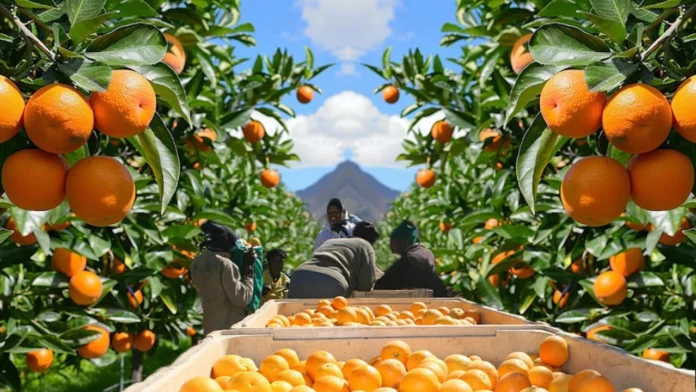
Despite these headwinds, Scales has benefited from favorable growing conditions in New Zealand’s Hawke’s Bay and Nelson regions, where it cultivates varieties like Royal Gala, Braeburn, and Envy apples. The company reported a bumper harvest in the 2024 season, coupled with strong demand from premium buyers in China and Southeast Asia.
Analysts welcomed the update. “Scales’ ability to thread the needle between geopolitical risks and operational excellence is impressive,” said Jane Harrington, a senior equity analyst at Auckland-based brokerage Forsyth Barr. “This revision implies a 10-15% earnings beat on consensus estimates, reinforcing the stock’s appeal as a defensive play in agribusiness.”
Shares in Scales rose 2.8% in early trading Thursday, closing at NZ$3.52, near its 52-week high.
Board Refresh: New Oversight, Fond Farewells
In a separate announcement, Scales appointed Paul Munro as an independent non-executive director and chair of its Audit & Risk Management Committee, effective October 14. The move coincides with the retirement of long-serving director Alan Isaac after 11 years of service.
Munro brings extensive experience in governance and finance. A chartered accountant with over 30 years in the sector, he previously served as a director at Fonterra Cooperative Group and chairs the audit committees of several NZX-listed firms. His expertise in risk management is seen as timely given Scales’ exposure to international trade fluctuations.
Chair Mike Petersen praised Isaac’s contributions during a transformative era for the company. “Alan has been an integral part of the Scales team over a period of substantial change and success,” Petersen said. “He was appointed to the board in 2014 when Scales listed on the NZX, and his contribution during that time as a director and as chair of Scales’ Audit & Risk Management Committee has been immense.”
Petersen highlighted Isaac’s “broad and deep accounting and financial knowledge” and his “well-considered counsel on a wide variety of issues.” Isaac, a former partner at Deloitte New Zealand, played a pivotal role in navigating the company’s initial public offering and subsequent expansions, including acquisitions in logistics and post-harvest technology.
“Alan is very well respected by his fellow directors and by management,” Petersen added. “His presence and input will be missed by all.”
Isaac’s departure caps a distinguished career in corporate governance. In a brief statement, he expressed gratitude: “It has been a privilege to serve Scales during its growth from a family-run exporter to a global player. I am confident in the team’s ability to build on this strong foundation.”
Scales’ Strategic Edge in a Volatile World
Founded in 1946 as a small apple orchard in Hastings, Scales has evolved into New Zealand’s largest controlled-atmosphere apple storage operator and a key player in the Southern Hemisphere’s fruit export market. The company handles about 20% of the nation’s apple exports, generating annual revenues exceeding NZ$500 million.
Recent investments in sustainable practices, such as solar-powered cold stores and water-efficient irrigation, have bolstered margins. In its half-year results in August, Scales reported a 12% revenue increase, driven by higher export volumes and favorable exchange rates.
Looking ahead, Borland emphasized diversification as a buffer against risks. “Our integrated model, from orchard to overseas shelf, gives us agility in uncertain times,” he said. The company is also exploring opportunities in emerging markets like India and expanding its avocado and kiwifruit segments.
Geopolitical challenges persist, however. Potential U.S. tariffs under a new administration, combined with Red Sea shipping disruptions, could add 5-10% to logistics costs, according to industry estimates. Yet Scales’ forward contracts and hedging strategies have mitigated much of the impact.
“This guidance revision is a testament to proactive management,” Harrington noted. “Investors should view Scales as a hedge against broader market volatility.”
As Scales enters the peak export season, all eyes will be on its interim results in February 2026. For now, the company’s defiance of global storms positions it as a standout in New Zealand’s export sector.