Arabfields, Farah Benali, Economic Correspondent, China — Papua New Guinea is looking to technology, better data and practical farming experience as it searches for ways to make agriculture more productive and resilient across the Pacific.
Nelson Simbiken, director general of Papua New Guinea’s National Agricultural Research Institute, said in August 2026 that China’s experience in agricultural mechanization, seed systems and digital technologies could provide useful lessons for Papua New Guinea and neighboring Pacific island communities.
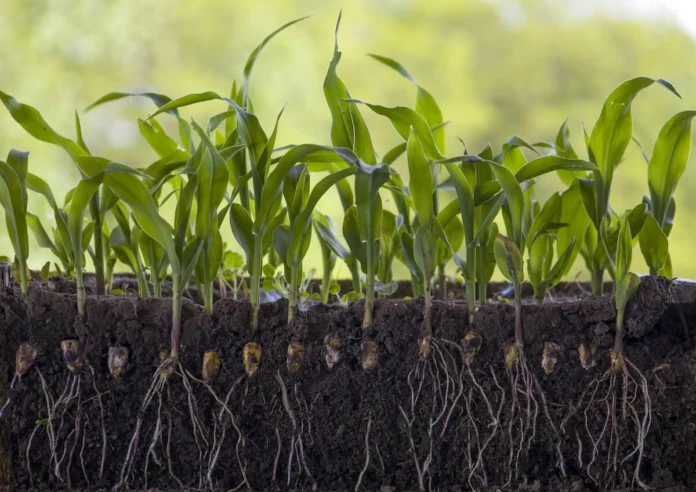
Speaking during the APEC Food Security Ministerial Meeting in Hangzhou, Simbiken pointed to artificial intelligence and digital soil mapping as tools that could help farmers and policymakers make better decisions. He also stressed that technology will have limited value without stronger systems for collecting and sharing agricultural data.
The timing is significant for Papua New Guinea. Agriculture remains central to the livelihoods of millions of people, with more than half of the working-age population employed in the sector. Yet much of that work remains informal or focused on subsistence farming. The World Bank estimates that Papua New Guinea’s economy grew by 5.6 percent in 2025, while its latest projections put agricultural growth at about 3.4 percent in 2026.
For farmers living far from major markets, the challenge is often much more basic than adopting advanced technology. Poor roads, limited storage, unpredictable weather and weak access to information can determine whether a harvest becomes household food or a source of income.
Recent research on fresh produce markets illustrates the problem. In Port Moresby, marketing and wastage costs accounted for as much as 85 percent of the retail price of cabbage between 2023 and 2025. The figure shows why improving production alone may not be enough. Farmers also need more efficient transport, storage and market systems if higher yields are to translate into better incomes.
This is where China’s agricultural experience could become relevant. Mechanization, improved seed systems and digital mapping could help farmers understand soil conditions, select suitable crops and use resources more efficiently. For Papua New Guinea, however, the most useful approach is likely to be one adapted to local geography and farming traditions rather than a direct copy of China’s model.
The human side of that transition will matter just as much as the technology. A farmer deciding when to plant sweet potatoes or vegetables cannot rely on a digital map alone. The information has to reach the village, make sense to the farmer and fit the realities of local weather, transport and household labor.
Simbiken’s emphasis on regional cooperation also reflects a wider opportunity. If agricultural data can be shared more effectively among Pacific countries, governments and research institutions could respond faster to changing soil conditions, crop diseases and weather risks. Better information could also help identify areas where particular crops have stronger commercial potential.
The outlook for the coming years is therefore likely to depend less on a single technological breakthrough than on whether these different pieces can be connected. If investment in data systems, agricultural research, mechanization and regional cooperation accelerates, productivity gains could become more visible across Pacific farming communities.
Papua New Guinea’s agricultural sector is already expected to continue expanding, with World Bank projections indicating growth of around 3.4 percent in 2026 and a similar pace in the following years. The bigger question is whether that growth can reach smallholders more directly.
For farmers, the promise of artificial intelligence may ultimately be measured in simpler terms, a more reliable harvest, lower losses and a better price at the market. That makes the emerging discussion between Papua New Guinea, China and other Pacific economies less about technology for its own sake and more about finding practical ways to make farming work better for the people who depend on it.