Arabfields, Jamel derbal, Senior Correspondent, Innovation & Sustainability, Singapore — The Philippines is embarking on a strategic initiative to diversify its agricultural exports by focusing on high-value crops, a move that promises significant economic growth but demands substantial increases in production volume and quality improvements. At the heart of this effort lies the recognition that merely promoting these crops internationally will not suffice, rather, the country must dramatically scale up output through enhanced planting programs, superior seedling development, and targeted investments to meet global demand and compete effectively in overseas markets.
Current export performance provides a clear foundation for understanding the potential ahead. In 2025, several of these prioritized crops already demonstrated modest but promising presence in international trade. Calamansi and its processed products led the group with export earnings of $11.76 million, driven primarily by strong demand from China, where consumers value its unique citrus profile in both fresh and processed forms. Close behind was durian, generating $8.82 million in exports, again with China as the dominant buyer, reflecting the fruit’s growing popularity in that market despite intense regional competition. Coffee and coffee-based products contributed $7.51 million, finding receptive audiences in the United States, Taiwan, and Canada, where premium quality and distinctive flavors can command higher prices. Chocolate and chocolate preparations, derived largely from cacao, brought in $6.53 million, with key destinations including Indonesia, Japan, Thailand, and Malaysia, indicating opportunities in processed value-added goods. Okra exports reached $3.75 million, almost entirely directed to Japan, while avocado shipments amounted to $2.44 million, mainly to South Korea and Japan, showcasing the appeal of these items in Asian markets that prioritize fresh, high-quality produce.
These figures, though relatively small compared to the Philippines’ traditional agricultural exports, reveal concentrated market dependencies and untapped potential. The heavy reliance on China for calamansi and durian, for instance, highlights both opportunity and vulnerability, as expanding into additional destinations could stabilize revenues and reduce risks from fluctuations in a single market. Similarly, the spread of coffee and chocolate exports across multiple countries suggests that with consistent supply and improved quality, these crops could penetrate even more premium segments globally.
Looking toward the future, if the Philippines successfully scales up production as experts advocate, export values for these high-value crops could experience exponential growth over the coming decade. Consider calamansi, already the top performer at over $11 million in 2025, with aggressive planting expansions and the introduction of higher-yielding, disease-resistant varieties, annual exports could realistically double or triple by 2030, potentially reaching $30-40 million as new markets in Europe and North America discover its versatility in beverages, condiments, and culinary applications. Durian, riding the wave of its cult-like status in Asia, stands poised for even more dramatic expansion, should domestic output increase substantially, projections suggest exports could surge past $50 million annually within five to seven years, challenging established suppliers and capturing shares in emerging markets like the Middle East and Europe where exotic tropical fruits are gaining traction.
Avocado presents another compelling case for optimistic forecasting. Current exports hover around $2.44 million, limited by variety constraints and supply volumes, yet with investments in improved cultivars that address consumer preferences for creamier texture and reduced fibrous content, the Philippines could mirror the success of major producers like Mexico and Peru. By scaling production through organized replanting and modern farming techniques, avocado exports might climb to $20-30 million by the early 2030s, diversifying beyond South Korea and Japan into high-value markets such as the European Union and the United States, where demand for healthy fats continues to rise steadily.
Coffee and cacao-derived products also carry substantial upside potential. The $7.51 million from coffee in 2025 could grow significantly if quality enhancements position Philippine beans as specialty offerings, appealing to discerning consumers willing to pay premiums for unique arabica and robusta profiles. Future growth might see coffee exports exceeding $50 million annually by 2035, bolstered by sustainability certifications and direct trade relationships that bypass traditional intermediaries. Chocolate preparations, currently at $6.53 million, could evolve into a major processed export category as local manufacturers refine techniques and branding, potentially reaching hundreds of millions in value as global chocolate consumption expands and origin-specific products gain favor.
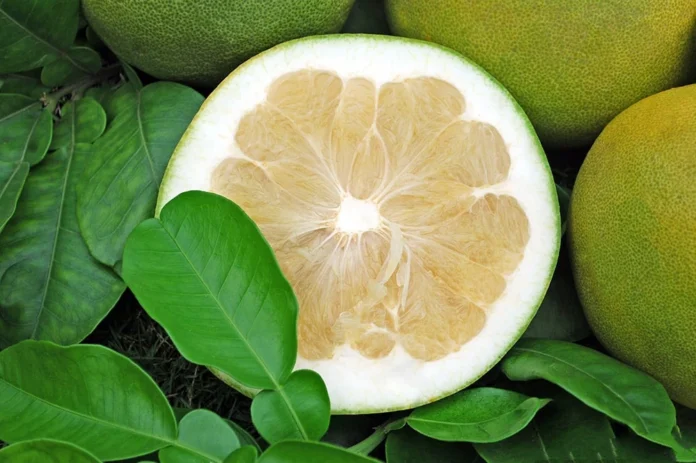
Okra, dragon fruit, pomelo, and rambutan, though starting from lower bases, hold promise in niche segments. Okra’s $3.75 million export value, concentrated in Japan, could broaden geographically with consistent supply, envisioning a future where it becomes a staple in Middle Eastern and European frozen vegetable markets, possibly tripling in value within a decade. Dragon fruit and pomelo, with their vibrant appeal and health benefits, might follow similar trajectories, especially as wellness trends drive demand for antioxidant-rich fruits, leading to combined exports in the tens of millions as production scales and marketing efforts highlight their superiority over competitors.
Even crops facing steeper challenges, such as asparagus and certain others requiring specific climatic conditions, could contribute meaningfully if innovative solutions emerge. While asparagus demands cooler temperatures not naturally abundant in much of the Philippines, targeted highland development and greenhouse technologies might enable viable commercial production, opening doors to lucrative temperate markets and adding several million dollars to the export tally over time. Rambutan, despite competition from established producers, could carve out specialty niches through superior freshness and variety differentiation.
The government’s plan to consolidate management of these export-oriented crops under a dedicated office signals strong institutional commitment, a factor that will be pivotal in realizing these projections. By streamlining coordination, securing adequate budgets, and fostering private-sector partnerships, this new structure could accelerate research into better varieties, improve post-harvest handling to reduce losses, and facilitate market access negotiations. If these efforts bear fruit, the overall contribution of high-value crops to agricultural export revenues could rise dramatically, shifting from their current peripheral role to becoming a cornerstone of the sector, potentially accounting for a significantly larger share of total agricultural exports by the mid-2030s.
Economic ripple effects would extend far beyond direct export earnings. Increased production would generate substantial employment in rural areas, from planting and harvesting to processing and logistics, helping alleviate poverty and stem urban migration. Farmers adopting modern practices for these crops would likely see higher incomes due to premium pricing, encouraging broader agricultural modernization. Moreover, diversification away from heavy reliance on a few commodities would enhance resilience against climate shocks and price volatility, contributing to long-term food security and sustainable development.
Yet, realizing this vision hinges on addressing critical bottlenecks. Budget allocations heavily skewed toward staple crops leave limited resources for high-value initiatives, necessitating reallocation or new funding mechanisms to support seedling distribution, irrigation infrastructure, and extension services. Private-sector engagement remains essential, as commercial players can drive innovation in processing and branding that government alone cannot achieve efficiently. Sustained research and development will be crucial for overcoming varietal limitations and boosting yields per hectare, ensuring that scaled-up output translates into competitive quality rather than mere volume.
In the years ahead, the Philippines’ high-value crop export drive could transform the agricultural landscape, turning modest beginnings into a robust, diversified portfolio that competes confidently on the world stage. With deliberate action to expand production, refine quality, and open new markets, the country stands on the threshold of a new era in agricultural trade, one where tropical abundance meets global demand in ways that deliver lasting prosperity to farmers, processors, and the nation as a whole. The path forward demands vision, investment, and persistence, but the rewards, grounded in the solid performance already evident, appear well within reach.