Arabfields, Farah Benali, Economic Correspondent, China — In the lush valleys of Hoa Binh province in northern Vietnam, the Cao Phong district has long been synonymous with some of the country’s finest oranges, renowned for their vibrant color, juicy flesh, and perfectly balanced sweet-tart flavor that has delighted consumers both domestically and abroad. For decades, these oranges formed the backbone of the local economy, enriching thousands of farming households and establishing a brand that became a symbol of Vietnamese agricultural excellence. At its peak, the region boasted over 1,500 hectares dedicated to orange orchards, yielding an impressive annual harvest of around 50,000 tons, a volume that not only supplied bustling markets across Vietnam but also contributed significantly to the livelihoods of families who had tended these trees for generations.
Yet, this golden era faced a severe setback between 2018 and 2021, when a combination of devastating factors led to a sharp decline in cultivation. Tree diseases spread rapidly through the orchards, exacerbated by unscientific farming practices that had accumulated over years of intensive production, while many trees simply reached the end of their productive lifecycle, their yields diminishing to unsustainable levels. Farmers watched helplessly as vast stretches of once-thriving groves withered, incomes plummeted, and the iconic Cao Phong orange risked fading into obscurity amid growing competition from other citrus-producing regions in Vietnam. The crisis was profound, threatening not just individual households but the entire agricultural identity of the district.
In response to this challenging period, authorities in Hoa Binh province launched an ambitious citrus replantation project spanning 2021 to 2025, with a forward-looking vision extending to 2030. This initiative marked a turning point, focusing on revitalizing the orange sector through structured support and modern cultivation approaches. A key component involved selecting 32 dedicated households to pioneer the effort, collectively replanting 14 hectares with new, healthy stock. These participants received comprehensive assistance, including the provision of disease-resistant seedlings carefully selected to ensure vigor and productivity, along with essential fertilizers and pesticides tailored to the local soil and climate conditions. Beyond material support, the project emphasized knowledge transfer, offering extensive training in critical techniques such as proper soil preparation and treatment, precise planting methods, ongoing tree maintenance, and effective pest and disease management strategies.
This holistic approach has already begun to yield encouraging results, transforming the way farmers engage with their land and crops. Households involved in the program have shifted toward more scientific and sustainable practices, fostering a heightened awareness of food safety standards that resonate with increasingly discerning consumers. By organizing into production groups that adhere to uniform varieties and standardized procedures, farmers have enabled better synchronization across their operations, making it easier to implement coordinated care and harvest schedules. This unity has also paved the way for product traceability systems, allowing each orange to be tracked from orchard to market, a feature that enhances consumer trust and adds premium value to the fruit. Even as orange cultivation expands rapidly in other parts of Vietnam, potentially diluting market share, these efforts have worked to reinforce the unique Cao Phong brand, positioning it as a hallmark of quality and reliability.
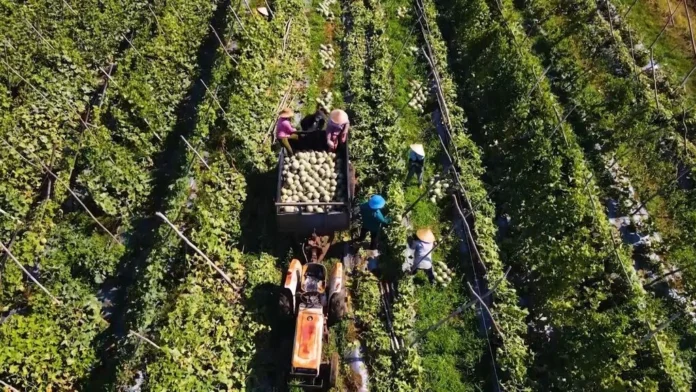
One notable example of this progress can be seen in the orchards managed by cooperatives such as the 3T agricultural products group, where rows of young, vigorous orange trees now stand as testament to the model’s effectiveness. The replanted groves exhibit robust growth, with trees showing strong resistance to the diseases that previously decimated older plantations, and early harvests indicate promising fruit quality that matches or even surpasses historical standards. Farmers report improved soil health from the recommended treatments, leading to better nutrient uptake and reduced reliance on corrective interventions over time. The collaborative framework has also encouraged knowledge sharing among participants, creating a community of practice where successes and lessons are exchanged freely, further accelerating adoption of best methods.
Looking ahead, the positive signals from this replantation model suggest a bright and expansive future for Cao Phong oranges, grounded in the tangible data emerging from the initial 14 hectares. With the project still in its active phase through 2025, the successful integration of healthy seedlings and trained practices points to steadily increasing yields in the coming years, potentially restoring much of the lost acreage and surpassing previous production peaks by the end of the decade. As these pilot households demonstrate higher productivity per hectare through disease-resistant varieties and precise management, scaling the model to broader areas within Cao Phong district becomes not just feasible but highly probable, envisioning a return to thousands of hectares under cultivation by 2030.
This expansion would likely drive substantial economic growth in the region, creating new jobs in farming, processing, and distribution, while boosting household incomes through more reliable and higher-value harvests. The emphasis on traceability and standardized production aligns perfectly with global demand for safe, verifiable agricultural products, opening doors to greater export opportunities, particularly to markets in Europe, Asia, and beyond where Vietnamese citrus is gaining recognition. As competition intensifies from other domestic regions, the strengthened Cao Phong brand, backed by these modern replantation efforts, could command premium pricing, ensuring long-term profitability for growers and stabilizing rural economies against fluctuations in commodity markets.
Furthermore, the vision to 2030 incorporates sustainable development goals that build on current successes, promoting citrus as a cornerstone crop for Hoa Binh province. By continuing to invest in training and support infrastructure, authorities can foster even wider adoption of eco-friendly techniques, such as integrated pest management that minimizes chemical inputs while maintaining yields, thus preserving the fertile valley soils for future generations. This approach not only mitigates risks from climate variability, which could influence disease patterns or water availability, but also enhances the resilience of orchards against potential future threats. The resulting increase in overall citrus output would contribute meaningfully to Vietnam’s agricultural restructuring, shifting toward high-value, export-oriented production that supports national goals for rural development, job creation, and enhanced food security.
In the broader context, the Cao Phong replantation serves as a replicable blueprint for other citrus-growing areas facing similar challenges, illustrating how targeted interventions can reverse decline and propel growth. As the young trees mature over the next several years, annual production figures are expected to climb progressively, starting from the solid foundation laid by the 32 pioneering households and their 14 hectares. By 2030, with sustained commitment, the district could realistically achieve a multifaceted revival: restored vast orchards teeming with healthy trees, communities thriving on renewed prosperity, and a global marketplace increasingly filled with the distinctive taste of Cao Phong oranges. This trajectory underscores a powerful narrative of resilience and innovation in Vietnamese agriculture, where thoughtful replantation efforts today promise abundant, sustainable harvests tomorrow, securing the legacy of one of Vietnam’s most cherished fruits for decades to come.
The momentum generated thus far indicates that these predictions are not mere optimism but are firmly rooted in the observable outcomes of the program. Healthier trees mean fewer losses to disease, translating directly into higher marketable volumes, while improved practices ensure consistent quality that appeals to both local buyers and international traders. As production groups expand and traceability becomes standard, cooperative models like the 3T group could evolve into larger enterprises, incorporating post-harvest processing facilities that add value through juicing, packaging, or even organic certification pathways. Such developments would further elevate economic returns, drawing younger generations back to farming with the allure of modern, profitable opportunities rather than the hardships of the past.
Moreover, the project’s success in building awareness around food safety positions Cao Phong oranges to capitalize on emerging consumer trends favoring transparent, responsibly produced foods. This could lead to niche markets for premium segments, where the story of revival from near-crisis adds emotional appeal and justifies higher prices. On a provincial scale, integrating this model into wider citrus strategies would amplify impacts, potentially increasing total output significantly and contributing to export revenues that bolster Vietnam’s trade balance in agrifood sectors. Environmental benefits, though indirectly supported through better management, may also emerge more prominently in future phases, with reduced pesticide runoff and enhanced biodiversity in orchards promoting long-term ecological health.
Ultimately, the Cao Phong orange replantation model stands as a beacon of hope and practicality, demonstrating that with coordinated support and farmer empowerment, agricultural setbacks can be transformed into eras of unprecedented growth. As the vision to 2030 unfolds, the district is poised to reclaim and exceed its historical prominence, delivering not only economic vitality but also cultural preservation of a fruit deeply woven into the fabric of local identity. The promising signals seen today, from thriving young groves to empowered farming communities, forecast a future where Cao Phong oranges once again flourish abundantly, sustaining livelihoods, delighting palates worldwide, and exemplifying the enduring potential of innovative rural development in Vietnam.