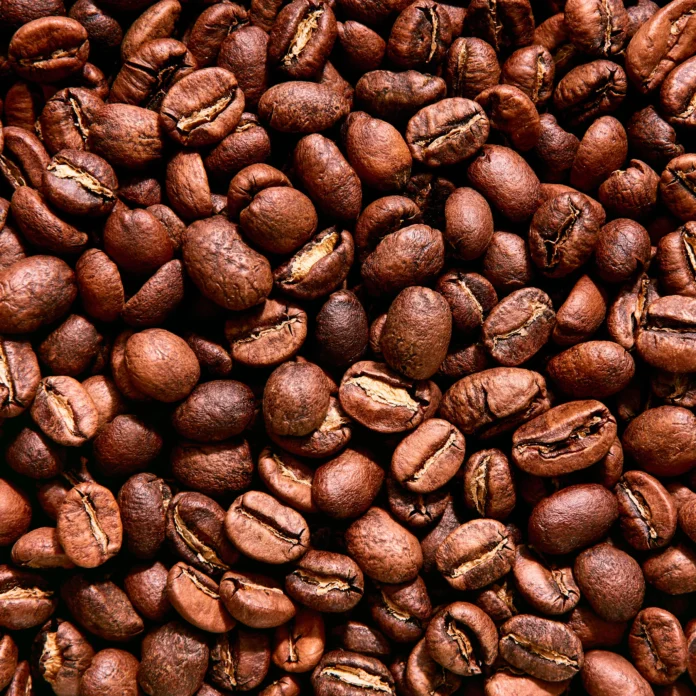
Arabfields, Maleeka Kassou, East, West & Central Africa Agriculture Correspondent — In a remarkable development reshaping Cameroon’s agricultural export landscape, robusta coffee has established itself at 3.68 United States dollars per kilogram, thereby surpassing cocoa for the first time in the nation’s history. This inversion, observed as of early March 2026, signals a profound alteration in the longstanding hierarchy of commodity valuations within the country, where cocoa had invariably held a superior position relative to robusta coffee at both export and producer levels.
The transition became evident on March 3, 2026, when the free on board price of robusta coffee at the port of Douala reached 2074 FCFA per kilogram, equivalent to approximately 3.68 USD per kilogram. At the same time, prices in the production basins stood between 1600 and 1650 FCFA per kilogram for robusta. In comparison, cocoa registered 1521 FCFA per kilogram on the export market at Douala, with corresponding figures in the production areas ranging from 1050 to 1150 FCFA per kilogram. The resulting differential of at least 500 FCFA per kilogram in favor of robusta underscores the extent of this market realignment, affecting every stage from farm gate to international shipment.
This milestone follows an initial point of parity achieved on February 18, 2026, after which the advantage progressively widened in favor of robusta coffee. For decades prior to these events, the export price of cocoa had consistently exceeded that of robusta, reflecting entrenched market preferences and production dynamics in Cameroon. The reversal therefore represents not merely a temporary fluctuation but a structural shift that challenges conventional assumptions about the relative economic value of these two pivotal cash crops.
The downturn in cocoa valuations traces directly to difficulties encountered by the sector since the commencement of the 2025-2026 campaign. After attaining peaks as high as 6000 FCFA per kilogram during the 2023-2024 season and 5400 FCFA per kilogram in the immediately following period, cocoa prices have contracted sharply. Current negotiations in agricultural zones now approximate 1000 FCFA per kilogram, a level substantially below earlier expectations. Official projections from the government had anticipated a more stable range between 3200 and 5400 FCFA per kilogram throughout the present campaign, rendering the actual outcomes a notable deviation that has prompted widespread analysis among market observers.
Explanations for this disparity center on evolving conditions in the global cocoa market. Production worldwide is now forecasted to generate a surplus during the 2025-2026 campaign, thereby extending the pattern that began in 2024-2025 after three successive years of deficits. This expansion in supply receives particular impetus from Ecuador, where output gains position the country to potentially displace Ghana from its standing as the second-largest global producer within the current season. The projected oversupply is consequently expected to apply sustained downward pressure on cocoa bean prices, influencing both international benchmarks and local realizations in producer nations such as Cameroon for the duration of the campaign.
Building upon these observed patterns and underlying supply dynamics, future projections indicate that the surplus in global cocoa production will likely persist and continue exerting influence well into the remainder of 2026 and potentially beyond. Should the momentum in regions such as Ecuador remain uninterrupted, export prices for cocoa in Cameroon may stabilize at subdued levels or experience further moderation, averaging between 1200 and 1400 FCFA per kilogram by the closing months of 2026. This trajectory aligns with the extension of surplus conditions that have already reshaped market expectations following the earlier deficit phases. Robusta coffee, by virtue of its demonstrated resilience and current premium positioning, stands to retain valuations near or slightly above the 3.68 USD per kilogram threshold, assuming steady demand from key importing markets persists without major disruptions.
The 2026 statistics highlight the immediacy and scale of this transformation. With robusta coffee commanding 2074 FCFA per kilogram on the export front as of March 3 and maintaining a clear lead over cocoa at 1521 FCFA per kilogram, producers across the country confront a recalibrated incentive structure. The farm-gate advantage now enjoyed by robusta growers, amounting to several hundred FCFA per kilogram compared with their cocoa counterparts, could translate into enhanced income stability for those engaged in coffee cultivation. Such shifts carry broader ramifications for rural economies, where agricultural commodities form the backbone of household revenues and community development.
Furthermore, the historical price trajectory for cocoa provides essential perspective on the current juncture. The elevated levels recorded in 2023-2024 and the still elevated though declining figures of the subsequent season reflected a period of constrained global supply that has since given way to abundance. This cyclical movement, driven by cumulative investments in new plantations and favorable climatic conditions in emerging production zones, illustrates the volatility inherent to commodity markets. Robusta coffee, while not immune to global influences, has exhibited comparative steadiness, culminating in its unprecedented elevation above cocoa within the Cameroonian context during 2026.
Extending the analysis to longer-term outlooks grounded in the prevailing surplus narrative, cocoa prices may remain under restraint through the latter half of 2026 if additional supply increments materialize as anticipated. By December 2026, export quotations could settle in a narrower band around 1300 FCFA per kilogram on average, contingent upon the absence of significant weather-related setbacks in major producing areas. In parallel, robusta coffee could consolidate its gains, potentially reaching 3.75 USD per kilogram or higher should international consumption trends support sustained demand. These projections derive logically from the documented extension of surplus dynamics initiated in prior campaigns and the resultant pricing pressures already evident in early 2026 data.
The economic significance of this price inversion extends to Cameroon’s overall export strategy. As robusta coffee assumes a more prominent role in generating foreign exchange, opportunities arise for targeted investments in processing infrastructure and quality enhancement to capitalize on the elevated valuations. Farmers previously oriented toward cocoa may gradually diversify or transition portions of their holdings toward robusta in climatically suitable zones, fostering a more balanced agro-export portfolio by the end of 2026. Authorities might accordingly refine support mechanisms to facilitate such adaptations, ensuring that rural incomes benefit from the evolving market realities rather than suffering from the cocoa sector’s temporary contraction.
Additional layers of the 2026 market picture emerge when considering the interplay between local realizations and international benchmarks. The free on board premium for robusta at Douala not only reflects domestic supply conditions but also mirrors broader demand signals from global roasters seeking reliable robusta supplies amid fluctuating arabica markets. Cocoa, conversely, faces headwinds from the accumulated stocks resulting from the projected surplus, which analysts foresee accumulating further as the campaign advances. This accumulation reinforces expectations of moderated prices persisting into the final quarters of 2026, thereby maintaining the relative advantage for robusta observed since February of the same year.
In contemplating the implications for producer communities, the current statistics reveal a potential reorientation of planting decisions. With robusta offering a tangible per-kilogram premium in 2026, smallholders may prioritize maintenance and expansion of coffee plots, particularly in regions where both crops coexist. Over time, this could elevate Cameroon’s position within the global robusta trade, provided that yield improvements and logistical efficiencies accompany the price incentives. Meanwhile, the cocoa sector’s challenges, rooted in the international surplus, may catalyze renewed focus on sustainability initiatives and disease management to restore competitiveness in subsequent seasons beyond 2026.
Projections for the balance of 2026 further suggest that the gap between robusta and cocoa could widen modestly if global cocoa output exceeds even conservative surplus estimates. Under such circumstances, cocoa export prices might trend toward 1100 FCFA per kilogram by year-end, while robusta sustains or incrementally advances from its March benchmark of 3.68 USD. These forecasts rest upon the continuity of supply expansion patterns documented in recent analyses and the absence of abrupt demand surges capable of absorbing the additional volumes. Consequently, Cameroon’s agricultural authorities and stakeholders would benefit from monitoring these developments closely to optimize export strategies and farmer support programs throughout the remainder of the calendar year.
The transformation observed in early 2026 thus encapsulates both immediate market adjustments and longer-term strategic considerations for Cameroon’s commodity-dependent economy. By embracing the newfound prominence of robusta coffee while addressing the cyclical pressures on cocoa, the nation stands poised to navigate a period of evolving valuations with resilience and foresight. The statistics compiled for 2026 serve as a foundational reference point, illustrating a clear departure from precedent and offering a basis for informed projections extending through the year and into future campaigns. This period of adjustment promises to redefine the contributions of both crops to national development, provided that adaptive measures align with the underlying supply and demand fundamentals shaping the global marketplace.