Arabfields, Tonga — In the remote islands of Tonga, where agriculture forms the backbone of rural livelihoods, a recent initiative has brought renewed hope to local farmers. Last week, farmers in Vava’u welcomed new agricultural support from China’s Phase VI programme, marking another step in the ongoing collaboration between the two nations to enhance food security and sustainable practices.
The event unfolded in Holeva Village, a community nestled in the northern island group of Vava’u, known for its fertile soils and reliance on subsistence farming. Organized jointly by the China-Aid Agriculture Technical Assistance Project to Tonga Phase VI and the Vava’u branch of Tonga’s Ministry of Agriculture, Food and Forests (MAFF), the outreach aimed to deliver practical resources and knowledge directly to the grassroots level. Despite persistent heavy rain that turned the village paths into muddy trails, the gathering proceeded with enthusiasm, drawing strong participation from local residents. Villagers and Chinese experts engaged in lively interactions, exchanging ideas on crop management and soil health, underscoring the programme’s focus on community-driven development.
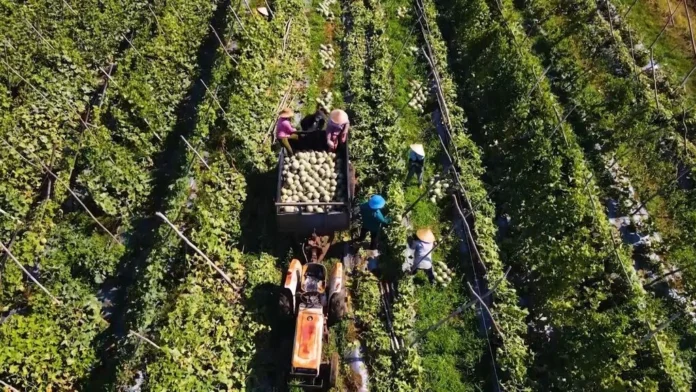
At the heart of the initiative was the donation of essential agricultural supplies, including high-quality vegetable seedlings, fertilizers, and farming tools. These items were carefully selected to address common challenges faced by Tongan farmers, such as nutrient-poor soils and vulnerability to climate variability. In addition to the material aid, the expert team provided hands-on training in vegetable cultivation techniques. Participants learned advanced methods for planting, pest control, and irrigation, tailored to Vava’u’s tropical climate. One farmer, speaking anonymously to local media, described the session as “a game-changer,” noting how the practical demonstrations helped demystify modern farming practices that could boost yields and reduce reliance on imported produce.
This rural outreach is part of a broader strategy under China’s aid framework, emphasizing “technical assistance going into community, taking innovation from capital to grassroots.” By decentralizing expertise from urban centers like Nuku’alofa to outlying islands, the programme seeks to empower local communities with self-sustaining skills. The Vava’u event builds directly on previous phases of the China-Aid project, which have been instrumental in Tonga’s agricultural sector since their inception.
Launched in earlier years, the China-Aid Agriculture Technical Assistance Project has progressed through multiple phases, each targeting specific areas of need. Phase VI, in particular, focuses on vegetable farming and livestock production, as outlined in Tonga’s government budget statements. Recent activities under this phase have included collaborations with local institutions, such as Vava’u High School, to integrate agricultural education into community programs. In September 2025, the project established formal cooperation ties in Vava’u, laying the groundwork for initiatives like the Holeva Village event.
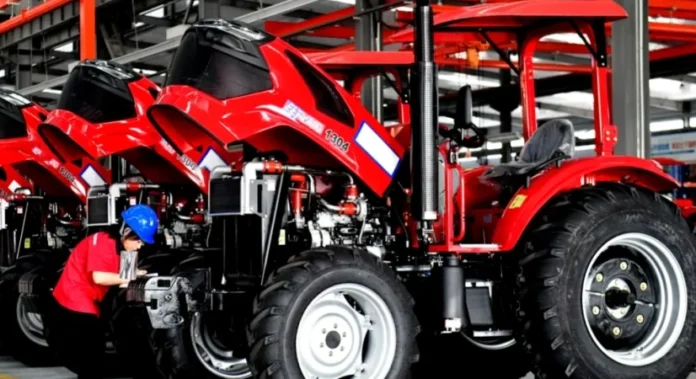
Complementing these efforts, Phase VII of the project has shifted attention to poultry farming, specifically enhancing skills in layer (egg-laying) operations. In mid-September 2025, a training session in Tonga combined theoretical lessons with practical exercises, equipping participants with techniques to improve poultry health and productivity. Team leader Chiang Wei Go, in an interview with Tongan media, expressed eagerness to expand these programs, highlighting their role in addressing food scarcity in the Pacific nation. Earlier in the year, in February 2025, Chinese Ambassador to Tonga Liu Weimin attended a handover ceremony for additional agricultural supplies, including laboratory equipment and machinery, further solidifying China’s commitment to Tonga’s farming sector.
The agricultural cooperation is just one facet of the deepening ties between China and Tonga, which span various sectors and reflect a model of South-South collaboration. In recent years, China has introduced innovative crops and techniques to Tonga, such as Juncao grass for livestock feed, dragon fruit cultivation, and modern pig farming methods. These introductions have not only diversified Tonga’s agricultural output but also promoted sustainability, reducing the environmental footprint of traditional farming. Beyond crops, projects like biogas systems have been implemented in Vava’u, with the fifth such system launched in Longomapu in May under the China-Tonga agricultural partnership. Such initiatives align with Tonga’s national goals to increase local food production and build resilience against climate change, as detailed in MAFF’s corporate plan.
Extending beyond agriculture, China’s aid to Tonga has made significant inroads in renewable energy, addressing the kingdom’s vulnerability to fossil fuel dependency and natural disasters. A prime example is the 2.25 MW wind farm in Tongatapu, commissioned by King Tupou VI on July 14, 2025. Funded entirely by the People’s Republic of China and constructed by China Energy Engineering Corporation (CEEC), the project features three 750-kilowatt wind turbines and a 110-kilovolt substation. Since its handover in July, the wind farm has generated over 2.6 million kilowatt-hours of electricity, contributing approximately 3.8% to Tonga’s total annual supply and a quarter of its renewable energy capacity. This development supports Tonga’s ambitious Energy Road Map, which aims for 100% renewable power by 2035, and serves as a symbol of green cooperation between the two countries. The project’s timely completion, despite delays from earlier plans, highlights the efficiency of bilateral partnerships in tackling climate challenges in small island nations.
These efforts come at a critical time for Tonga, a nation of about 100,000 people spread across 170 islands, where agriculture employs over 60% of the workforce and contributes significantly to GDP. However, challenges such as soil degradation, water scarcity, and the impacts of cyclones have strained productivity. Chinese aid programs, by providing technical expertise and resources, help mitigate these issues, fostering self-reliance. As noted in a fact sheet on China-Pacific Island cooperation, similar projects in neighboring countries like Fiji and Samoa have improved agricultural efficiency and tourism development.
Looking ahead, the MAFF Vava’u branch plans further follow-up visits to Holeva and neighboring villages to monitor progress and ensure the newly acquired techniques are retained and scaled up. Officials anticipate expanding the model to other islands, potentially incorporating more advanced technologies like precision farming tools. Ambassador Liu Weimin, in a June 2025 article, emphasized the importance of such dialogues in building mutual respect and shared prosperity.
As Tonga navigates its development path, partnerships like these with China offer a blueprint for sustainable growth. By bridging the gap between policy and practice, the initiatives not only boost immediate outputs but also lay the foundation for long-term resilience in one of the world’s most climate-vulnerable regions. For the farmers of Vava’u, this support represents more than aid—it’s an investment in their future.