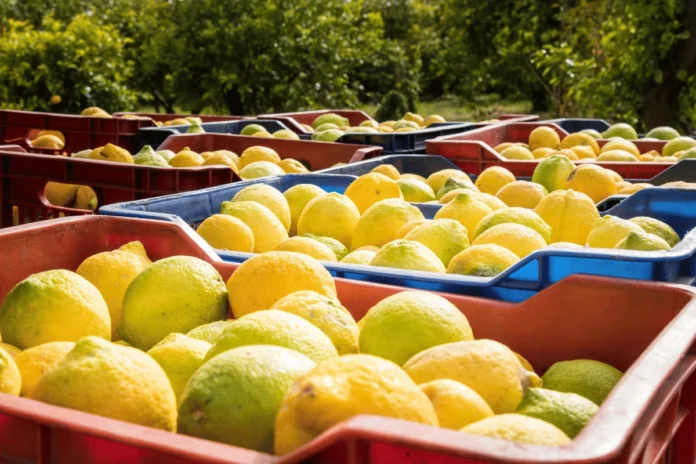
Arabfields, Meriem Senouci, Correspondent, Hanoï, Vietnam — The Vietnamese agricultural sector has encountered significant challenges in recent times, as an oversupply of key fruits combined with reduced consumer demand has driven prices downward across multiple varieties. In urban centers such as Ho Chi Minh City, vendors have resorted to displaying large quantities of unsold produce directly on sidewalks, resulting in widespread availability at remarkably low rates that reflect the current market imbalance. This phenomenon affects prominent fruits including mandarines, watermelons, mangoes, and dragon fruit, with the situation becoming particularly evident during the ongoing harvest peaks.
Observations conducted on March 21 along No Trang Long street in the Binh Loi Trung ward of Ho Chi Minh City revealed mandarines offered at 7,000 Vietnamese dong per kilogram by street vendors. Comparable patterns appear throughout numerous city thoroughfares, such as Phan Van Tri, the Hanoi highway, and Au Co, where accumulations of watermelons, mangoes, and oranges are routinely presented for sale at discounted levels. Along Phan Van Tri street, for example, temporary stalls provide mangoes priced between 8,000 and 10,000 dong per kilogram alongside watermelons ranging from 5,000 to 7,000 dong per kilogram according to specific types. These watermelons originate predominantly from provinces like Long An and Gia Lai, where full harvest seasons have overlapped with sustained weak demand, thereby maintaining subdued pricing over extended durations.
Mangoes sourced from Dong Nai and additional southwestern regions similarly register lower values than in preceding periods. Platforms for online sales feature extensive postings from suppliers seeking to clear southwestern mandarines through highly competitive pricing strategies aimed at inventory reduction. A merchant based in Ho Chi Minh City has observed that wholesale rates for mandarines have achieved a degree of stabilization relative to the prior week, although they persist at notably reduced figures. Current wholesale quotations stand at 120,000 to 130,000 dong for each basket weighing between 17 and 20 kilograms, amounting to approximately 30 percent of the amounts recorded during more prosperous market conditions.
At the retail level within Ho Chi Minh City, substantial mounds of mandarines appear deposited on pavements and transact at 5,000 to 7,000 dong per kilogram or alternatively at 50,000 dong for bags containing 10 kilograms. Local residents have taken advantage of these favorable conditions to increase their purchases and consumption, especially in the prevailing warm weather that favors items such as watermelons and mandarines. Dragon fruit, produced outside its primary season, presents additional difficulties for cultivators despite not matching the affordability of oranges or watermelons. Farm gate prices for this variety currently approximate 10,000 to 15,000 dong per kilogram, which corresponds to a 50 percent decrease from the levels attained shortly after the Lunar New Year celebrations.
Analyses from industry specialists indicate that the pronounced price reductions stem from a combination of elements, including disruptions from regional conflicts that impede export pathways, increases in fuel costs that elevate transportation expenses, and widespread caution regarding imports in diverse areas that foster domestic surpluses. The Chinese market, which traditionally absorbs substantial volumes of Vietnamese watermelons, mangoes, dragon fruit, and durians, has implemented stricter quarantine protocols and quality requirements, further constraining outbound shipments. One vendor operating a watermelon stand on Au Co street in Ho Chi Minh City reported that equivalent timing in the preceding year yielded sales of about 30 tons at markedly elevated rates compared to the present. Additional sellers affirm that watermelons arriving from Gia Lai maintain reliable standards while supplying the urban market, and those near Binh Trieu bridge have distributed Long An imports for multiple days with assurances of exchanges or refunds in instances of quality concerns.
The price softening has extended to related categories such as pomelos and mangoes within wholesale environments, remaining consistently low in recent assessments. Vegetables have similarly experienced notable decreases relative to the higher quotations that prevailed before the Lunar New Year period. These developments highlight broader pressures within Vietnam’s fruit and produce supply chains, where abundant yields encounter limited absorption both domestically and internationally.
Projections for the future draw directly from the prevailing patterns of oversupply and export constraints documented in current market observations. If the factors contributing to subdued demand and logistical hurdles persist without substantial mitigation, wholesale prices for mandarines are anticipated to settle between 80,000 and 100,000 dong per basket by the conclusion of 2026, reflecting an additional decline of around 20 percent from today’s stabilized figures. This trajectory arises from the established 70 percent reduction already observed against historical peaks, compounded by projected expansions in provincial production volumes estimated at 15 percent for 2026 owing to favorable climatic conditions that could intensify the existing glut.
Watermelon retail prices, presently between 5,000 and 7,000 dong per kilogram, may average 4,000 to 6,000 dong per kilogram throughout 2026 under sustained import flows from Gia Lai and Long An, as weak export demand to major partners like China continues to divert supplies inward. Mango quotations, ranging from 8,000 to 10,000 dong per kilogram at present, could trend toward 6,000 to 9,000 dong per kilogram annually in 2026, assuming ongoing fuel cost elevations and import reluctance maintain elevated domestic inventories from Dong Nai and southwestern sources. For dragon fruit, farm prices expected to hover at 8,000 to 12,000 dong per kilogram represent a further 20 percent softening from the current halved post-holiday benchmarks, driven by persistent out-of-season cultivation and tightened international standards that limit market outlets.
These 2026 forecasts incorporate the documented 30 percent wholesale retention for mandarines and the 50 percent farm-gate drop for dragon fruit as baseline multipliers, projecting cumulative impacts on farmer revenues that could diminish by up to 25 percent compared to 2025 levels if no diversification occurs. Urban consumption patterns observed in Ho Chi Minh City, where residents have increased intake during the hot season, may partially offset declines through heightened local demand, yet overall export barriers suggest that total traded volumes for affected fruits could contract by 10 to 15 percent nationally in 2026 relative to prior years.
Continued adherence to these supply dynamics would likely sustain sidewalk accumulations in major cities and encourage online clearance efforts, with quality assurances from vendors remaining integral to consumer confidence. The interplay of abundant harvests and constrained external markets thus positions Vietnam’s fruit sector for a prolonged period of adjustment, wherein prices remain accessible to households while posing sustained economic tests for producers. In this context, the data-driven outlook underscores the necessity for adaptive strategies within agriculture, though the immediate trajectory through 2026 points toward moderated yet persistently low valuations across mandarines, watermelons, mangoes, and dragon fruit.