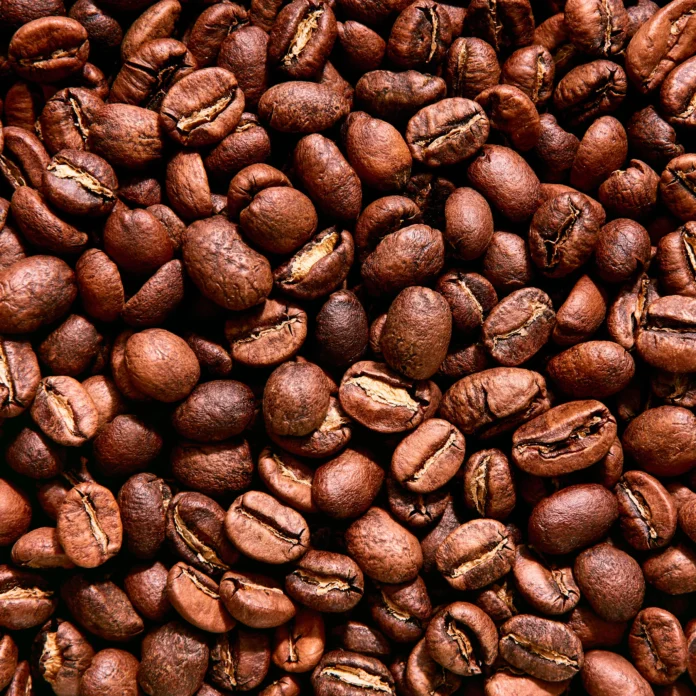
Arabfields, Adel Serai, Economic Analyst Arabfields — The global coffee sector finds itself amidst a phase of considerable instability during 2025, with prices demonstrating persistent upward trends and significant fluctuations that affect all involved parties from cultivation to consumption. This situation arises from a delicate balance where supply limitations encounter unwavering demand, resulting in market conditions that require careful observation and strategic responses. Coffee remains a vital agricultural commodity, supporting economies in producing countries and satisfying the preferences of diverse populations across continents, and the current environment of elevated pricing underscores the challenges inherent in maintaining equilibrium within this complex ecosystem.
In the early part of 2025, prices for coffee beans rose sharply to notable levels. Arabica varieties reached approximately nine dollars per kilogram in the period spanning February and March, as Robusta types came close to six dollars per kilogram. Even though a partial retreat was noted in April, the underlying momentum stayed positive. The initial three months of the year saw Arabica achieve a twenty six percent quarter on quarter improvement, coming close to twice the value from one year earlier. Robusta recorded a twelve percent gain in the same interval, reflecting an increase equivalent to two thirds compared with 2024. These statistics illustrate the strength of market forces at play and highlight how supply constraints have combined with resilient consumer interest to propel values higher throughout the opening quarter.
Continuing this trend, data from the middle of October 2025 revealed Arabica priced at about three dollars and ninety four cents per pound, translating to around eight dollars and seventy cents per kilogram. This level came with a small daily change of minus one point four four percent, against a backdrop of fifty three point four three percent growth since the start of the year. Robusta has mirrored these patterns with its characteristic variability, frequently responding to news regarding potential harvest difficulties. The elevated prices point to enduring supply side challenges supported by healthy demand worldwide, where both established and emerging consumer bases continue to drive consumption forward despite the higher costs involved.
World coffee production has shown signs of a gentle recovery in recent times. The season covering 2023,2024 generated roughly one hundred and seventy million bags of sixty kilograms each. The following season of 2024,2025 is expected to yield one hundred and seventy three million bags. These numbers, however, do not match the highest outputs achieved in 2020,2021. For the period from October 2025 to September 2026, the total is projected to attain one hundred and seventy eight point six eight million bags, marking a two point four five percent expansion. This incremental growth reflects incremental improvements in growing conditions across several key origins, yet it remains insufficient to fully offset accumulated deficits from prior periods or to satisfy the expanding requirements of the global market.
Brazil, a leading producer, is anticipated to account for sixty nine point nine million bags in the 2024,2025 season. This contribution aids the global total, yet previous shortages from 2021,2022, along with rising consumption in new markets and quality focused segments, maintain pressure on availability. The modest nature of the recovery underscores the difficulties in rapidly scaling coffee cultivation, given the crop’s specific requirements for altitude, rainfall, and temperature ranges. As a result, the market continues to operate with limited buffers against unexpected disruptions, reinforcing the conditions for sustained price firmness.
Market projections indicate that price strength will carry through much of 2025 before potential moderation takes hold in 2026. Arabica prices are set to rise by more than fifty percent year over year during 2025, followed by an expected fifteen percent decline in 2026 as output expands notably in Colombia, the second largest Arabica supplier worldwide. Robusta prices are foreseen to advance by nearly twenty five percent in 2025 and then ease by nine percent the subsequent year. The beverages index, dominated by coffee, is anticipated to increase by almost twenty percent in 2025 prior to a reduction of eleven percent in 2026, driven by anticipated easing in overall supply availability. These outlooks incorporate assumptions of more stable weather patterns and higher yields in prominent Robusta producing areas such as Côte d’Ivoire and Uganda, which could collectively contribute to a gradual rebalancing of the market.
Nevertheless, weather conditions represent a major element of unpredictability that could alter these trajectories at any moment. Early 2025 brought low rainfall and elevated temperatures to important cultivation zones in Brazil, threatening the prospects for the 2025,2026 harvest cycle. Consequently, forecasts for Arabica production in that country have been adjusted downward to thirty five point two million bags for 2025. Such revisions serve as a clear illustration of how climatic variations can swiftly impact agricultural output for a crop as sensitive as coffee. Prolonged periods of dryness not only diminish immediate yields but can also compromise the long term vitality of coffee plantations, potentially leading to structural supply reductions if the patterns persist across multiple growing cycles. The role of weather as a dominant factor explains why market participants remain vigilant, as any further adverse developments could trigger additional price spikes and prolong the current phase of volatility.
The robust demand environment has equally contributed to the maintenance of high price levels. Growth in emerging markets has been particularly noteworthy, where expanding middle class populations have embraced coffee as part of modern lifestyles and social routines. At the same time, premium and specialty segments have experienced accelerated expansion, with consumers demonstrating willingness to pay more for higher quality origins and sustainable certifications. This dual dynamic of volume growth in price sensitive areas and value growth in discerning segments creates a layered demand structure that supports prices even when production shows modest gains. Over time, such trends may encourage further investment in quality improvement and traceability within producing regions, although short term supply limitations continue to dominate the pricing narrative.
The implications of this volatility extend across the entire value chain. Producers in origin countries face both opportunities and risks, as higher prices can enhance revenues and fund improvements in farm infrastructure, yet the unpredictability of harvests due to climate factors can lead to income instability. Traders and exporters must manage exposure to rapid price movements through sophisticated hedging mechanisms, while importers and roasters work to absorb cost increases without alienating their customer bases. On the retail side, adjustments in portion sizes, blend compositions, or final selling prices have become common strategies to preserve affordability. Consumers, meanwhile, may respond by moderating their intake or shifting toward more economical alternatives, although the cultural significance of coffee often limits the extent of such behavioral changes.
Looking further ahead, the potential for stabilization in 2026 offers a measure of cautious optimism, provided that projected production increases materialize and weather conditions cooperate. Enhanced output from key origins such as Colombia for Arabica and selected African nations for Robusta could help replenish stocks and ease the tightness that has characterized recent years. However, the persistence of climatic risks means that complete predictability remains elusive, and market participants would be prudent to prepare contingency plans for scenarios where supply disruptions reemerge. Broader economic considerations, including currency fluctuations and global trade dynamics, may also influence the extent to which price corrections take hold.
In summary, the coffee market in 2025 exemplifies the intricate interactions between agricultural realities, consumer preferences, and environmental variables. Persistent price surges have defined the year to date, supported by statistics that reveal both the scale of recent gains and the modest pace of production recovery. Future projections, grounded in available data, point toward continued elevation through 2025 followed by possible moderation in 2026, contingent upon successful harvests and favorable conditions in major producing areas. Industry stakeholders are encouraged to monitor developments closely, adapt their strategies accordingly, and contribute to efforts aimed at building greater resilience within the sector. The enduring global appeal of coffee ensures that, despite current challenges, the market will continue to evolve and adapt, maintaining its position as a cornerstone of international commerce and daily life for millions of people.