Arabfields, Said Ali, Specialist in Agricultural Policy and Economic Innovations in Asia — In the verdant landscapes of central Vietnam, where rolling hills meet fertile valleys, a quiet revolution in sustainable agriculture is gaining momentum. From October 10 to 12, 2025, the ASEAN Regional Knowledge Network on Agroecology (ALiSEA) orchestrated a pivotal three-day field visit that brought together farmers, researchers, cooperatives, and journalists. This initiative, held across two emblematic sites in Nghe An and Ha Tinh provinces, served as more than a官方网站 tour, it was a vibrant tapestry of shared experiences, innovative practices, and forward-thinking dialogues aimed at embedding agroecology deeper into Vietnam’s agricultural fabric.
Agroecology, at its core, is a holistic approach to farming that integrates ecological principles with social and economic sustainability. It moves beyond conventional monoculture models, emphasizing biodiversity, soil health, and community resilience in the face of climate challenges. In Vietnam, where agriculture employs nearly half the workforce and faces mounting pressures from erratic weather patterns, soil degradation, and market volatility, such practices are not just desirable, they are essential. ALiSEA, a collaborative network spanning Southeast Asia, plays a crucial role in this shift. Established to foster knowledge exchange and scale up agroecological innovations, the network connects diverse stakeholders: from grassroots cooperatives to international funders, all united by a vision of resilient, equitable food systems.
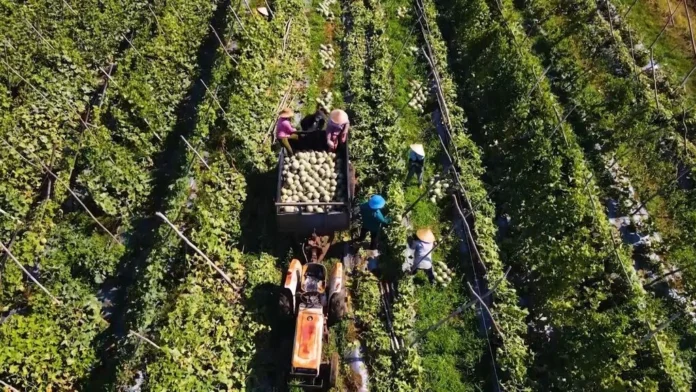
This recent field visit, supported by the French Development Agency (AFD), the European Union (EU), and the French Global Environment Facility (FFEM), exemplified ALiSEA’s mission in action. Over the three days, more than a dozen participants, ranging from seasoned agroecologists to newcomers in the field, traversed the countryside, immersing themselves in living laboratories of sustainable practice. The journey began at the Phu Quy Fruit and Industrial Crop Research Center in Nghe An province, under the auspices of the Agricultural Science Institute for North Central Vietnam (ASINCV). Here, the group was greeted by a landscape alive with experimentation: rows of citrus orchards interspersed with cover crops, mulched pathways teeming with beneficial insects, and demonstration plots that showcased the tangible benefits of agroecological methods.
At Phu Quy, the focus was on the center’s pioneering work in citrus variety selection and conservation, a vital endeavor in a region where fruit production is both a cultural staple and an economic lifeline. Vietnam’s citrus industry, while prolific, has long grappled with issues like pest outbreaks and nutrient depletion in intensively farmed soils. The center’s response? A suite of agroecological strategies designed to harmonize productivity with planetary health. Participants observed intercropping systems where legumes and herbs are planted alongside fruit trees to naturally enrich the soil and deter pests. Organic mulching techniques, using locally sourced materials like rice husks and banana leaves, were highlighted for their role in retaining moisture and suppressing weeds without synthetic chemicals. Cover cropping emerged as a star practice, with fast-growing plants like clover and vetch deployed to prevent erosion and build organic matter in the soil.
One particularly striking element was the on-farm demonstration models, which served as real-world proof points. These plots, meticulously monitored over years, demonstrated how agroecological approaches could maintain yields comparable to conventional methods while slashing input costs and environmental footprints. “We’ve seen yields stabilize even during dry spells,” explained a center researcher during the tour, pointing to data logs showing reduced fertilizer use by up to 40% in test fields. Discussions delved into the nuances of locally adapted plant varieties, hybrids bred not just for output, but for resilience against Vietnam’s tropical monsoons and occasional typhoons. For attendees, many of whom hailed from smallholder cooperatives, these insights were gold: actionable blueprints for adapting their own operations without overhauling entire systems.
As the sun dipped low on the first day, the group shared stories over communal meals of fresh-picked pomelos and herbal teas, reminders that agroecology is as much about human connections as it is about crop cycles. Ms. Tran Thi Linh Nham, a representative from the Green Future Agricultural Service Cooperative, captured the sentiment eloquently. Having joined the ALiSEA network less than a year prior, she reflected on the visit’s profound impact: “As a member of ALiSEA for less than a year, we’ve already learned and shared so much valuable knowledge with other organizations and individuals. This has been incredibly meaningful for cooperatives like ours, working in agroecological farming. Through this field visit, we not only learned theory but also saw effective models in practice, drawing lessons that we can apply directly in our own context. This trip has been a source of inspiration and knowledge to keep us motivated in advancing agroecology and creating products that deliver economic, social, and environmental benefits.”
The second leg of the journey took the participants to the Human Ecology Practice Area (HEPA) in neighboring Ha Tinh province, a site that redefines restoration as reverence. Nestled in a once-degraded forest fringe, HEPA embodies the philosophy of “Nurturing Nature,” a guiding ethos predicated on three pillars: respecting the unique rhythms of ecosystems, embracing biodiversity in all its forms, and honoring indigenous and local knowledge systems. Over the past two decades, this approach has yielded astonishing results. What was once a landscape with a mere 39% forest cover now boasts a near-complete 99% canopy, achieved not through aggressive replanting but via minimal-intervention strategies that let nature lead.
At HEPA, the visit unfolded like a narrative of quiet triumph. Guides led the group through winding trails where native species, fig trees, bamboo groves, and wild orchids, intermingled with agroforestry plots. The philosophy in practice meant observing rather than imposing: seeds dispersed by birds and wind, soil fungi networks allowed to flourish undisturbed, and water flows redirected only subtly to mimic natural contours. This hands-off ethos has not only revived the ecology but also woven it into community lifelines. Integrated farming models here blend conservation with commerce, beehives in the understory for honey production, medicinal herb gardens for local apothecaries, and agro-silviculture systems that yield timber, fruits, and fodder sustainably.
Participants engaged in facilitated sessions where HEPA practitioners shared case studies: how indigenous techniques, like rotational grazing informed by ethnic minority traditions, had bolstered soil fertility; or how biodiversity corridors had attracted pollinators, boosting crop pollination rates by 30%. The site’s success underscores a broader truth in agroecology: environmental health and human prosperity are intertwined. Surrounding communities, once reliant on extractive logging, now sustain stable incomes through eco-tourism, seed banks, and value-added products like organic teas, all while safeguarding the land for future generations.
The inclusion of media representatives amplified the visit’s reach beyond the immediate circle. Journalists, armed with notebooks and cameras, documented the proceedings with an eye toward public enlightenment. Mr. Ha Van Khai, from the Journal of Green Economy and Business, offered a poignant perspective: “For me as a journalist, this visit was extremely valuable. It deepened my understanding of the philosophy and on-the-ground realities of agroecology, which will help me communicate these ideas and models to the public and inspire wider adoption.” His words highlight a key multiplier effect: stories from Phu Quy and HEPA, once siloed in academic papers or local lore, now poised to ripple through newspapers, broadcasts, and online forums, potentially swaying policymakers and consumers alike.
Beyond the sites themselves, the field visit fostered intangible yet invaluable outcomes. It reignited partnerships within the ALiSEA network, sparking commitments for follow-up workshops and joint pilot projects. Newcomers like Ms. Nham’s cooperative left with tailored action plans, perhaps trialing Phu Quy’s mulching in their citrus groves or adapting HEPA’s biodiversity ethos to community gardens. For veterans, it was a reaffirmation of agroecology’s scalability: what works in Nghe An’s research plots could inform Ha Tinh’s forests, and vice versa, creating a mosaic of best practices adaptable across Vietnam’s diverse agro-zones.
In the larger context of Southeast Asia, this event aligns with ALiSEA’s ambitious roadmap. The network, which spans countries like Cambodia, Laos, and Myanmar, prioritizes cross-border learning to address shared challenges, such as ASEAN’s vulnerability to sea-level rise and supply chain disruptions. By 2030, ALiSEA aims to influence national policies, embedding agroecological metrics into agricultural subsidies and extension services. Vietnam, with its robust cooperative movement and growing organic market (valued at over $200 million annually), stands as a frontrunner. Initiatives like this field visit accelerate that momentum, proving that knowledge exchange isn’t a luxury, it’s the fertilizer for systemic change.
As the participants dispersed on October 12, laden with notebooks, soil samples, and renewed resolve, the air hummed with possibility. Agroecology in Vietnam isn’t emerging from abstraction; it’s rooting deeply, branch by branch, in the hands of those who till the earth. Through ALiSEA’s bridge-building, what began as a three-day sojourn has the potential to seed enduring harvests, of equity, ecology, and abundance, for generations to come. In a world racing toward sustainability, these stories from central Vietnam remind us: the future of farming is not just green; it’s alive, adaptive, and profoundly human.