Arabfields, Meriem Senouci, Correspondent, Hanoï, Vietnam — The Vietnamese durian industry has achieved a remarkable milestone, capturing the imagination of global agricultural markets with its unprecedented success in China, the world’s largest consumer of this exotic fruit. For the first time, Vietnam has overtaken Thailand as the leading exporter of fresh durian to China, securing more than half of the market share in a country that imported over 1.8 million tons of durian from various suppliers last year. This triumph underscores not only the rapid growth of Vietnam’s fruit export sector but also the strategic efforts that have positioned the nation as a dominant player in one of the most lucrative tropical fruit markets on the planet.
At the heart of this achievement lies the sheer volume of Vietnamese durian that flooded the Chinese market, amounting to an impressive 940,000 tons, which represented over 50 percent of total imports. China, with its vast population and growing appetite for premium tropical fruits, sourced durians from five countries, yet Vietnam emerged as the undisputed leader. This shift marks a historic turning point, as Thailand had long held the crown in durian exports to China due to its established reputation and earlier market access. Vietnam’s ascent reflects years of dedicated investment in quality control, traceability systems, and compliance with stringent international standards, allowing its producers to meet the exacting demands of Chinese consumers who prize freshness, flavor, and safety in their fruit choices.
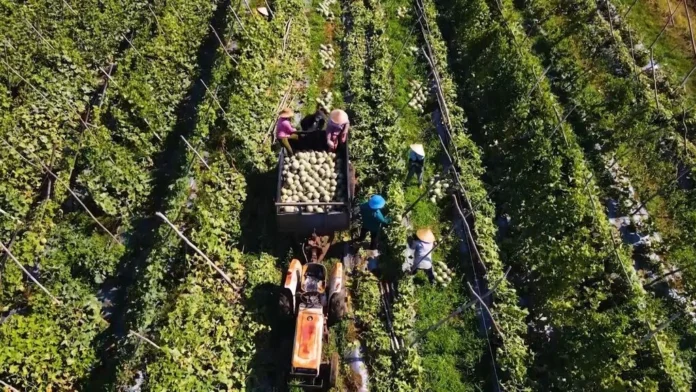
The success story is built on collaborative efforts between farmers, cooperatives, enterprises, and government authorities. Local communities have played a pivotal role by adhering to rigorous protocols for cultivation areas and packaging facilities, ensuring that every batch of durian carries the necessary codes for traceability and quarantine compliance. These measures have not only facilitated smoother exports but also built trust with Chinese importers, who increasingly favor suppliers that can guarantee consistent quality and transparency. Enterprises have stepped up by providing training and technical support to farmers, helping them adopt modern techniques that align with export requirements. This linkage between production and market needs has transformed durian farming from a traditional pursuit into a sophisticated, export-oriented industry capable of competing on the global stage.
Consider the experience of farmers like Mr. Nguyen Van Hien from Truong Long commune in Can Tho city, who has been cultivating durian for over a decade. In the past, fluctuating prices and uncertain markets left him anxious about the viability of his crops. However, by joining a cooperative, he gained access to stable buyers, regular training sessions, and expert guidance on advanced farming practices. The technical staff from partnering companies have been instrumental, offering on-site instruction that enables farmers to produce durians meeting the high standards demanded by overseas markets. This support system ensures a reliable supply chain, where farmers feel secure in their output and motivated to maintain excellence. Such stories are replicated across Vietnam’s durian-growing regions, particularly in the Mekong Delta, where the climate and soil conditions create ideal environments for this thorny, creamy fruit to thrive.
Government officials have emphasized the importance of these structured approaches. Measures to normalize cultivation areas through proper coding and facility approvals have been crucial in expanding export opportunities. Packaging plants must meet specific standards to receive unique identifiers, ensuring that only compliant products reach international buyers. This meticulous oversight aims to prevent issues that could jeopardize market access, allowing Vietnam to sustain its momentum. As the industry matures, the focus is shifting from merely increasing volume to prioritizing quality and sustainability, a transition that promises long-term stability in an otherwise volatile agricultural sector.
Looking ahead, the future of Vietnamese durian appears exceptionally bright, with projections indicating continued expansion and deeper market penetration in China. In 2025 alone, durian exports are forecasted to generate approximately 3.86 billion dollars in revenue, marking an increase of more than 20 percent from the previous year and accounting for over 45 percent of Vietnam’s total fruit and vegetable export value. This substantial contribution highlights durian’s role as a cornerstone of the nation’s agricultural economy, driving income for millions of farmers and bolstering foreign exchange reserves. As production methods evolve toward greater emphasis on quality, the industry is poised to move away from rapid, quantity-driven growth toward a more sustainable model that prioritizes environmental responsibility and long-term viability.
The period starting in 2026 is expected to be transformative, with Vietnamese durian fully embracing a quality-centric approach that could solidify its dominance in China for decades to come. The implementation of a comprehensive traceability plan for agricultural products, spanning 2026 to 2030 and initially focused on durian, will provide robust support for this multibillion-dollar sector. By enhancing transparency from farm to table, this initiative will likely reassure Chinese buyers, reduce risks of trade disruptions, and open doors to even higher-value segments of the market. With ongoing approvals for new cultivation codes and facilities, Vietnam’s export capacity is set to grow steadily, potentially pushing annual volumes well beyond the million-ton mark in the coming years.
Extrapolating from current trends, it is reasonable to predict that by the end of the decade, Vietnamese durian could command an even larger share of the Chinese market, perhaps approaching 60 to 70 percent as competitors face challenges in matching Vietnam’s scale and efficiency. Sustained investments in research for disease-resistant varieties, improved post-harvest handling, and eco-friendly farming practices will further elevate the product’s premium status, allowing exporters to command higher prices amid rising demand from China’s expanding middle class. This growth trajectory could see durian export revenues surpassing 6 to 8 billion dollars annually by 2030, transforming regional economies in the Mekong Delta and creating thousands of additional jobs in processing, logistics, and related industries.
Moreover, the success in China may serve as a springboard for diversification into other demanding markets, though the sheer size of Chinese consumption will remain the primary driver. As global tastes for exotic fruits continue to evolve, Vietnamese durian stands out for its rich, custard-like texture and distinctive aroma, qualities that have already captivated millions of consumers across the border. The industry’s ability to adapt to tightening regulations, such as enhanced food safety protocols and environmental standards, will be key to avoiding pitfalls that have affected other exporters in the past. By maintaining this proactive stance, Vietnam can ensure that its durian remains not just a commodity but a symbol of agricultural excellence.
In essence, the rise of Vietnamese durian in China represents more than a trade victory, it embodies the resilience and innovation of an entire nation committed to turning its natural advantages into economic prosperity. Farmers who once worried about unstable prices now enjoy predictable incomes, cooperatives thrive on shared knowledge, and the country as a whole reaps the benefits of a booming export sector. With the foundations firmly in place and a clear vision for sustainable development, the coming years promise to elevate Vietnamese durian to even greater heights, securing its place as a global leader in this niche yet highly profitable arena. The journey from regional producer to market dominator has been swift, but the potential for enduring success is immense, fueled by dedication, strategy, and an unwavering focus on delivering the king of fruits to eager consumers worldwide.