Arabfields, Maleeka Kassou, East, West & Central Africa Agriculture Correspondent — In the northern reaches of Senegal, where the vast Sahara Desert meets the life-giving waters of the Senegal River, two expansive agricultural enterprises have reshaped the landscape and emerged as essential providers of fresh vegetables to consumers across the United Kingdom. These operations, located near the town of Saint Louis, harness intense sunlight, sandy soils, and sophisticated irrigation systems to produce abundant harvests of crops such as sweetcorn, green beans, spring onions, radishes, chilies, and butternut squash, particularly during the British winter months when local supplies are limited. The farms stand as a testament to innovative land use in a challenging environment, turning arid fringes into productive fields that sustain international trade flows and support both distant markets and local economies.
The development of these farms traces back to the early years of the twenty first century, when an agronomist identified the region’s untapped potential through advanced satellite mapping. Recognizing the combination of reliable sunshine, available land, and a willing workforce, initial efforts focused on clearing bushland and establishing irrigation networks fed by the Senegal River, which extends over one thousand six hundred kilometers from its source to the Atlantic Ocean. Water is diverted into an intricate web of canals, pumps, and pipes that distribute it across vast distances, enabling cultivation despite scant rainfall and temperatures that frequently surpass thirty five degrees Celsius. Over time, the cultivated area has grown to encompass two thousand hectares, roughly equivalent to nearly three thousand standard football pitches, demonstrating how targeted engineering can convert marginal land into high yielding agricultural zones.
One enterprise, managed as a subsidiary of a prominent Cambridgeshire based fresh produce specialist, cultivates five hundred hectares dedicated primarily to salad crops and delivers impressive weekly volumes during the United Kingdom’s winter season, including two million bunches of spring onions, one hundred tonnes of green beans, and eighty tonnes of radishes. Approximately seventy percent of this output reaches major British supermarket chains, with the balance distributed to retailers in Germany and the Netherlands. Complementing this effort, a larger joint venture involving a Sussex headquartered company and a local partner produces fifty five million ears of sweetcorn each year, along with substantial quantities of chilies, butternut squash, and additional green beans. These figures underscore the scale at which Senegalese agriculture now integrates into European supply chains, filling seasonal gaps that traditional sources from southern Europe or Latin America can no longer address as reliably.
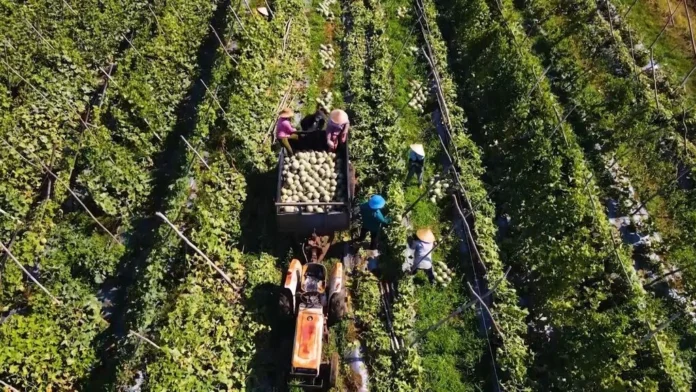
Harvesting occurs under demanding conditions, with teams of workers, predominantly women, moving efficiently through dense fields to collect produce before it is promptly transferred to on site cooling facilities maintained at zero degrees Celsius. From there, lorries transport the goods southward for five hours to the deep water port in Dakar, where weekly container ships undertake a six day voyage covering three thousand miles to destinations such as Poole in Dorset. This sea based logistics model ensures freshness upon arrival and aligns with broader shifts in global transport preferences, as air freight has become less favored for environmental and cost reasons. The entire process from field to retail shelf exemplifies efficiency in connecting West African production with British demand, especially as the United Kingdom relies on imports for about forty percent of its total food supply and up to ninety percent of fresh produce during winter periods.
Political and economic stability in Senegal has played a pivotal role in attracting and sustaining these investments. As the only nation in West Africa without a record of military coups or abrupt governmental changes in recent history, the country offers a secure environment for foreign capital. Land is secured through long term lease agreements negotiated with governmental authorities and local communities rather than outright purchases, while water rights are allocated via licensed arrangements overseen by community management committees. Such frameworks have encouraged commitments totaling around seventy million pounds sterling from one operator alone, reflecting confidence in the model’s viability and potential for sustained growth amid competitive global markets.
For Senegal, a country home to eighteen million inhabitants where unemployment stands near nineteen percent and remains particularly acute among rural young adults following the disruptions of the pandemic, these farms generate meaningful employment for approximately nine thousand individuals. The positions, while compensated at the agricultural minimum wage of roughly two thousand five hundred CFA francs per day, equivalent to about four dollars and fifty cents or three pounds sterling, include opportunities for performance based bonuses that reward speed and productivity. This income stream supports families in regions where alternative opportunities are scarce, and perspectives among local advocates have evolved from initial skepticism about external involvement to a recognition of tangible benefits, even as calls persist for gradual improvements in compensation levels aligned with thin industry profit margins.
Critics, including specialists in food systems and environmental impacts, have raised valid points regarding the broader implications of such long distance supply arrangements. Maritime transport, while emitting fewer greenhouse gases than air freight, still accounts for approximately three percent of global emissions overall, prompting reflections on whether extensive reliance on imported produce aligns with ideals of seasonal consumption and reduced food miles. Domestic British production of certain vegetables involves labor costs that can reach sixty percent of total expenses, whereas in Senegal this share falls below one third, creating clear economic incentives that influence sourcing decisions. Yet these operations highlight a pragmatic adaptation to consumer expectations for year round availability of favorite items, irrespective of local growing seasons.
Looking forward, the data on cost structures, production scales, and investment levels point toward accelerated expansion and deeper integration of Senegalese agriculture into United Kingdom and European markets over the next decade. With labor expenses remaining significantly lower than in Britain or southern Europe, and ongoing pressures from climate related challenges such as recurring droughts in Mediterranean regions, projections indicate that Senegalese farms could capture an even larger share of off season supplies, potentially extending into transitional spring and autumn periods. Cultivated areas may expand beyond the current two thousand hectares, possibly reaching four thousand or more through additional irrigation enhancements and precision farming techniques that optimize water use from the Senegal River basin. Such growth would likely incorporate advanced technologies, including sensor driven monitoring and renewable energy sources for pumps and refrigeration, to address sustainability concerns and maintain competitiveness.
Employment opportunities are expected to multiply accordingly, potentially surpassing twenty thousand positions across expanded operations and ancillary sectors such as packaging, transport, and cold storage. This surge could contribute meaningfully to lowering regional unemployment rates below the current nineteen percent benchmark, fostering greater economic stability, reducing rural to urban migration pressures, and empowering women who form the majority of the workforce through skill development programs focused on agronomy, logistics, and quality control. As wages adjust upward in response to market dynamics and policy changes, including recent minimum wage increases in Senegal, the sector may evolve into a higher value contributor to national GDP, with export revenues supporting infrastructure upgrades in ports and roads.
On the environmental front, future trajectories will likely emphasize mitigation strategies to counterbalance the emissions associated with shipping, such as investments in low carbon vessel technologies and carbon offsetting initiatives tied directly to farm operations. International collaborations on transboundary water management involving Mauritania could ensure the Senegal River’s sustainability amid projected climate shifts, while certification schemes for ethical labor and eco friendly practices may emerge to appeal to discerning consumers increasingly attentive to traceability and impact. In parallel, diversification of crops and the introduction of value added processing facilities closer to production sites in Senegal could shorten certain supply segments, create higher skilled local jobs, and generate premium product lines that command better margins.
Geopolitical and trade developments will further shape this evolution. Should supply chain vulnerabilities arise from conflicts or policy shifts in other exporting regions, the reliability offered by Senegal’s stable context and efficient sea routes will position it as a preferred partner, possibly benefiting from tailored trade agreements that facilitate smoother market access. By the mid twenty thirties, integrated models may see British retailers forging closer strategic alliances with Senegalese producers, incorporating joint research on resilient varieties suited to warmer climates and data analytics for demand forecasting. Consumer preferences may also bifurcate, with one segment prioritizing convenience and variety while another seeks out transparently sourced, lower impact options, thereby rewarding farms that demonstrate proactive environmental stewardship.
Ultimately, these Senegalese enterprises illustrate how agricultural innovation at the desert’s edge can forge enduring links across continents, balancing economic imperatives with opportunities for social advancement and ecological responsibility. As trends in labor efficiency, climatic adaptation, and global trade continue to unfold, the farms are set to play an increasingly prominent role in nourishing British tables while driving prosperity in West Africa, provided that all stakeholders collaborate to align growth with principles of sustainability and equity. This trajectory promises not only expanded harvests but also a more interconnected and resilient food system capable of meeting the demands of future generations.