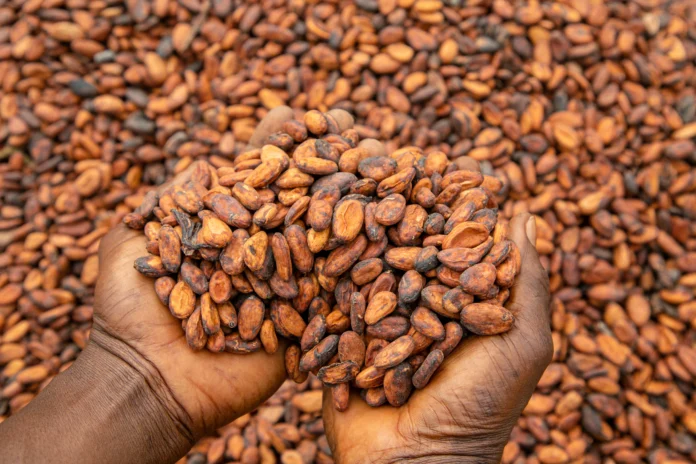
Arabfields, Nadia Fatima Zahra, Arabfields, Yamoussoukro, Ivory Coast — In a significant development for the global cocoa industry, Côte d’Ivoire has seen the resumption of cocoa bean purchases by traders following the removal of certain premiums by the national regulatory authority. This move has brought relief to a sector that faced considerable difficulties across the West African cocoa basin at the start of 2026, with the world’s leading producer now experiencing a period of relative calm in its commercialization segment. The adjustment aligns local pricing more closely with international realities, thereby addressing longstanding concerns raised by buyers regarding the competitiveness of Ivorian cocoa beans on the world market.
The cocoa sector in Côte d’Ivoire, which consistently ranks as the foremost producer worldwide and accounts for a substantial share of global supply, has long been central to the country’s economic framework. Cocoa cultivation supports the livelihoods of millions of smallholder farmers and their families, contributing significantly to foreign exchange earnings and rural development. Over the decades since independence, the industry has evolved from modest beginnings into a cornerstone of agricultural output, with production levels often exceeding two million metric tons in peak seasons before facing recent declines attributed to climatic variability, disease pressures, and soil fertility challenges. In the current context, these structural elements have intersected with acute market pressures, prompting decisive regulatory action to sustain export flows and maintain the nation’s prominent position in international trade.
Since the beginning of the year, the commercialization of cocoa beans in Côte d’Ivoire encountered notable obstacles as traders paused acquisitions amid elevated costs that rendered the beans less attractive compared to global benchmarks. According to market reports dated February 25, 2026, buyers have now restarted purchases, motivated by a reduction in the overall cost of the raw material. Previously, the final acquisition price for Ivorian cocoa incorporated not only the prevailing international market rate and an origin differential reflecting the inherent quality of the beans, but also a quality-related premium and the decent income differential, or living income differential, fixed at four hundred United States dollars per metric ton. This living income differential had been introduced in the 2020 to 2021 campaign specifically to improve the economic conditions of producers by providing a stable supplement to their earnings, thereby promoting sustainability and reducing poverty in cocoa-growing communities.
The decision to suppress the origin differential and the living income differential by the Coffee and Cocoa Council has effectively resolved a protracted standoff between the regulator and international buyers, who had emphasized the prohibitive expense of Ivorian offerings relative to market conditions. This resolution echoes a comparable episode during the 2020 to 2021 season, when subdued global demand resulting from broader economic downturns led to negotiated discounts on Ivorian beans that similarly offset the benefits of the living income differential. In the present instance, the policy shift is expected to stimulate renewed engagement in the forward sales market, particularly ahead of the smaller mid-crop harvest that typically begins in April. Such forward contracting is vital for ensuring steady cash flows to farmers and cooperatives, as well as for facilitating efficient logistics and export planning throughout the remainder of the marketing year.
Current statistics illustrate the scale of the adjustments and their potential ramifications. The guaranteed producer price for the main harvest campaign, running from October to March, stands at two thousand eight hundred CFA francs per kilogram, equivalent to approximately five thousand United States dollars per metric ton. By comparison, international cocoa prices have oscillated between three thousand and four thousand dollars per metric ton since early February 2026, creating a notable gap that had previously discouraged bulk purchases. Port arrival data through mid-February 2026 show cumulative deliveries of about one point three zero seven million metric tons since the season’s start on October first, 2025, marking a decline of four point five percent from the prior year. Broader production estimates for the 2024 to 2025 market year place Côte d’Ivoire’s output in the vicinity of one point seven five million metric tons, a figure that underscores the country’s enduring dominance while highlighting vulnerabilities to weather-related disruptions such as irregular rainfall and the Harmattan winds.
Exports for the calendar year 2025 reached approximately one point three six million metric tons, representing a robust performance despite production headwinds and contributing substantially to national revenues. In parallel, the government has undertaken direct buy-back initiatives targeting up to one hundred thousand metric tons of unsold stocks to inject liquidity into the cooperative network and prevent excessive accumulation that could further depress local prices. These interventions, combined with the premium suppressions, address a situation where unsold inventories had risked swelling significantly, potentially reaching levels that would strain storage capacities and quality preservation efforts.
Analysts anticipate that buyers may receive additional support through an expected announcement by the end of February 2026 regarding a downward revision of the producer price for the mid-crop season. Such a measure would bring the farmgate rate into closer alignment with global trends and with adjustments already implemented by neighboring Ghana, thereby minimizing the risk of cross-border smuggling and enhancing the overall competitiveness of West African cocoa. The combined output of Côte d’Ivoire and Ghana represents roughly sixty percent of worldwide cocoa production, making coordinated pricing policies essential for influencing market dynamics and stabilizing incomes across the region.
Looking to the future, projections based on the recent policy changes and prevailing data point to a strengthening of commercial activity in the coming months. The resumption of purchases is forecast to drive a substantial increase in forward sales for the mid-crop period commencing in April 2026, potentially accelerating export volumes and helping to clear accumulated stocks more efficiently. With restored buyer confidence, total cocoa shipments for the season could recover toward or exceed one million metric tons of beans, supporting downstream processing industries within the country and bolstering foreign exchange reserves. Over the medium term, assuming continued alignment between local and international prices, the sector may experience a gradual stabilization, with production potentially holding steady around one point seven to one point eight million metric tons in subsequent seasons despite ongoing climatic challenges.
The removal of the living income differential, while instrumental in restoring market access, will nonetheless place short-term pressure on producer revenues, as many smallholders depend on this supplement to cover rising costs for inputs such as fertilizers and labor. Historical patterns from the 2020 to 2021 period indicate that similar concessions can lead to temporary reductions in household incomes, potentially affecting investments in farm improvements and community welfare. To mitigate these effects, complementary government measures, including enhanced extension services and support for crop diversification, will be crucial in safeguarding the long-term viability of cocoa farming.
On a broader economic scale, the cocoa sector remains indispensable to Côte d’Ivoire’s growth trajectory, accounting for a meaningful portion of gross domestic product and serving as a primary driver of rural employment. The recent developments are expected to contribute positively to overall economic performance by ensuring uninterrupted export activity, which in turn sustains related industries such as transportation, warehousing, and local grinding facilities. Global chocolate manufacturers stand to gain from more predictable supply chains, as reduced volatility in raw material costs can help moderate retail prices for end consumers and encourage sustained demand for cocoa-derived products.
In the international arena, these adjustments occur against a backdrop of evolving trade relationships, including temporary disruptions such as the suspension of certain imports by major partners due to phytosanitary considerations. Despite such hurdles, the underlying resilience of Côte d’Ivoire’s cocoa industry, reinforced by strategic regulatory interventions, positions it favorably to navigate future market cycles. Sustained focus on quality enhancement, sustainable cultivation practices, and value addition through increased domestic processing will be key to elevating the sector’s competitiveness and capturing greater value within the national economy.
Projections extending into 2027 and beyond suggest that, with successful implementation of the current measures, Côte d’Ivoire could achieve incremental growth in export volumes of five to ten percent year on year for the mid-crop, contingent on favorable weather and stable global demand. This outlook incorporates expectations of gradual recovery in bean quality and yield improvements through ongoing agronomic research and farmer training programs. Collaborative initiatives with regional partners will further enhance the sector’s capacity to withstand price fluctuations and climate variability, ensuring that cocoa continues to serve as a reliable engine for development.
The interplay between regulatory policy and market forces in Côte d’Ivoire’s cocoa sector exemplifies the complexities inherent in managing a commodity of such global significance. By facilitating the resumption of purchases and paving the way for further price realignments, the authorities have taken steps that balance immediate commercial needs with the imperative of supporting producer communities. As the mid-crop season unfolds and new data emerge on sales volumes and price trends, stakeholders across the value chain will monitor progress closely, confident that these foundational adjustments will foster a more robust and sustainable industry trajectory in the years ahead. This episode not only reinforces Côte d’Ivoire’s leadership in cocoa production but also highlights the adaptive strategies required to thrive in an ever-changing global agricultural landscape.