Arabfields, Meriem Senouci, Correspondent, Hanoï, Vietnam — On February 26, Vietnam’s agricultural commodity markets displayed notable divergence, with coffee prices surging sharply across both domestic and international platforms while pepper experienced a reversal leading to declines in key producing regions. This development underscores the dynamic nature of Vietnam’s agricultural sector, which plays a pivotal role in the national economy through its contributions to export revenues and rural livelihoods. The observed trends reflect ongoing market adjustments influenced by global supply considerations and domestic trading activity, setting the stage for an analysis of current conditions and potential future trajectories grounded in the day’s data.
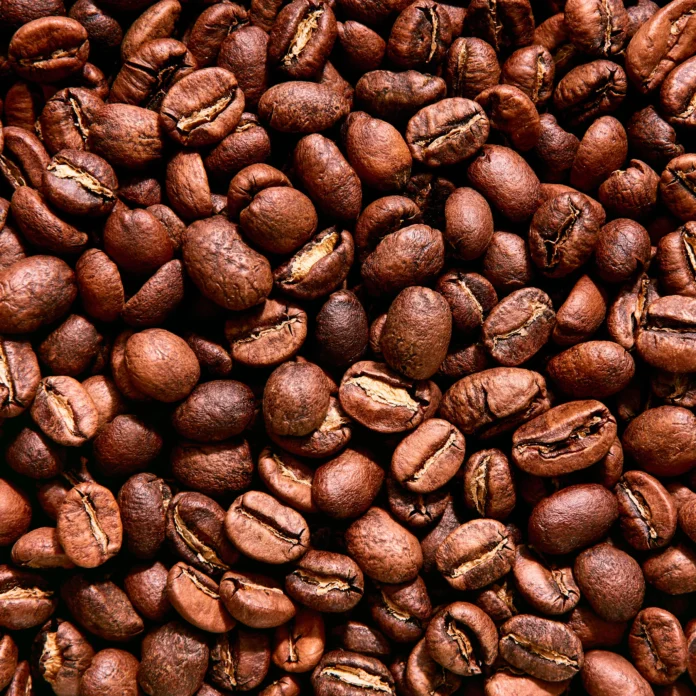
Coffee prices in Vietnam’s Central Highlands provinces, the heartland of the country’s robusta production, advanced robustly on February 26, attaining levels not seen since the beginning of the month. Prices across the region ranged from 95,300 to 96,000 Vietnamese dong per kilogram, representing a general marked increase from the prior session. In Gia Lai province, the price climbed by 2,700 Vietnamese dong per kilogram, while Dak Lak registered a gain of 2,600 Vietnamese dong per kilogram and Dak Nong saw an uplift of 2,500 Vietnamese dong per kilogram, pushing values to 96,000 Vietnamese dong per kilogram in those areas. Lam Dong province, recording the lowest prices in the region, experienced a more modest rise of 2,500 Vietnamese dong per kilogram, reaching 95,300 Vietnamese dong per kilogram. These gains indicate a clear recovery in the domestic market following earlier stagnation, with trading volumes supporting the upward momentum as buyers responded to firmer international cues.
Internationally, coffee futures contracts mirrored this strength, with robusta prices on the London exchange posting significant advances. The March 2026 robusta contract increased by 3.41 percent, or 121 United States dollars per tonne, to settle at 3,663 United States dollars per tonne. The May 2026 contract followed suit, rising by 2.25 percent, equivalent to 80 United States dollars per tonne, to reach 3,640 United States dollars per tonne. On the New York exchange, arabica futures also climbed, as the March 2026 contract gained 2.53 percent, or 7.1 cents per pound, to 288.25 cents per pound, and the May 2026 contract advanced by 2.68 percent, or 7.45 cents per pound, to 285.5 cents per pound. Such concurrent elevations in global benchmarks highlight robust demand and limited near-term supply availability, factors that directly bolstered Vietnam’s position as a leading robusta exporter.
In contrast, pepper prices in Vietnam turned lower on February 26 in several major cultivation areas, reversing recent patterns and reflecting localized adjustments in supply and buyer sentiment. Dak Lak and Dak Nong provinces witnessed the steepest reductions, each declining by 1,000 Vietnamese dong per kilogram to stabilize around 151,000 Vietnamese dong per kilogram. Gia Lai and Dong Nai saw milder drops of 500 Vietnamese dong per kilogram, bringing quotations to 149,000 Vietnamese dong per kilogram. Prices in the Ba Ria, Vung Tau region held steady at 150,000 Vietnamese dong per kilogram, providing a measure of regional stability amid the broader downward shift. On the global front, pepper markets remained largely unchanged, with Indonesian black pepper quoted at 6,899 United States dollars per tonne, Brazilian ASTA 570 at 6,125 United States dollars per tonne, and Malaysian black pepper at 9,100 United States dollars per tonne. Vietnamese black pepper for export traded in the range of 6,400 to 6,600 United States dollars per tonne for the 500 and 550 grams per liter grades. White pepper varieties showed similar steadiness, as Indonesian Muntok reached 9,247 United States dollars per tonne, while Malaysian and Vietnamese white pepper stood at 12,100 and 9,150 United States dollars per tonne, respectively. This international equilibrium suggests that the domestic declines may stem from temporary oversupply or profit-taking rather than fundamental weakness in demand.
The performance of these two commodities on February 26 carries substantial implications for Vietnam’s agricultural economy, where coffee and pepper together form critical pillars of export earnings and employment in rural provinces. Coffee, in particular, benefits from its status as a high-value crop that supports millions of smallholder farmers in the Central Highlands, contributing to income stability and regional development. The sharp price increases observed could translate into enhanced revenues for producers who timed their sales effectively, potentially encouraging further investment in farm maintenance and quality improvements. Pepper growers, facing the day’s reductions, may experience short-term pressure on margins, yet the stability in export quotations offers reassurance that overseas buyers continue to value Vietnamese supplies for their consistent quality and availability. Overall, these movements illustrate the interconnectedness of local and global markets, where even daily fluctuations can influence decisions on harvesting, storage, and forward contracting.
Looking ahead, future projections for coffee prices can be reasonably extrapolated from the pronounced upward trajectory documented on February 26. The robust gains across domestic and international venues point to sustained bullish conditions, driven by the market’s demonstrated capacity for rapid recovery and escalation. Should this momentum persist, domestic coffee prices in the Central Highlands are anticipated to test levels exceeding 100,000 Vietnamese dong per kilogram in the coming weeks, with potential for additional increments of 2,000 to 3,000 Vietnamese dong per kilogram in subsequent sessions if international futures maintain their strength. Over the medium term, extending into the latter part of the year, continued elevation could result in average annual domestic prices surpassing previous benchmarks, fostering higher export volumes and revenues as global buyers seek reliable robusta sources. Such a scenario would likely stimulate expanded cultivation efforts among farmers, including renewed focus on replanting and pest management to capitalize on favorable pricing, ultimately reinforcing Vietnam’s competitive edge in the world coffee trade.
For pepper, the reversal and decline witnessed on February 26 suggest a period of consolidation following prior advances, but the accompanying stability in international markets provides a foundation for cautious optimism. Domestic prices may stabilize around the 149,000 to 151,000 Vietnamese dong per kilogram range in the near term, with limited downside risk given the absence of sharp global deterioration. Based on the observed data, a moderate recovery could emerge within one to two months, potentially adding 500 to 1,000 Vietnamese dong per kilogram as supply dynamics adjust and demand from key importers remains steady. In a longer horizon, the resilience of export quotations at 6,400 to 6,600 United States dollars per tonne for black pepper indicates that Vietnamese pepper could sustain positive value growth, supporting export turnover even if volumes fluctuate. Producers might respond by optimizing harvest schedules and exploring value-added processing to mitigate volatility, thereby enhancing overall sector profitability.
This divergence between coffee and pepper on February 26 also invites consideration of broader strategic responses within Vietnam’s agricultural framework. Farmers and traders in coffee-dominant areas stand to gain from the price surge through improved cash flows, which could fund infrastructure upgrades such as irrigation systems or drying facilities, thereby boosting long-term productivity. In pepper-growing regions, the day’s softer tone may prompt diversification strategies, including intercropping with other spices or fruits to buffer against price swings. At the national level, these trends contribute to a balanced export portfolio, where gains in one commodity can offset pressures in another, aiding macroeconomic stability and foreign exchange reserves. Policymakers may monitor such developments closely to implement supportive measures, including market information dissemination and credit facilities tailored to commodity cycles.
Furthermore, the international price movements for coffee underscore Vietnam’s influence on global robusta dynamics, as the country’s output and export decisions ripple through exchanges in London and New York. The February 26 advances, particularly the more than three percent jump in the near-month robusta contract, reflect heightened investor confidence in supply tightness, a condition that could prolong elevated pricing if replicated in coming trading periods. Pepper’s steadier global profile, meanwhile, positions Vietnam favorably among suppliers, as buyers appreciate the reliability of Vietnamese grades amid consistent quotations from competitors. Integrating these elements, the day’s data paints a picture of resilience in Vietnam’s agricultural exports, with coffee leading the charge toward potential record performances.
In synthesizing the February 26 observations, it becomes evident that Vietnam’s commodity markets remain responsive to both internal trading flows and external benchmarks. The coffee surge, encompassing increases of up to 2,700 Vietnamese dong per kilogram domestically and over three percent internationally, signals strong underlying demand that is likely to propel prices higher in the foreseeable future. Projections indicate that, building directly on this momentum, coffee could achieve cumulative gains of 10 to 15 percent over the next quarter, benefiting the entire value chain from farm gate to port. Pepper’s domestic pullback, tempered by unchanged global levels, points toward equilibrium rather than sustained weakness, with forecasts suggesting a return to stability or slight appreciation as markets digest the reversal. Collectively, these outlooks, derived from the concrete statistics of the day, affirm Vietnam’s pivotal role in global agriculture and highlight opportunities for stakeholders to navigate volatility with informed strategies.
As the agricultural season progresses, ongoing vigilance regarding price signals will be essential for optimizing outcomes. The strong coffee performance on February 26 not only elevates immediate prospects but also lays groundwork for enhanced sector contributions to national growth, while pepper’s adjustment serves as a reminder of the need for adaptive management. Through sustained attention to such daily indicators, Vietnam can continue to strengthen its position as a premier supplier of high-quality coffee and pepper on the world stage, ensuring prosperous futures for its farming communities and exporters alike. This balanced yet dynamic market environment promises continued evolution, with the trends of February 26 serving as a reliable basis for anticipating further advancements in the months ahead.