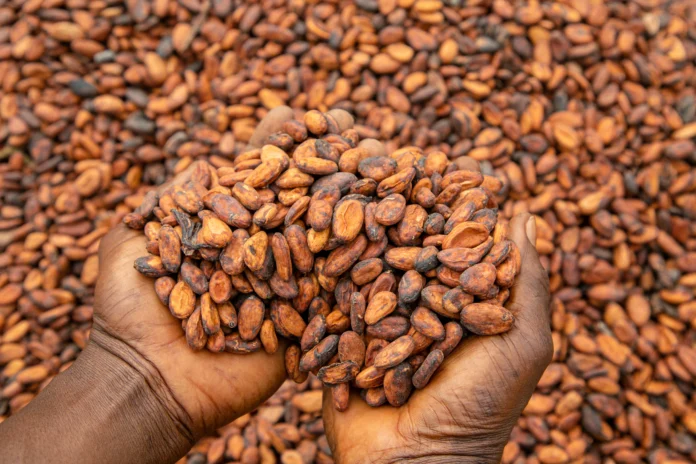
Arabfields, Maleeka Kassou, East, West & Central Africa Agriculture Correspondent — Cameroon has achieved a remarkable milestone in the international cocoa arena by securing the gold medal in the Africa and Indian Ocean category at the tenth edition of the Cocoa of Excellence Awards held on February twentieth, two thousand twenty six, in Amsterdam, Netherlands, on the sidelines of the Cocoa Trade Fair. This distinction was awarded to a sample of cocoa beans submitted by the cooperative of production and commercialization of cocoa from Kye Ossi in the southern region of the country. The event brought together one hundred ninety one samples originating from forty five nations, illustrating the highly competitive nature of the global premium cocoa market where quality, flavor profiles, and sustainable practices determine top honors.
This latest success builds directly on the progress observed in prior years, as Cameroon had earned a bronze medal in the same competition during the two thousand twenty three edition. Such advancement reflects the tangible outcomes of deliberate national efforts to elevate the standards of cocoa production across the country. Authorities have emphasized that the recognition stems from years of focused initiatives aimed at enhancing the overall quality of the national output, positioning Cameroon not merely as a high volume producer but as a source of superior beans sought after by discerning international buyers and processors.
The cocoa sector plays a vital role in Cameroon’s economy, supporting the livelihoods of hundreds of thousands of smallholder farmers and contributing substantially to export revenues. Recent production figures underscore this importance, with the country recording three hundred nine thousand tonnes of cocoa during the two thousand twenty four to two thousand twenty five season, a notable increase from the two hundred sixty six thousand seven hundred ten tonnes achieved in the preceding campaign. Of this total output, one hundred ninety two thousand tonnes were exported while one hundred nine thousand tonnes underwent local processing, demonstrating a growing emphasis on value addition within the domestic economy. Average farm gate prices during that season reached approximately five thousand CFA francs per kilogram, ranging from a low of three thousand two hundred CFA francs to a peak of five thousand four hundred CFA francs, which significantly boosted producer incomes and incentivized greater investment in farm maintenance and expansion.
These production levels place Cameroon among the leading cocoa producing nations worldwide, contributing to Africa’s dominant share of global supply. The quality focused strategies implemented over recent years have been instrumental in achieving such results. Post harvest treatment centers have been established in key production basins to ensure the creation of zero defect beans that meet the most stringent international specifications. In addition, a premium for quality has been introduced to reward producers who adhere to best practices in fermentation, drying, and storage, thereby aligning local output more closely with the expectations of premium markets.
The culmination of these measures has enabled Cameroon to join an exclusive group of fine cocoa producers alongside Ghana, a status previously reserved primarily for select origins in South America. This inclusion was formalized in June two thousand twenty three during a meeting of experts from the International Cocoa Organization held in Antananarivo, Madagascar. Entry into the fine and flavor cocoa category opens doors to higher pricing structures and expanded market access, as these beans command premiums due to their distinctive aromatic profiles and superior processing standards.
The gold medal in Amsterdam represents the third international accolade secured by Cameroon’s cocoa and coffee sector within a short span of two weeks. Earlier in February two thousand twenty six, from the fourth to the sixth, Cameroonian roasters claimed first place for natural robusta and third place in the category of natural robusta produced by women at the African Taste of Harvest event in Addis Ababa, Ethiopia, held alongside the annual conference of the African Fine Coffees Association. These consecutive achievements highlight the broader momentum within the national cocoa coffee value chain and the effectiveness of coordinated efforts to promote excellence across related commodities.
The cooperative responsible for the award winning sample, known as the Société coopérative avec conseil d administration de production et de commercialisation de cacao de Kye Ossi, exemplifies the community based model that underpins much of Cameroon’s cocoa production. Located near the borders with Gabon and Equatorial Guinea in the southern region, Kye Ossi benefits from ideal agro climatic conditions including fertile soils, consistent rainfall, and suitable elevation for cultivating high quality cocoa varieties. Farmers associated with the cooperative, including the producer credited with the winning lot, have adopted meticulous post harvest techniques that preserve the beans’ inherent flavors while eliminating defects that could compromise market value.
This success story is part of a longer trajectory in Cameroon’s cocoa development. Introduced during the colonial period, cocoa cultivation expanded significantly after independence as the government prioritized agricultural diversification to reduce reliance on other commodities. Over decades, the sector has evolved from basic production to a more sophisticated industry emphasizing traceability, certification, and sustainability. The National Cocoa and Coffee Board has played a central coordinating role, overseeing regulatory frameworks, market information systems, and support programs for producers.
Challenges persist within the sector, including vulnerability to climate variability, pest and disease pressures, and fluctuating global prices. However, the quality enhancement initiatives directly address many of these issues by promoting resilient farming systems and improved agronomic practices. Centers of excellence for post harvest handling, for instance, equip producers with the knowledge and infrastructure needed to mitigate losses and maintain consistent quality even under adverse weather conditions. The quality premium further encourages adoption of these standards, creating a virtuous cycle of improvement that benefits both farmers and the national economy.
Looking ahead, the data from recent seasons and the demonstrated progression in international competitions provide a solid foundation for optimistic projections. With the strategies for quality improvement now well established and yielding measurable results, as evidenced by the shift from bronze to gold within a single year, Cameroon is poised for continued advancement in the premium segment. Production volumes are expected to maintain an upward trend, potentially surpassing three hundred fifty thousand tonnes annually within the next few seasons as more farmers implement best practices and benefit from higher incomes that allow for reinvestment in orchards and modern inputs.
The integration into the fine cocoa category will likely drive a reorientation of export markets toward higher value destinations in Europe, North America, and Asia where demand for specialty chocolate continues to expand. Revenues from cocoa sales could rise disproportionately to volume growth due to the price premiums associated with fine flavor designations, supporting broader rural development objectives and contributing to poverty reduction in cocoa growing communities. Local processing capacity, already accounting for over one third of recent output, is anticipated to expand further, fostering job creation in grinding, manufacturing, and related industries while reducing dependence on raw bean exports.
Sustained government commitment to post harvest infrastructure and incentive programs will reinforce this trajectory, enabling the sector to weather global market volatility more effectively. As international buyers increasingly prioritize traceable and high quality origins, Cameroon’s enhanced reputation will facilitate new partnerships and long term contracts that stabilize incomes for producers. By two thousand thirty, the cumulative impact of these developments could see Cameroon not only increase its overall market share but also establish itself as a benchmark for quality within Africa, inspiring similar transformations across the continent.
Moreover, the recent coffee accolades suggest potential synergies between the two commodities, as many farming households cultivate both and can apply shared knowledge of quality management. Integrated support programs covering cocoa and coffee may amplify overall sector resilience, leading to diversified income streams and greater economic stability at the household level. Environmental considerations are also embedded in the quality drive, since sustainable practices such as shade grown systems and reduced chemical use often correlate with superior bean characteristics.
In summary, the gold medal awarded in Amsterdam represents far more than a single competition victory. It symbolizes the successful implementation of a national vision centered on excellence and serves as a catalyst for future growth. With production data confirming robust output levels and strategies proven effective through international validation, Cameroon stands ready to capitalize on its strengths in the global cocoa landscape. The coming years will likely witness accelerated progress, higher farmer prosperity, and strengthened contributions to the national economy, all underpinned by an unwavering focus on quality that has now earned global acclaim. This momentum positions the country as a dynamic player capable of shaping trends in the premium cocoa market for years to come.