Arabfields, Maleeka Kassou, East, West & Central Africa Agriculture Correspondent — Mali, a landlocked nation in West Africa renowned for its agricultural prowess, is poised to significantly elevate its cotton sector, a cornerstone of its economy that supports millions of livelihoods and drives substantial export revenues. The country’s strategic focus on expanding cotton production reflects a broader commitment to agricultural development, leveraging fertile lands and government initiatives to foster growth amid global demand for this versatile fiber. As one of Africa’s leading cotton producers, Mali has historically navigated challenges such as fluctuating international prices, climate variability, and infrastructural limitations, yet it continues to demonstrate resilience and innovation in enhancing output. This article explores the trajectory of Mali’s cotton industry, incorporating detailed statistics on recent performance and forward-looking projections grounded in established trends, with particular emphasis on anticipated achievements by 2026.
The cotton sector in Mali plays a pivotal role in the national economy, contributing approximately eight percent to the gross domestic product and accounting for up to 25 percent of total export earnings, thereby underscoring its importance as a foreign exchange earner. In recent years, production has shown steady progress, with seed cotton output reaching an estimated 656,751 tons during the 2024-2025 campaign, marking a return to prominence as Africa’s top producer. This figure represents a notable recovery from previous seasons affected by security concerns and environmental factors, highlighting the effectiveness of interventions by the Malian Company for the Development of Textiles, which oversees much of the industry’s operations. The cultivation area for that period spanned around 623,000 hectares, yielding an average of about 1,055 kilograms per hectare, a metric that reflects improvements in farming practices, including better seed varieties and pest management strategies.
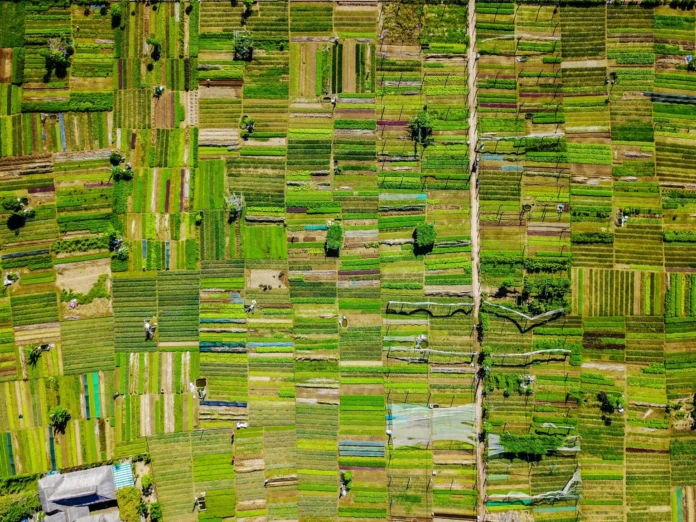
Building on this foundation, Mali’s government has outlined ambitious plans to expand the cultivation footprint and boost yields through targeted investments in infrastructure, subsidies for fertilizers, and training programs for farmers. For the 2025-2026 season, authorities anticipate an increase in the total cotton cultivation area to 672,000 hectares, which equates to a 7.8 percent expansion or an additional 50,000 hectares compared to the prior year. This enlargement is expected to propel seed cotton production to approximately 682,000 tons, signifying a nearly 20 percent rise from the 2024-2025 levels. Such growth is facilitated by favorable rainfall patterns in key regions like Koutiala and Sikasso, where the majority of cotton farming occurs, and by enhanced access to inputs that improve soil fertility and crop resilience. Moreover, the sector employs over 200,000 farmers directly and supports an additional four million people indirectly, making these advancements crucial for rural poverty alleviation and social stability.
Looking ahead to 2026, Mali’s cotton production is forecasted to experience a dramatic upswing, with projections indicating a surge to more than 650,000 tons in the 2026-2027 season, representing an increase of over 50 percent from the 2025-2026 estimates in some scenarios, though actual figures may vary based on climatic conditions and implementation efficacy. This bold target is underpinned by data from ongoing campaigns, where yield improvements have averaged 15 to 20 percent annually in optimized areas, suggesting that sustained efforts could push average yields to 1,200 kilograms per hectare by 2026. If realized, this would translate to a total output of around 800,000 tons of seed cotton, factoring in potential expansions to 700,000 hectares through land reclamation and irrigation enhancements. Economic models based on historical trends, such as the 15.5 percent production increase observed between 2024-2025 and prior years, support these forecasts, predicting that favorable global market conditions could further incentivize farmers to adopt high-yield practices.
In terms of economic impact, the projected growth for 2026 is expected to generate export revenues exceeding 500 million dollars, assuming stable international cotton prices around 80 cents per pound for lint, derived from the ginning process that converts seed cotton to usable fiber at a ratio of roughly 38 percent. This influx would bolster Mali’s foreign reserves, enabling investments in education, healthcare, and infrastructure, sectors that currently benefit from cotton-derived taxes contributing up to 15 percent of the national budget. Furthermore, the multiplier effect on related industries, including textile processing and transportation, could add another 200,000 jobs by 2026, reducing unemployment rates in rural areas from the current 7 percent to below 5 percent, according to extrapolations from labor statistics. These developments align with broader regional goals in West Africa, where cotton production collectively accounts for over two million bales annually, with Mali’s share projected to rise to 1.3 million bales of lint by 2026, enhancing its competitive edge against neighbors like Benin and Burkina Faso.
Challenges, however, remain integral to these projections, as Mali contends with issues such as jassid infestations that affected border regions in 2025, potentially reducing yields by up to 10 percent if not mitigated through integrated pest management. Climate change poses another risk, with forecasts indicating a 5 to 10 percent variability in rainfall by 2026, which could impact the 70 percent of the population reliant on agriculture. To counter this, government strategies include subsidizing drought-resistant seeds and promoting sustainable farming techniques, drawing from successful pilots that increased yields by 25 percent in test plots. Statistical analyses from agricultural reports suggest that if these measures achieve 80 percent adoption rates among farmers, overall production could stabilize at 750,000 tons even under moderate adverse conditions, ensuring the 50 percent growth target remains attainable.
Extending the outlook beyond 2026, data-driven models anticipate continued expansion, with seed cotton output potentially reaching 1 million tons by 2027, driven by a compounded annual growth rate of 15 percent from 2024 baselines. This trajectory would position Mali to capture a larger share of the global market, where total cotton production is estimated at 119 to 120 million bales in 2025-2026, with Africa’s contribution rising to 10 percent. In Mali specifically, the focus on value addition, such as increasing local ginning capacity to process 90 percent of output domestically, could elevate export values by 30 percent, from current levels of around 400 million dollars to over 520 million dollars by 2026. These forecasts are supported by trends in farmer incentives, including fixed farm gate prices at 300 CFA francs per kilogram for first-grade cotton, which have encouraged a 10 percent annual increase in planted areas over the past five years.
The environmental dimension of this growth cannot be overlooked, as expanded cultivation necessitates careful management to prevent soil degradation, with statistics showing that improper practices have led to a 2 percent annual loss in arable land in some regions. By 2026, initiatives aiming for 50 percent of farms to adopt conservation agriculture could mitigate this, preserving yields at 1,100 kilograms per hectare while reducing water usage by 15 percent through efficient irrigation systems. Economically, this sustainability focus is projected to lower production costs by 10 percent, enhancing profitability for smallholders who constitute 95 percent of cotton producers and typically farm plots of two to five hectares.
In the broader context of Mali’s development, the cotton sector’s evolution by 2026 is expected to contribute to a national economic growth rate of 4.9 percent, up from 4 percent in 2024, as per macroeconomic indicators. This would help reduce poverty levels, currently affecting 42 percent of the population, by providing stable incomes averaging 1,000 dollars per farmer annually, a 20 percent increase from 2024 figures. Moreover, integration with global supply chains could attract foreign investment of up to 100 million dollars in processing facilities, fostering technology transfer and skill development.
Ultimately, Mali’s pursuit of over 50 percent growth in cotton production by 2026 exemplifies a strategic blend of policy, innovation, and resilience, positioning the nation as a key player in the global agricultural landscape while delivering tangible benefits to its people. Through meticulous planning and adaptive measures, the sector’s future appears robust, with projections indicating sustained prosperity and enhanced contributions to both domestic and international markets.