Arabfields, Farah Benali, Economic Correspondent, China — Farmers and engineers in Shaanxi Province are reshaping the kiwifruit industry through smart technologies that blend precision equipment with traditional expertise. In counties like Zhouzhi and Meixian, advanced facilities now handle sorting, storage, and quality control, supporting higher standards and broader market access.
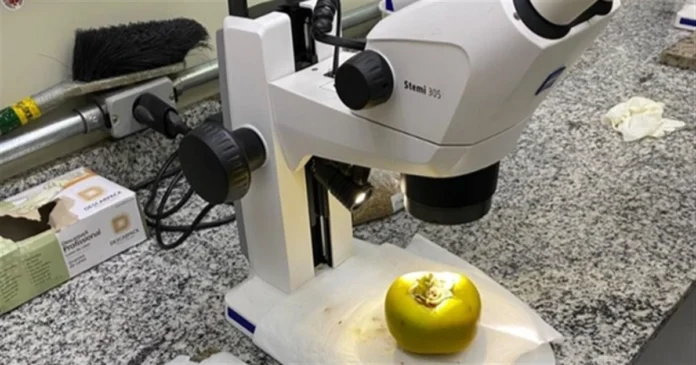
At the Zhouzhi Kiwifruit Integrated Development Demonstration Center, high-speed sorting lines equipped with multiple cameras and near-infrared scanners inspect each fruit thoroughly. The systems detect external defects and evaluate internal attributes such as sweetness and firmness. Traceability codes on every box help maintain quality from orchard to consumer, building confidence in premium products.
A large intelligent cold storage unit with a capacity of 20,000 tonnes ensures stable conditions year-round. Sophisticated refrigeration keeps temperature variations minimal, reducing dehydration and allowing consistent supply of ready-to-eat kiwifruit even outside the main harvest season. He Liandi, director of Xi’an Urban Green Agricultural Technology Development Co., Ltd., highlighted the integrated approach. “The center aims to build a fully connected industrial chain covering variety development, standardized planting, intelligent sorting, smart cold-chain logistics, and brand building,” he noted. “Digital platforms are transforming traditional mindsets into modern industrial operations.”
Shaanxi has identified kiwifruit as a strategic crop for specialty agriculture. Zhouzhi County, recognized as a national hub and the fruit’s primary global origin, has advanced multiple enhancement projects. These efforts focus on variety improvement, standardized cultivation, processing, branding, and digital tools. The local agricultural experiment station, which maintains rich germplasm resources, develops resilient new varieties suited to changing conditions.
Senior engineer Zhang Xiaobin at the station explained how these genetic resources support larger, sweeter, and more disease-resistant fruits. The widely grown ‘Cui Xiang’ variety already occupies extensive areas in the province, with cultivation spreading nationwide. Research partnerships with Northwest A&F University have improved disease control and extended post-harvest shelf life, enhancing competitiveness in distant markets.
In nearby Meixian County, similar innovations are underway. Shaanxi Qifeng Fruit Industry Co., Ltd. implemented a digital system that integrates environmental data, IoT sensors, and AI modeling. This full-chain approach has delivered measurable gains in efficiency and productivity. Chairman Qi Feng described how the company works with local communities through structured models that consolidate land and share benefits among village collectives and operators.
Technological progress is also opening international doors. Qifeng Fruit maintains overseas planting bases for continuous supply and exports to many countries across different continents. Recent industry events in the region have facilitated significant sales agreements, reflecting strong demand.
Industry observers project that these advancements will drive further expansion in the coming years. With continued investment in smart practices, yields per unit area are expected to rise while resource use declines. Enhanced cold-chain infrastructure and global partnerships could substantially increase export volumes by the late 2020s. Such developments position the kiwifruit sector as a potential blueprint for modernizing other agricultural products across China, offering improved livelihoods for rural workers and greater resilience to market and climate challenges.
The human element remains central to this transformation. Technicians monitor seedlings in greenhouses, farmers adapt to new digital tools, and researchers collaborate across institutions. Together, they are turning favorable natural conditions into a competitive, sustainable industry.