Arabfields, Farah Benali, Economic Correspondent, China — China’s apple industry is undergoing a major transformation as technological innovation, domestic research and improved farming practices reshape production in the country’s leading agricultural regions. The provinces of Shaanxi and Gansu are emerging as key drivers of this development, combining traditional farming expertise with modern technologies to increase productivity and strengthen the value of agricultural exports.
According to 2026 industry figures, Shaanxi and Gansu jointly account for approximately 1 million hectares of apple-growing land, producing around 24 million tonnes annually. Their combined agricultural value across the apple supply chain exceeds 200 billion yuan, equivalent to approximately $28 billion. Together, the two provinces contribute nearly half of China’s total apple production, reinforcing the country’s position as the world’s largest apple producer.
For farmers in these regions, however, the transformation is about more than production figures. It is also changing how rural communities manage their land, access agricultural services and generate income.
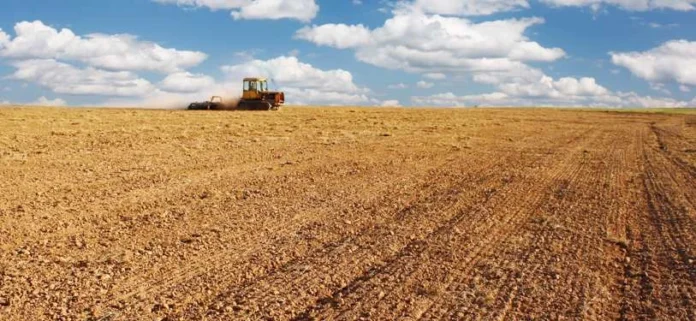
In Beichi village, located in Shaanxi Province, 57 households previously cultivated orchards across 40.4 hectares of fragmented farmland. The arrangement made it difficult to introduce modern machinery and more efficient planting systems. A land-management initiative introduced in 2023 reorganised orchard layouts without changing household ownership rights. The reform removed 1,108 plot boundaries, allowing farmers to benefit from larger cultivation areas while retaining their individual interests.
The initiative has also reduced orchard construction material costs by 1,244 yuan per mu, illustrating how agricultural reform can deliver practical financial benefits to small-scale producers.
Technology is another important factor behind the industry’s expansion. In Yan’an, Shaanxi, a network of 543 smart weather stations and 2,470 temperature sensors now monitors conditions across apple-growing areas. The system provides farmers with mobile alerts about potential frost, helping them respond more quickly to weather-related threats. Monitoring errors associated with low temperatures have fallen from 5 degrees Celsius to 0.5 degrees Celsius.
Meanwhile, domestic agricultural research is reducing China’s dependence on foreign apple varieties. Research teams have developed 13 varieties under the Qin brand, supported by a genetic resource bank containing more than 4,000 apple germplasm resources. These advances have shortened the breeding cycle by approximately 30 percent.
The Qin Cui variety, approved in Shaanxi in 2016, has already expanded to more than 33,000 hectares, demonstrating the commercial potential of locally developed agricultural technologies.
Beyond cultivation, businesses are increasingly focusing on processing, storage and international distribution. In Gansu’s Jingning County, apple production reaches approximately 1.25 million tonnes annually across 66,667 hectares of orchards. Its regional apple brand is valued at more than 18.1 billion yuan, with products distributed across 23 countries and regions.
Cooperatives are also helping farmers strengthen their market position. In Tianshui, more than 170 apple-growing households have joined a cooperative to improve production coordination and market access. Such arrangements provide smaller producers with opportunities to share services, participate in decision-making and benefit from collective marketing.
Looking ahead, China’s apple industry is expected to place greater emphasis on productivity, agricultural technology and higher-value products rather than simply expanding cultivated land. The growing adoption of smart farming systems, domestic breeding programmes and organised agricultural services could further improve efficiency across the supply chain.
However, climate-related risks, production costs and competition in international markets will remain important challenges. Investment in weather monitoring, agricultural insurance and improved storage facilities is therefore likely to become increasingly important in protecting farmers’ incomes and maintaining stable supplies.
With nearly half of China’s apple production concentrated in Shaanxi and Gansu, developments in these provinces could have significant implications for the wider agricultural economy. The industry’s next phase will depend not only on producing more apples, but also on ensuring that technological progress translates into stronger rural incomes, more competitive businesses and sustainable growth.