Arabfields, Meriem Senouci, Correspondent, Hanoï, Vietnam — In the heart of Vietnam’s Mekong Delta, the city of Can Tho has embarked on a strategic initiative to elevate its agricultural prominence through the deliberate cultivation and branding of specialty rice varieties, marking a significant step toward establishing Can Tho Rice as a recognized high-quality product on both domestic and international markets. On March 6, during a comprehensive demonstration of rice varieties tailored for the winter-spring harvest spanning 2025 and 2026 and organized by the Mekong Delta Rice Research Institute, local authorities reinforced their commitment to this vision by highlighting the potential of select innovative strains developed specifically to strengthen the regional identity of rice production.
The Mekong Delta Rice Research Institute showcased four promising new rice varieties, namely OM19, OM3, OM74, and OM29, each designed to mitigate challenges related to diminishing cultivation areas and evolving environmental conditions while simultaneously supporting the overarching goal of specialty branding. Among these, the OM19 and OM3 varieties stand out as direct outcomes of a dedicated project focused on selecting high-quality aromatic rice strains expressly for the Can Tho Rice brand, a collaborative effort led by the city’s Department of Sciences and Technologies. These varieties represent more than mere agricultural advancements, they embody a calculated approach to transforming local rice farming into a cohesive, market-oriented enterprise that emphasizes quality, aroma, and adaptability.
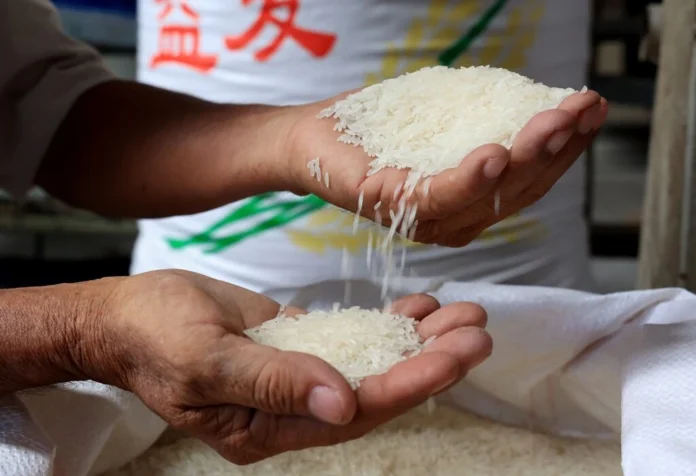
Dr. Tran Ngoc Thach, serving as director of the Mekong Delta Rice Research Institute, has detailed the exceptional attributes of the OM19 variety, positioning it firmly within the high-end market segment due to its remarkable versatility across the diverse ecological zones of the Mekong Delta, including those in coastal regions prone to salinity intrusion. With a notably short growth cycle ranging from 95 to 100 days and a consistent yield potential of six to eight tons per hectare, the OM19 produces grains of superior quality that exhibit a rich natural aroma and deliver an appealing texture and flavor upon cooking. Complementing this profile, the OM3 variety excels within the high-quality rice category through its incorporation of salt-tolerant genetic traits, rendering it especially well suited for coastal areas increasingly vulnerable to the effects of climate change and rising sea levels. Such adaptations underscore the forward-thinking nature of these developments, ensuring that rice cultivation remains viable even as environmental pressures intensify.
During an extensive field evaluation involving 22 distinct rice varieties planted across a dedicated demonstration plot, the OM19 achieved a second-place ranking in overall varietal performance, trailing only the OM29, yet it secured the top evaluation scores from both participating companies and local farmers specifically for its rice quality attributes. This strong endorsement from stakeholders highlights the practical appeal of the OM19, as it balances agronomic reliability with consumer-desired sensory characteristics, thereby laying a robust foundation for the Can Tho Rice brand’s market positioning. Building upon these promising results, the city’s Department of Sciences and Technologies has taken decisive action to safeguard and promote the brand by successfully registering its intellectual property rights and assigning management responsibilities to the agricultural sector, thereby ensuring controlled yet expansive utilization across the region.
Research findings related to these rice varieties are now being transferred at no cost to the Mekong Delta Rice Research Institute, facilitating accelerated scaling of production capabilities and enabling broader dissemination among farmers. In parallel, the department has pledged ongoing support for the implementation of a comprehensive traceability system developed in coordination with the national Ministry of Agriculture and Environment, a measure intended to enhance transparency and consumer confidence by allowing end-to-end verification of product origins and production practices. This traceability framework will play a pivotal role in distinguishing Can Tho Rice within competitive global markets, where authenticity and quality assurance increasingly influence purchasing decisions.
Under the city’s explicit policy, the Can Tho Rice brand will be made available freely and universally for deployment with any delicious fragrant rice varieties cultivated within the designated regional boundaries, thereby fostering inclusive participation while maintaining unified branding standards. To further incentivize adoption, the state has committed to subsidizing 30 percent of the costs associated with acquiring necessary machinery and equipment for small and medium-sized cooperatives that integrate into the OM rice value chain and actively contribute to the development of this flagship brand. Such financial support is expected to lower entry barriers for producers, encourage technological upgrades, and promote sustainable intensification of farming practices across participating entities.
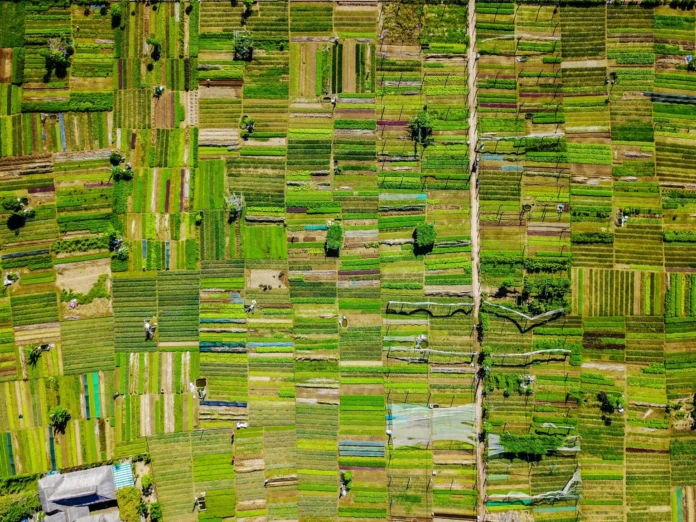
The practical implementation of these strategies is already yielding tangible outcomes through integrated production models centered on the OM19 variety. For instance, the Vuong Dinh Group has successfully established a dedicated OM19 cultivation zone at the Tien Thuan Cooperative in Thanh Quoi Commune within Can Tho city, encompassing an initial 80 hectares that serve as a pilot for larger-scale replication. This enterprise has additionally formalized a cooperation agreement with the Rice Research Institute to expand OM19 cultivation to approximately 200,000 hectares throughout the Mekong Delta region over the period from 2026 to 2030, representing a substantial commitment to regional transformation and brand consolidation. Mr. Pham Huu Cuong, deputy director of the Vuong Dinh Group, has articulated the primary commercial objective as securing high-volume purchases for export, with a particular emphasis on the South American market and notably Brazil, where consumer demand for premium fragrant rice varieties originating from Vietnam continues to demonstrate robust growth.
As the initiative progresses into 2026, projections grounded in the announced cultivation targets and established yield benchmarks indicate that the expanded adoption of OM19 and related varieties will generate significant statistical advancements for the Can Tho Rice sector. With the expansion phase commencing in 2026, an estimated 40,000 hectares are anticipated to come under OM19 cultivation during the initial year alone, assuming a measured rollout aligned with the five-year horizon toward the 200,000-hectare goal. Applying the documented average yield range of six to eight tons per hectare, this initial area is projected to deliver between 240,000 and 320,000 tons of high-quality rice output in 2026, with a midpoint estimate of 280,000 tons providing a conservative yet realistic benchmark for planning purposes. These figures not only reflect enhanced local production capacity but also signal the potential for substantial contributions to Vietnam’s overall rice export volumes, particularly in premium aromatic segments targeting discerning international buyers.
Furthermore, the 2026 outlook incorporates the anticipated benefits of the 30-percent machinery subsidy program, which is expected to equip at least 50 small and medium cooperatives with upgraded processing and harvesting technologies, thereby improving efficiency and reducing post-harvest losses by an estimated 15 to 20 percent relative to traditional methods. Traceability system integration across these cooperatives is forecasted to cover the full 40,000 hectares under OM19 by the close of 2026, enabling precise documentation that will support premium pricing strategies and facilitate entry into regulated markets such as Brazil. In terms of disease resistance metrics derived from field demonstrations, the OM19 variety’s projected success rate of approximately 90 percent under standard conditions will likely translate into minimized crop losses, further stabilizing the 280,000-ton production estimate even amid variable weather patterns.
Despite these optimistic projections, the transition toward specialized cultivation introduces several operational complexities that warrant careful management to sustain momentum into and beyond 2026. Farmers transitioning from conventional dense seeding practices to the lower-density approach recommended for OM19, which utilizes approximately 60 kilograms of seed per hectare, must adapt to requirements for perfectly leveled fields to achieve uniform germination and plant distribution. Mr. Nguyen Cao Khai, director of the Tien Thuan Cooperative, has noted that although the OM19 demonstrates strong inherent disease resistance and high overall success potential, lingering concerns persist regarding extreme weather events and untimely off-season rainfall, factors that could temporarily disrupt yields if not addressed through enhanced resilience measures. Nevertheless, adherence to certified seed usage, combined with stage-specific fertilization and pesticide protocols, is anticipated to mitigate these risks effectively, supporting the reliability of the 2026 production forecasts.
Dr. Mai Nguyet Lan from the Rice Research Institute has emphasized the importance of rigorous adherence to best practices, including the selection of certified seeds to guarantee optimal germination rates and genetic purity, as well as precise soil preparation to accommodate the reduced seeding density. These guidelines, when implemented systematically, will not only safeguard the projected 280,000 tons of output for 2026 but also contribute to long-term soil health and reduced chemical inputs, aligning the Can Tho Rice brand with emerging global preferences for sustainably produced commodities. Over the subsequent years leading to 2030, the cumulative expansion to 200,000 hectares is expected to scale annual production proportionally, potentially reaching 1.4 million tons at peak capacity based on sustained seven-ton-per-hectare averages, thereby solidifying Can Tho’s position as a premier supplier of specialty rice and generating corresponding economic multipliers for local communities through employment, value-added processing, and export revenues.
The broader implications of this branding and varietal strategy extend to the preservation of cultural agricultural heritage while simultaneously adapting to contemporary market demands and climatic realities, ensuring that Can Tho Rice evolves from a regional staple into a globally competitive specialty product. By leveraging the unique attributes of varieties such as OM19 and OM3, including their aromatic profiles and environmental tolerances, the initiative positions the city to capture greater value from its rice sector without necessitating proportional increases in land use. As 2026 unfolds with the initial wave of expanded cultivation and supportive infrastructure investments, the measurable statistics of increased output, enhanced traceability coverage, and subsidized cooperative participation will serve as clear indicators of progress toward the ambitious 2030 targets. Continued collaboration among research institutions, government departments, cooperatives, and private enterprises will remain essential to overcoming transitional challenges and realizing the full potential of these specialty rice varieties in building a resilient and prestigious Can Tho Rice brand for future generations.