Arabfields, Imed Aissaoui — In late December 2025, the Algerian Ministry of Agriculture, Rural Development and Fisheries took decisive action to address mounting pressures in one of the country’s most sensitive agricultural supply chains. Following an in-depth assessment meeting with key representatives of the national poultry sector, authorities confirmed the existence of growing strains on corn availability, a commodity that forms the backbone of poultry feed production across the nation. Corn accounts for approximately 80 percent of the typical feed formulation used by breeders and industrial manufacturers, making any disruption in its supply capable of generating rapid ripple effects throughout the entire protein production chain.
To prevent potential shortages and restore immediate market equilibrium, the government directed the National Office for Animal Feed and Poultry Farming, known as ONAB SPA, to initiate an exceptionally large import operation. Between December 28, 2025, and the end of February 2026, a total of 1,150,000 tons of corn will enter the country through a carefully phased schedule designed to ensure continuous replenishment of stocks. The first wave, amounting to around 250,000 tons, arrived at the major ports of Oran, Algiers, Skikda, and Bejaia during the very last days of 2025 and the opening hours of the new year. This initial delivery was followed by a substantial additional volume of 500,000 tons throughout January 2026, with the operation concluding via another 400,000 tons scheduled for February. Such a concentrated influx of nearly 1.15 million tons over just two months reflects both the scale of the current demand surge and the government’s determination to avoid any prolonged tension on the domestic market.
Current assessments by the ministry indicate that sufficient quantities are already present in the national territory, including volumes in transit and those already committed under earlier contracts. This reassurance aims to calm professionals in the sector who had begun expressing concerns about possible interruptions in feed deliveries to farms and processing units. Beyond the immediate response, however, the announcement carries a deeper structural message. Recognizing that similar tightness in corn supply has tended to reappear annually, especially during periods of peak consumption or when international prices and logistics create bottlenecks, the authorities have formally committed to establishing a dedicated strategic reserve of corn. This forward-looking measure seeks to create a buffer capable of smoothing out future fluctuations, thereby helping stabilize prices and protect breeders from sudden cost spikes that could otherwise threaten the viability of many operations.
Looking ahead, the current large-scale import initiative offers several insights into the probable evolution of Algeria’s feed and livestock policies over the coming years. The sheer volume involved, equivalent to roughly a quarter to a third of the country’s typical annual corn requirement when compared with historical patterns of 3.5 to 4.5 million tons, suggests that domestic consumption continues to expand rapidly. The poultry sector, which has experienced sustained growth fueled by rising urban demand for affordable animal protein, appears to be the principal driver behind this increased appetite for imported grain. Unless major breakthroughs occur in local production capacity, Algeria will likely remain compelled to rely on international markets for the great majority of its corn needs well into the late 2020s.
At the same time, the repeated pattern of end-of-year supply pressure points to persistent vulnerabilities in planning and forward contracting. The decision to build a strategic reserve signals a shift toward more proactive stock management, a strategy already applied with some success in other staple commodities such as soft wheat. If this reserve policy is effectively implemented and regularly replenished, it could substantially reduce the amplitude of seasonal price volatility starting as early as 2026-2027. Market operators might then witness fewer dramatic swings and greater predictability, elements that are essential for long-term investment in modern poultry facilities and feed mills.
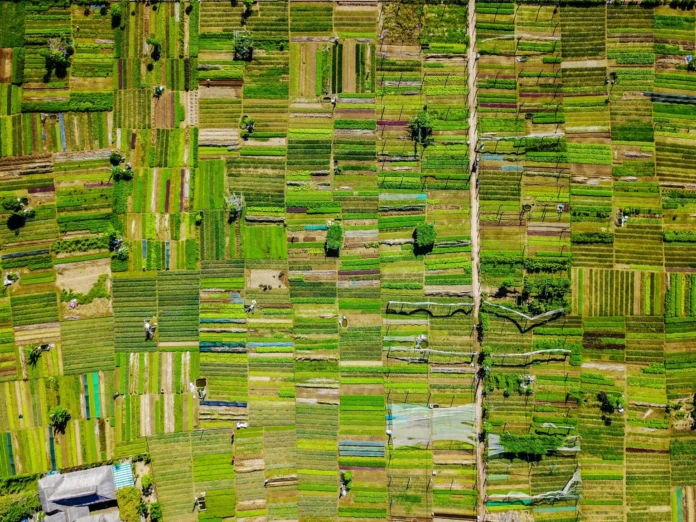
Parallel to these short-term stabilization efforts, broader national ambitions for agricultural self-reliance are beginning to take concrete shape. Recent government communications have highlighted ambitious targets for expanding domestic cultivation of strategic crops, including grain corn. Plans circulated in early 2025 outlined intentions to gradually increase planted areas, particularly in the southern regions benefiting from irrigation infrastructure, with a view toward reaching meaningful output levels by the end of the decade. Should these programs achieve their stated goals, including improved yields per hectare and wider adoption of suitable varieties, the annual import bill for corn could start declining noticeably from 2028 onward. Such a trajectory would free up significant foreign currency reserves, currently absorbed by massive grain purchases, and redirect those resources toward other development priorities.
Nevertheless, several challenges remain on the horizon. Climatic variability continues to limit the reliability of rain-fed agriculture in the north, while large-scale irrigated production in the Sahara requires very substantial upfront investment in water management, energy for pumping, and technical support for farmers. Global corn markets, influenced by weather patterns in major exporting countries, geopolitical tensions, and competing demand from Asia, will keep introducing an element of uncertainty. Against this background, the combination of immediate massive imports, strategic stockpiling, and gradual expansion of local output constitutes a pragmatic, multi-layered approach.
In the medium term, between 2026 and 2030, Algeria’s corn policy will most likely oscillate between these three pillars. Emergency import campaigns of the magnitude seen at the close of 2025 may become less frequent if the strategic reserve performs as intended and if early domestic harvests begin to cover a growing share of baseline needs. The poultry industry, meanwhile, can reasonably anticipate a progressively more secure supply environment, provided collective discipline among importers, distributors, and end-users helps prevent speculative hoarding during perceived tight periods.
Ultimately, the recent corn import decision transcends its role as a simple market correction. It illustrates the government’s evolving understanding that food security in a country with a still-growing population and limited arable land demands both reactive decisiveness and long-term structural transformation. By addressing today’s urgent requirements while laying the groundwork for tomorrow’s greater resilience, Algeria positions itself to navigate an era in which global agricultural commodities will remain exposed to multiple sources of instability, all the while striving to give its livestock producers and consumers the predictability they need to thrive.