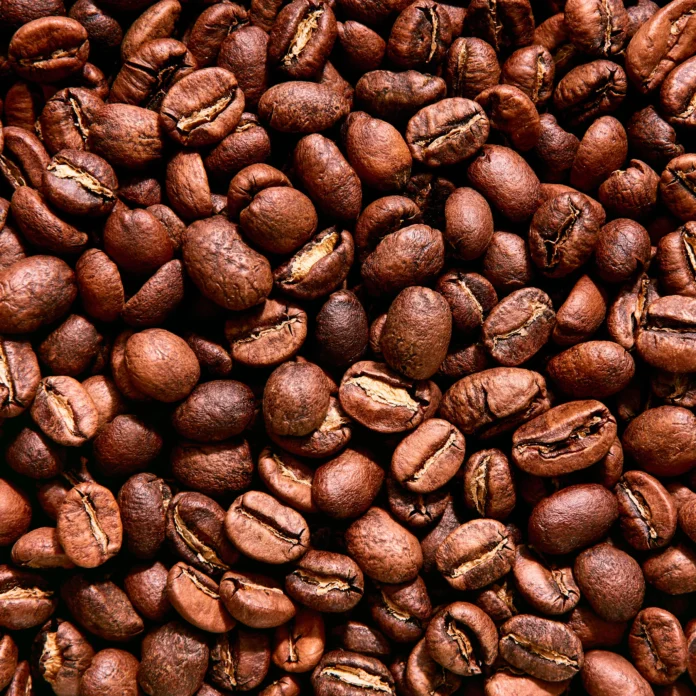
Arabfields, Sophia Daly, Financial Analyst specialized in Agriculture and Futures Markets — In the international coffee markets, prices experienced a significant decline on Tuesday, with Arabica futures reaching a three-week low and Robusta contracts dropping to an eight-month nearest-futures low. This sharp sell-off reflects growing optimism regarding global supply prospects, particularly driven by expectations of record harvests in major producing regions. As of early April 2026, Arabica coffee futures traded around 292 US cents per pound, while Robusta prices hovered near 3,897 USD per tonne, underscoring a broader downward trend that has intensified in recent weeks.
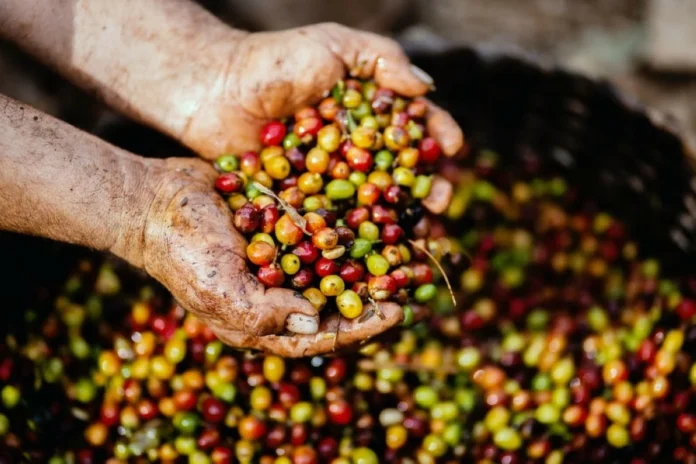
The primary catalyst for this price correction stems from improved forecasts for the 2026/27 coffee season. Brazil, the world’s leading producer, is projected to achieve a record output of approximately 75.3 million 60-kilogram bags, representing a substantial increase of about 20.8 percent compared to the previous cycle. This surge is attributed to favorable weather patterns, including adequate rainfall in key Arabica-growing areas such as Minas Gerais, as well as the natural biennial production cycle that favors higher yields in the current period. Within this total, Arabica production alone is anticipated to reach around 50 million bags, marking a notable recovery and expansion from earlier estimates. Robusta output from Brazil is also expected to contribute strongly, supporting overall supply growth.
Global coffee production for the 2026/27 season is now forecasted to reach a historic high of 182.5 million bags, according to updated analyses from industry experts. This figure represents an approximate 9.6 percent rise from the revised 2025 estimate of 166.5 million bags. Contributing to this expansion are strong performances in other major origins, including Vietnam, where production is projected to grow by nearly 10 percent in the coming year, potentially reaching a four-year high. Indonesia and Ethiopia are similarly expected to see incremental gains in Robusta and Arabica outputs, respectively, further bolstering worldwide availability. These developments mark a reversal from the supply deficits observed in prior seasons, which had cumulatively created shortages amounting to millions of bags and propelled prices to elevated levels throughout much of 2025.
On the demand side, global consumption is anticipated to recover modestly to about 172.5 million bags in 2026/27, reflecting a 2.5 percent increase from the previous year’s revised figure of 168.3 million bags. While this growth is positive, it remains below the peaks seen in earlier periods, partly due to lingering effects of elevated prices on consumer behavior in key importing markets. The resulting market balance points to a surplus of approximately 10 million bags, which is expected to facilitate the rebuilding of global stocks. Inventories, which had tightened significantly over the preceding four years with only a minor uptick in 2025, are projected to expand from around 38 million bags to more than 48 million bags by the end of 2026. Brazilian stocks alone could increase by over 5 million bags following the harvest, providing a critical buffer against future volatility.
This shift toward abundance has exerted considerable downward pressure on futures contracts. Analysts participating in recent surveys have projected that Arabica prices could close 2026 at an average of around 225 cents per pound, representing a decline of roughly 27 percent from late March 2026 levels and approximately 35 percent lower than the end of 2025. For Robusta, expectations point to a settlement near 2,500 USD per tonne by year-end, a reduction of about 30.5 percent from recent trading levels and 36 percent below the prior year’s close. Broader projections from institutions such as the World Bank suggest Arabica prices may ease by 13 percent in 2026, followed by an additional 5 percent decline in 2027, while Robusta is expected to moderate more gradually by around 2 percent annually over the same period.
Despite the current bearish sentiment, several factors introduce elements of uncertainty into the outlook. Weather remains a perennial risk, with any unforeseen droughts, excessive rains, or frosts in Brazil or Vietnam capable of altering production trajectories. Geopolitical developments, including disruptions in key shipping routes such as the Strait of Hormuz, have already influenced freight rates, insurance costs, and fuel expenses, potentially complicating the timely movement of coffee from origin to destination markets. Currency fluctuations, particularly movements in the Brazilian real and the US dollar, continue to affect export competitiveness and importer purchasing power. Additionally, inventory levels monitored by exchanges have shown mixed signals, with Arabica stocks rising to multi-month highs in some cases while Robusta inventories fluctuate.
Looking further ahead, the coffee market is poised for a period of relative stabilization, albeit with ongoing volatility. By 2027 and beyond, sustained production growth could support a more balanced supply-demand equilibrium, assuming consumption continues its gradual recovery amid expanding populations and rising preferences for premium and ready-to-drink coffee products in emerging economies across Asia and elsewhere. The global coffee market size, valued at approximately 185.69 billion USD in 2026, is projected to expand at a compound annual growth rate of around 5.18 percent through 2031, reaching nearly 239 billion USD. This expansion will likely be driven by innovations in sustainable farming practices, traceability initiatives, and consumer demand for specialty varieties, even as overall volume growth moderates.
In the near term, roasters and importers may benefit from the easing price environment, allowing for more predictable cost management and potential relief in retail beverage pricing. However, producers in origin countries face challenges, as lower futures values could compress margins unless offset by higher volumes or efficiency gains. Farmers in Brazil and Vietnam, having experienced the benefits of elevated prices in recent years, may adopt cautious selling strategies to navigate the transition. Industry participants are closely monitoring harvest progress, with Arabica collection in Brazil approaching peak periods and Robusta already in early stages in certain regions.
Overall, the recent plunge in coffee prices signals a welcome correction following periods of tightness and record highs. The transition toward abundant supplies in 2026 offers opportunities for market normalization, yet it also underscores the sector’s inherent sensitivity to agronomic, climatic, and macroeconomic variables. As the year progresses, continued attention to crop developments and global economic conditions will be essential for stakeholders across the value chain to adapt effectively and capitalize on emerging dynamics in this vital agricultural commodity.