Arabfields, Sophia Daly, Financial Analyst specialized in Agriculture and Futures Markets — The cocoa sector entered the third week of February 2026 amid pronounced price stabilization following an extended period of volatility that had characterized much of the preceding two years. Market participants gathered insights from ongoing developments across major producing and processing regions, with Africa maintaining its longstanding dominance in supply while Asia continued to expand its influence both in modest production gains and, more significantly, in downstream consumption and grinding activities. Current futures prices hovered near 3,180 US dollars per metric ton on major exchanges, reflecting a substantial retreat from the record highs exceeding 12,900 US dollars observed in late 2024, driven primarily by improved harvest prospects and accumulating inventories in key origin countries.
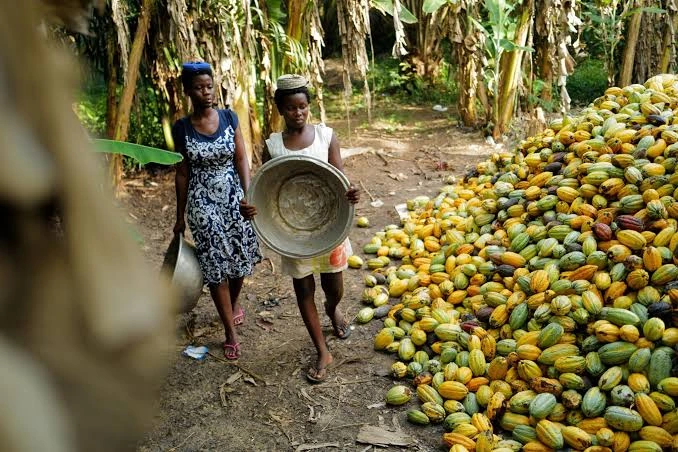
In West Africa, where the bulk of global cocoa originates, favorable climatic conditions during the latter part of 2025 had supported stronger pod development and harvest flows into the main crop season. Côte d’Ivoire, the world’s foremost producer, saw output recover modestly from approximately 1.6 million tonnes in the prior campaign toward levels approaching or slightly above 2 million tonnes under optimistic projections for 2026, though overall regional output remained constrained by structural factors such as aging tree stock, many exceeding 25 years in age, and lingering effects of disease pressures including the cocoa swollen shoot virus. Ghana, traditionally the second-largest supplier, experienced a sharper contraction in recent seasons, with harvests falling below 500,000 tonnes before anticipated rebounds to between 500,000 and 800,000 tonnes amid better rainfall patterns. These two nations together accounted for roughly 60 percent of worldwide production, underscoring the concentrated nature of supply that continued to expose the market to localized disruptions despite the current surplus signals. Nigeria and Cameroon contributed additional volumes, with Nigerian output projected to reach around 305,000 tonnes for the 2025/26 season after an 11 percent year-on-year decline, while Cameroon hovered near 290,000 tonnes. The cumulative effect across West Africa pointed to a regional total still approximately 10 percent below historical norms, yet sufficient to alleviate the acute shortages that had propelled prices upward in 2024 and early 2025.
Government interventions in these African economies reflected the urgency of aligning internal pricing mechanisms with softened international benchmarks. Ghana implemented a reduction of nearly 29 percent in the official farm-gate price for the remainder of the 2025/26 main crop, adjusting to approximately 51,660 cedis per tonne, a move coordinated in part with regional partners to manage liquidity strains among exporters and processors facing reluctance from international buyers unwilling to meet elevated local costs. Côte d’Ivoire, in parallel deliberations during mid-February, weighed a potential 35 percent adjustment for its mid-crop starting in April, aiming to sustain farmer incentives while preventing excessive stockpiling at ports where supplies had begun to accumulate. Such measures highlighted the delicate balance between supporting smallholder livelihoods, which underpin millions of rural households across the region, and adapting to a global environment of rebuilding inventories. International Cocoa Organization estimates indicated a 4.2 percent rise in ending stocks for the 2024/25 season, with visible inventories on ICE exchanges climbing toward 2.1 million bags by late February, equivalent to more than five months of cover and exerting sustained downward pressure on spot values.
Demand-side indicators further reinforced the corrective phase in pricing. Global grindings, a reliable proxy for processing activity and ultimate consumption, contracted noticeably in the final quarter of 2025. In Asia specifically, fourth-quarter grindings declined by 4.8 percent year-on-year to approximately 197,022 metric tons, mirroring cautious buying patterns among processors amid elevated costs carried over from earlier periods. Europe recorded an even steeper 8.3 percent drop to 304,470 metric tons, the lowest fourth-quarter figure in over a decade, while North American activity remained nearly flat with a marginal 0.3 percent increase. These reductions signaled demand destruction at the manufacturing level, as chocolate makers and confectioners reformulated recipes, explored alternatives, or deferred purchases in anticipation of continued supply normalization. Yet underlying consumption trends pointed to resilience, particularly in emerging markets where rising disposable incomes fueled interest in premium and dark chocolate varieties.
Asia’s role in the cocoa ecosystem, though secondary in raw bean production, gained prominence through its expanding processing capacity and burgeoning consumer base. Indonesia, the region’s primary origin country, maintained annual output around 200,000 tonnes following a decade-long stabilization after earlier peaks, with ongoing rehabilitation programs targeting higher-quality beans suitable for specialty markets. Yields benefited from shifts toward agroforestry systems that integrated cocoa with shade trees, mirroring successful models elsewhere and supporting incremental gains projected through 2026. Emerging contributors such as Vietnam and the Philippines added smaller but growing volumes, collectively representing a diversification trend that reduced overall dependence on African supplies for Asian grinders. Southeast Asian processors capitalized on proximity advantages, importing African beans in volume while blending with local origins to meet regional specifications. This dual dynamic, sourcing externally while nurturing domestic cultivation, positioned Asia as a vital bridge in the supply chain.
On the demand front within Asia, the picture brightened considerably. The Asia-Pacific chocolate and cocoa-derived products market advanced at a compound annual growth rate approaching 5 to 7 percent, outpacing mature regions, propelled by urbanization, expanding middle classes in China and India, and evolving preferences for indulgent yet health-oriented confections. Chocolate transitioned from an occasional treat to a more frequent purchase in urban centers across India, Indonesia, Vietnam, Thailand, and the Philippines, supported by modern retail expansion, e-commerce platforms, and seasonal gifting traditions. Per capita consumption remained low relative to Europe or North America, leaving substantial headroom for future expansion. Processors in Malaysia and Singapore, for instance, invested in new lines to handle increased throughput, while initiatives in Indonesia focused on value-added derivatives such as cocoa butter and powder for both domestic and export markets. Projections for the broader cocoa market indicated global valuation rising from roughly 14.5 billion US dollars in 2025 toward 19.6 billion by 2032 at an average annual growth of nearly 5 percent, with Asia-Pacific capturing a disproportionate share of incremental demand.
Analysts forecasting beyond the immediate 2025/26 campaign anticipated continued surpluses, estimated at 287,000 metric tons for the current season and 267,000 metric tons for 2026/27 according to leading commodity houses, assuming normal weather patterns and sustained farmer responses to prior high prices through replanting and improved agronomic practices. These surpluses were expected to exert further moderating influence on prices in the short term, with models suggesting averages settling between 3,000 and 3,600 US dollars per metric ton by the close of 2026 before gradual firming. Medium-term outlooks, however, retained a structurally elevated floor around 6,000 US dollars per metric ton, reflecting persistent risks from climate variability, the long lead times required for new plantings to reach maturity, and the challenges of rehabilitating aging orchards across West Africa. La Niña effects, potentially enhancing rainfall in key African belts, introduced upside uncertainty, while prolonged dry spells could swiftly reverse current abundance.
Sustainability imperatives increasingly shaped strategic decisions across both continents. In Africa, mandatory standards such as the African Regional Standard for Sustainable Cocoa enforced traceability, no-deforestation commitments, and social safeguards, aligning with international regulations that compelled buyers to verify origins post-2020. Côte d’Ivoire and Ghana advanced farm mapping and certification programs, achieving traceability for over 80 percent of output in pilot areas, while addressing child labor concerns through monitoring systems. Carbon-focused initiatives offered premium payments for low-emission cocoa, incentivizing agroforestry adoption that could simultaneously boost yields by 15 percent in demonstration plots and sequester carbon. Farmer organizations received training and financing to transition toward climate-resilient varieties, though access to affordable credit remained a bottleneck for the millions of smallholders operating on two- to five-hectare plots.
Asia pursued parallel pathways emphasizing quality differentiation and environmental stewardship. Indonesian rehabilitation schemes prioritized disease-resistant clones and intercropping, enhancing resilience against heat stress projected under rising regional temperatures. Philippine and Vietnamese projects integrated cocoa into diversified farming systems, appealing to buyers seeking traceable, premium origins. Across the continent, processors invested in energy-efficient facilities and waste-reduction technologies to lower the carbon footprint of grinding operations, positioning Asian cocoa derivatives as competitive in environmentally conscious global markets.
Economic ramifications extended deeply into national budgets and rural communities. In West Africa, cocoa export revenues constituted critical foreign exchange inflows, funding infrastructure and social programs while employing vast numbers in upstream and ancillary activities. Price moderation eased inflationary pressures on chocolate products worldwide but squeezed margins for origin governments that had relied on levies calibrated to higher benchmarks. Diversification efforts gained traction, with governments promoting value addition through local processing plants that transformed beans into liquor, butter, and powder, thereby capturing more of the value chain domestically. In Asia, the growth trajectory supported job creation in manufacturing hubs and stimulated related sectors such as packaging and logistics, reinforcing the region’s emergence as a counterweight to traditional supply concentrations.
Looking further ahead, the interplay between African supply stability and Asian demand acceleration promised a more balanced global architecture by the end of the decade. Should production in Latin America, particularly Ecuador’s projected expansion beyond 570,000 tonnes toward 650,000 by 2027, continue alongside incremental Asian gains, the market could achieve greater geographic resilience. Yet the fundamental vulnerabilities, centered on climate sensitivity and the slow pace of orchard renewal, suggested that periods of tightness would recur, maintaining prices well above the sub-3,000-dollar averages of earlier decades. Stakeholders monitoring developments through late February 2026 thus emphasized proactive risk management, including forward contracting, inventory optimization, and collaborative sustainability programs that bridged producers in Africa with processors and consumers in Asia.
Ultimately, the cocoa market of early 2026 illustrated both the fragility and adaptability of a commodity deeply embedded in global food culture. Africa’s enduring role as the primary engine of supply faced tests from environmental and economic headwinds, yet demonstrated capacity for recovery when conditions aligned. Asia, evolving from a peripheral participant to a dynamic force in consumption and specialized production, injected fresh momentum and diversification. Together, these regions would continue to define trajectories for pricing, availability, and ethical standards well into the foreseeable future, as the industry navigated the transition from crisis-driven volatility toward a more predictable, albeit elevated, equilibrium. The weeks surrounding 19 to 21 February 2026 served as a pivotal vantage point, revealing early contours of this evolving landscape and underscoring the need for sustained investment in resilience across the entire value chain.