Arabfields, Meriem Senouci, Correspondent, Hanoï, Vietnam — Vietnam’s fruit and vegetable industry has emerged as the fastest-growing segment of the country’s agricultural sector, reinforcing its role as a major contributor to export earnings and rural development.
The industry has recorded remarkable growth in recent years, supported by expanding access to international markets, rising demand for tropical produce and continued investments in agricultural modernization. In 2026, fruit and vegetable exports are expected to remain one of the strongest performers within the agricultural economy, with export revenues projected to stay above the $7 billion mark after reaching record levels in previous years.
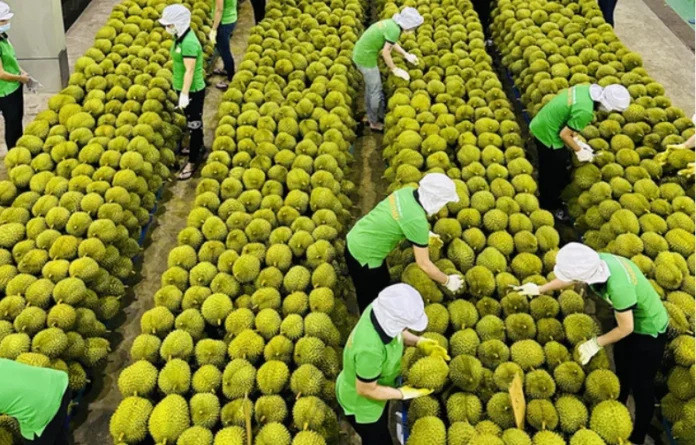
The sector’s rapid expansion has transformed farming communities across several provinces. Growers who once depended on traditional crops are increasingly shifting toward high-value fruits such as durian, dragon fruit, mango and passion fruit, attracted by stronger export demand and higher returns.
In the Mekong Delta, one of the country’s most important agricultural regions, farmers report growing confidence in the long-term prospects of fruit cultivation. Export opportunities have encouraged producers to adopt new farming techniques and comply with stricter international quality standards.
“We have seen more buyers coming directly to production areas,” said a durian grower in southern Vietnam. “The demand has encouraged many families to invest more in orchards and improve product quality.”
Industry officials say the sector has benefited from favorable trade conditions and stronger access to major Asian markets. Fresh fruit exports have become a key driver of agricultural growth, helping offset slower performance in some traditional commodity segments.
Statistics from 2026 indicate that fruits and vegetables now account for a growing share of Vietnam’s agricultural export portfolio. Durian remains one of the leading products, while shipments of mangoes, bananas and processed fruit products continue to gain momentum. The expansion of cold-chain infrastructure and logistics networks has further strengthened the industry’s competitiveness.
Economists believe the sector still has considerable room for growth. Rising consumer demand across Asia, increasing urbanization and a preference for fresh and healthy food products are expected to support export expansion over the coming years. If current trends continue, annual export revenues from fruits and vegetables could approach $10 billion before the end of the decade.
Challenges remain, particularly regarding quality control, market diversification and climate-related risks. Producers and exporters will need to adapt to stricter import regulations and changing weather conditions that can affect yields and supply chains.
Nevertheless, the outlook remains positive. Continued investments in technology, processing facilities and sustainable farming practices are expected to strengthen Vietnam’s position in global agricultural trade. For many rural communities, the growth of the fruit and vegetable sector is increasingly seen as a pathway to higher incomes and greater economic stability in the years ahead.