Arabfields, Lamia Cherifa, Special Economic Correspondent, Moscow, Russia — Russian authorities have set a new export quota limiting fertilizer shipments to 20 million tonnes between June 1 and November 30, a move designed to safeguard domestic agricultural needs at a time when international markets face mounting disruptions.
The decision, detailed in an official government statement, breaks down the quota into specific categories. It allows for more than 8.7 million tonnes of nitrogen fertilizers, over 4.2 million tonnes of ammonium nitrate, and more than 7 million tonnes of complex fertilizers. This quota follows an earlier restriction of 18.7 million tonnes that covered the period from December 2025 through May 2026. Exceptions remain in place for shipments to Abkhazia and South Ossetia, goods in international transit across Russian territory, and humanitarian assistance deliveries.
Officials explained that the measure seeks to maintain adequate supplies for local farmers, animal feed producers, and other domestic users, particularly during the critical spring planting season when external demand continues to rise. Russia, which accounts for a significant share of the global fertilizer trade, has repeatedly adjusted its export policies in recent years to balance internal priorities with international obligations.
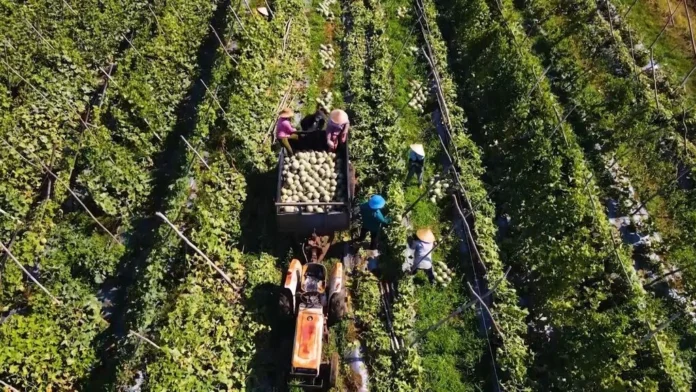
Farmers in regions such as the fertile Black Earth area have welcomed the assurance of stable access to essential inputs. One agronomist from a large cooperative near Voronezh noted that consistent fertilizer availability during peak periods directly supports yield stability and helps control production costs for thousands of households reliant on agriculture.
The latest quota arrives against a backdrop of heightened global challenges. Ongoing conflicts in the Middle East, including disruptions around the Strait of Hormuz, have already strained maritime trade routes responsible for roughly one-third of the world’s seaborne fertilizer movements. Urea prices have risen sharply since early 2026, with some reports indicating they have doubled compared to 2025 levels in certain markets. Exports from Gulf producers have fallen substantially, leaving vessels carrying fertilizers delayed or rerouted.
Analysts observe that these developments compound earlier restrictions imposed by other major players. China, the world’s leading fertilizer producer and consumer, extended its own urea export limits through August 2026 to prioritize domestic requirements. Such coordinated supply-side measures have contributed to tighter availability and upward pressure on prices worldwide.
Industry observers point to Russia’s strategic position as the second-largest fertilizer producer globally. In 2025, the country produced approximately 65 million tonnes of fertilizers and exported around 43 million tonnes, generating revenues exceeding 11 billion dollars. Projections for 2026 suggest total exports could reach at least 46 million tonnes if infrastructure and policy conditions allow, though current quotas and capacity constraints may moderate that figure.
Looking ahead, experts anticipate continued volatility in fertilizer markets through the remainder of 2026 and into 2027. The Food and Agriculture Organization has cautioned against further export barriers, warning that reduced access to inputs could lead to lower crop yields, elevated food commodity prices, and renewed inflationary pressures on global food systems. Some forecasts indicate that sustained supply tightness might push average fertilizer prices up by an additional 15 to 25 percent by year-end, depending on the resolution of geopolitical tensions and the pace of new production capacity coming online in alternative regions.
Russian producers, operating near full capacity in many facilities, face logistical and infrastructural limits that prevent rapid expansion of output. At the same time, the country’s export infrastructure, largely independent of affected maritime chokepoints, positions it as a relatively stable supplier for key partners in Asia, Latin America, and beyond. Market participants expect that any relaxation of quotas later in the year would depend on the domestic harvest outlook and evolving international demand.
As planting seasons progress in both the Northern and Southern Hemispheres, the interplay between national export policies and global supply dynamics will likely remain a central concern for agricultural stakeholders. Farmers, traders, and policymakers alike are monitoring developments closely, seeking pathways to mitigate risks to food production and affordability in the months ahead.