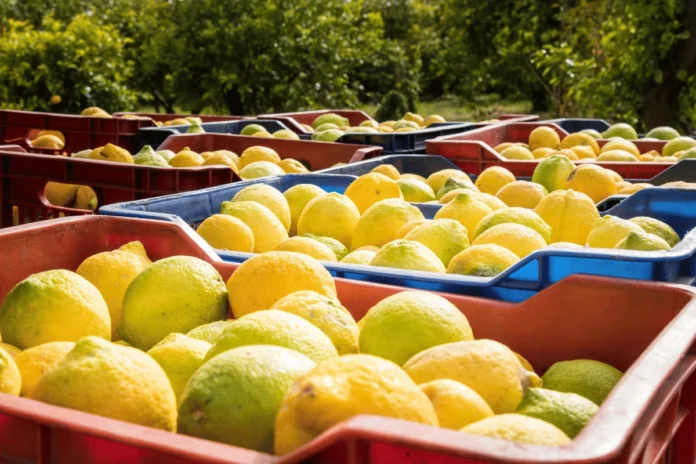
Arabfields, Sana Dib, Financial Correspondent, Johannesburg, South Africa — In 2026, the South African fruit export sector continues to confront substantial disruptions arising from the persistent instability in the Middle East, a situation that has compelled industry participants to reassess their operational strategies amid heightened logistical and economic pressures. As the marketing seasons for stonefruit and table grapes in the region approach their conclusion in the coming weeks, shipments of apples and pears have only recently commenced, while the first consignments of lemons have already departed South African ports en route to their destinations. Exporters report that the core difficulty lies in the accumulation of containers stranded within the Gulf, a predicament for which no immediate resolution appears available, thereby exacerbating delays and financial strains across the supply chain.
The challenge extends beyond mere logistics, as the fruit varieties destined for Middle Eastern markets have been cultivated and packed according to highly particular specifications, sizes, and cultivars that align precisely with regional consumer preferences. This tailored approach means that redirection of such produce to alternative destinations proves far from straightforward, often resulting in diminished profitability or outright unsuitability for other consumer bases where demand favors different attributes. Industry voices emphasize that one exporter has highlighted the specificity of these requirements, noting that the fruit in question cannot be marketed effectively elsewhere without incurring significant losses, a reality that underscores the intricate market dependencies built over years of targeted cultivation and trade relationships.
Efforts among exporters in 2026 have thus prioritized the recovery of these stranded containers to mitigate further erosion of value, with subsequent phases of the season hinging on adaptive measures once this initial cleanup concludes. Parallel to these developments, a marked escalation in shipping expenses has emerged as a direct consequence of the regional tensions. Carriers willing to maintain routes to affected Middle Eastern ports have imposed surcharges that have risen by more than 300 percent in certain instances, transforming what were once manageable freight costs into prohibitive burdens that ripple through the entire export ecosystem. For the 2026 season, preliminary industry data indicate that overall shipping expenditures for South African fruit to the Middle East have surged to an estimated 450 million South African rand, representing a 280 percent increase from the comparable period in the prior year and placing acute pressure on already thin margins.
Compounding these transport-related hurdles, South African growers face pronounced elevations in domestic production costs, driven primarily by upward trajectories in fuel prices and fertilizer expenses linked to the broader geopolitical fallout. Reports originating from key production zones in the Cape region reveal instances of panic purchasing fueled by apprehensions over potential shortages in national fuel reserves, a development that has accelerated cost inflation and disrupted routine supply planning. In the context of the 2026 harvest, aggregate production outlays for major fruit categories are projected to climb by approximately 35 percent year on year, with fuel components alone accounting for an additional 120 million rand in expenditures across stonefruit, pome fruit, and citrus operations, according to aggregated estimates from grower associations.
Particular attention has centered on the apple and pear segment, where shipments to the Middle East predominantly involve smaller fruit counts that cater to specific packaging and presentation standards in those markets. With packing activities for this category now expected to decelerate as stakeholders deliberate on viable reallocations, the 2026 outlook suggests a contraction in dispatched volumes by up to 22 percent relative to initial forecasts, potentially leaving substantial portions of the crop vulnerable to domestic oversupply or discounted sales in secondary channels. Growers articulate the overall scenario as profoundly grave from both a production and commercial standpoint, given that their business models rely fundamentally on the profitable disposal of entire harvests rather than selective portions, and the cultivation of longstanding customer networks in the Middle East now stands at risk of substantial erosion amid these uncertainties.
The table grape sector, represented through its industry body, has maintained a measured silence regarding the cascading effects of the conflict and the attendant cost escalations, choosing instead to monitor developments without issuing formal updates at this juncture. In contrast, representatives from the broader horticultural organization have characterized the environment as one of considerable disorder, with exporters engaged in frantic coordination to manage in-transit inventories and reroute where feasible. This chaotic dynamic has permeated the 2026 campaign, manifesting in delayed vessel departures and revised scheduling that collectively threaten to curtail total export revenues from the Middle East by an estimated 18 percent, or roughly 650 million South African rand, when compared against the benchmark figures established earlier in the decade.
Looking forward, projections grounded in the prevailing 2026 data point toward a sustained period of adjustment extending into late 2026 and the subsequent 2027 season. Should the Middle Eastern disruptions persist without abatement, analysts anticipate a further 15 to 25 percent reduction in aggregate fruit export volumes to the region by the close of the current calendar year, driven by the cumulative impact of elevated surcharges and production cost inflations that together erode competitive positioning. In response, industry stakeholders are expected to accelerate diversification initiatives, channeling redirected produce toward established European and Asian markets, albeit with the necessity of recalibrating packaging and quality parameters to align with those destinations, an endeavor projected to require an investment of approximately 200 million South African rand in infrastructure upgrades over the next 18 months.
By mid-2027, optimistic scenarios envisage a partial stabilization if geopolitical conditions improve, potentially enabling a rebound in Middle Eastern shipments to 80 percent of 2025 levels through resumed container traffic and moderated surcharges. Conversely, prolonged instability could precipitate a structural shift, with South African exporters reallocating up to 40 percent of their pome and stonefruit capacities toward alternative high-value corridors, thereby fostering resilience but at the expense of specialized cultivars historically optimized for Gulf preferences. Fuel and fertilizer cost trajectories remain a pivotal variable in these forecasts, with 2026 observations suggesting that a 20 percent sustained elevation in input prices could translate to an additional 15 percent contraction in net grower incomes unless offset by targeted governmental interventions or efficiency gains in irrigation and nutrient management practices.
Throughout these transitions, the emphasis on preserving the integrity of supply chains has become paramount, as the 2026 experience illustrates the fragility of reliance on singular regional outlets for tailored produce. Exporters anticipate incremental improvements in container availability toward the fourth quarter, yet the imperative to safeguard profitability across full crop cycles will necessitate innovative approaches, such as collaborative risk-sharing mechanisms among producers and enhanced predictive analytics for market volatility. In this evolving landscape, the South African fruit industry demonstrates a capacity for adaptation, informed by the quantitative benchmarks of the current year, which underscore both the immediate fiscal pressures and the longer-term opportunities for market reconfiguration.
As the season progresses, ongoing monitoring of shipping metrics reveals that surcharges, having peaked at over 300 percent earlier in 2026, may moderate to a 150 percent premium by year-end under scenarios of de-escalation, thereby alleviating some burden on lemon and pome fruit shipments still in pipeline. Production-area insights further highlight the role of localized fuel stockpiling in averting acute shortages, a strategy that has preserved operational continuity for many growers but at the cost of elevated working capital requirements estimated at 85 million South African rand sector-wide. These elements collectively inform forward-looking models that project a 2027 export value recovery to 2.1 billion South African rand for Middle Eastern destinations, contingent upon successful navigation of the specification mismatches that currently hinder seamless redirection.
Ultimately, the 2026 juncture serves as a critical inflection point for the South African fruit trade, where data on cost surges, volume adjustments, and market specificity converge to shape strategic imperatives for the ensuing years. Through methodical evaluation of these indicators, participants can chart pathways toward sustained viability, balancing the preservation of established relationships with proactive exploration of diversified avenues that promise to fortify the sector against future external shocks. This comprehensive recalibration, rooted in the empirical realities of the present campaign, positions the industry to emerge with enhanced robustness by the conclusion of the decade.