HANOI, Vietnam – In a bold vision for the future, Vietnamese leaders and international experts have declared that the country has the potential to emerge as a leading example of ecological agriculture, not just in Southeast Asia but worldwide. This ambitious goal aligns with Vietnam’s commitments to achieve net-zero emissions by 2050, fulfill the Paris Agreement, and support the Global Biodiversity Framework (GBF), while ensuring food security and environmental sustainability.
At the heart of this push is Ta Dinh Thi, vice-chairman of the National Assembly’s Committee on Science, Technology, and Environment, who emphasized during a recent conference that ecological agriculture represents an “inevitable path” for Vietnam amid global crises in climate, biodiversity, and food security. “I firmly believe that Vietnam can absolutely become a model of ecological agriculture in the region and the world,” Thi stated, highlighting the dual benefits of economic growth and environmental protection.
The conference, titled “Promoting Ecological Agriculture and Transforming Food Systems to Respond to Climate Change, Enhance Biodiversity, and Improve Livelihoods,” took place on the afternoon of October 6, 2025, in Hanoi. Organized amid growing concerns over the impacts of climate change on Vietnam’s vast agricultural sector – which employs millions and contributes significantly to the national economy – the event brought together policymakers, scientists, farmers’ representatives, and international organizations to chart a course toward greener farming practices.
Nguyen Do Anh Tuan, director of the Department of International Cooperation at the Ministry of Agriculture and Rural Development, traced the evolution of ecological agriculture in Vietnam from initial awareness to widespread implementation. “This has been a long journey from recognition to action,” Tuan noted. He pointed to early pilot models in key regions such as the Red River Delta, the Mekong Delta, the Central Highlands, and Son La province, which have since expanded into national programs, projects, and policies.
“Today, ecological agriculture is institutionalized and has become a strategic orientation for the development of agriculture and rural areas in Vietnam,” Tuan added. These efforts have included integrating sustainable practices into everyday farming, reducing reliance on chemical inputs, and promoting biodiversity-friendly methods that enhance soil health and water conservation.
In his keynote address, Ta Dinh Thi underscored the urgency of this transition in the face of interconnected global challenges. Ecological agriculture is not merely a new farming method; it is an inevitable direction for national development,” he said. Thi argued that shifting to these practices is no longer optional but essential for building a self-reliant economy, prosperous rural communities, and a sustainable living environment for future generations.
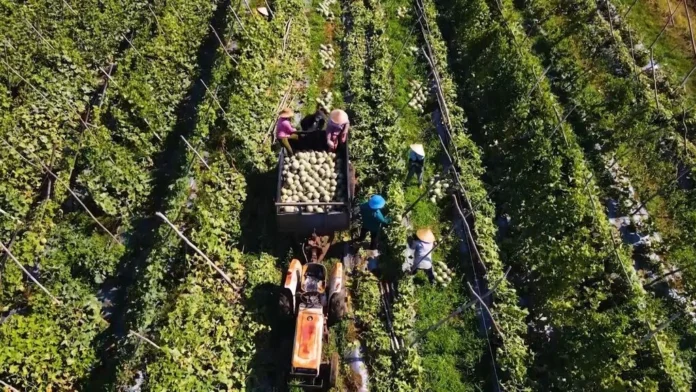
Real-world examples from across Vietnam illustrate the promise of this approach. Models such as rice-fish farming, rice-lotus-fish integration, clean straw mushroom cultivation, and agroforestry systems have demonstrated tangible benefits. In the Southeast region, new-style cooperatives are leading the way, showing how ecological methods can boost farmers’ incomes, mitigate production risks, and slash emissions by up to 70% compared to conventional agriculture.
“These initiatives prove the ‘double win’ between economy and ecology, livelihoods and conservation,” Thi explained. By prioritizing natural processes over synthetic fertilizers and pesticides, these systems not only yield higher-quality produce but also restore ecosystems, such as wetlands and forests, which are critical for biodiversity.
Central to this transformation, according to Thi, are the farmers themselves. “Any policy, whether national or local, only holds meaning if farmers are motivated and empowered to participate,” he emphasized. To achieve this, Thi called for stable market policies, green finance support, digital skills training, and direct linkages between farmers and businesses. These measures, he argued, are key to keeping rural communities engaged in the ecological shift.
International partners echoed Vietnam’s optimism and pledged continued support. Vinod Ahuja, the Food and Agriculture Organization (FAO) Representative in Vietnam, described the conference as a “milestone” in building sustainable and resilient food systems. “By fostering stronger public-private partnerships and mobilizing resources, we can build on Vietnam’s achievements and ensure the agricultural sector is fully equipped to address climate change impacts, for a better future for its people,” Ahuja said.
Thibault Ledecq, conservation director at WWF-Vietnam, reinforced the idea that food production can go hand-in-hand with conservation efforts. “Food production doesn’t just meet human needs; it can powerfully advance conservation work,” Ledecq stated. He advocated for sustainable land-use planning, nature-compatible farming models, and close collaboration across supply chains to develop durable markets and expand green finance.
“This will create a positive cycle where prosperity is tied to ecosystem restoration, leading to a future where people and nature thrive in harmony,” Ledecq added. WWF-Vietnam’s involvement highlights the global stakes, as Vietnam’s Mekong Delta – one of the world’s most productive agricultural areas – faces threats from rising sea levels, salinity intrusion, and habitat loss.
Adding a broader perspective, National Assembly Deputy Chairman Tran Thanh Man – wait, correction: Le Minh Hoan, who serves as a vice-chairman of the National Assembly – framed ecological agriculture as more than a technical endeavor. “It’s about listening to and respecting nature,” Hoan said. This is Vietnam’s long-term vision to meet global climate commitments, aiming for net-zero emissions by 2050, and planting the seeds for future generations.
Building on this foundation, Ta Dinh Thi outlined three major strategic directions to propel Vietnam forward.
First, enhancing the legal framework to create a cohesive policy environment for ecological agriculture. This includes revising laws on land, resources, environment, science, technology, innovation, and green credit to promote landscape approaches, circular economies, and efficient natural resource use. “Institutionalizing ecological agriculture strategies ensures no overlaps, no formalities, and measurable results,” Thi stressed.
Second, advancing science, technology, and innovation as the backbone of transformation. Thi highlighted the role of digital tools, carbon measurement technologies, sustainable water and land management, and ecological traceability. “We must prioritize investments in research and the transfer of green technologies and applied biotechnologies,” he said. This, Thi believes, will position Vietnam not just as a follower but as a creator of tropical ecological farming models.
Third, fostering multilateral cooperation and mobilizing societal resources. Ecological agriculture demands collective action from the state, private sector, financial institutions, and international community. Thi welcomed the contributions of organizations like WWF and FAO, which have helped shape regional initiatives and lay the groundwork for a “green agricultural economy.”
On this basis, Vietnam aims to encourage localities, businesses, and farmers to collaborate in a spirit of “co-creation and mutual benefit,” turning every field and cooperative into an “ecological core” within sustainable value chains.
Beyond these strategies, Thi portrayed ecological agriculture as a cultural shift, where humans, nature, and the economy coexist harmoniously. “When we talk about sustainable development, ecological agriculture converges three values: climate, biodiversity, and livelihoods,” he said. This path requires long-term thinking, flexible institutions, and tight coordination across levels, sectors, and communities.
Thi assured that the National Assembly would continue to support and monitor policy implementation, ensuring that commitments to “green, inclusive, and equitable development” translate from boardrooms to fields. “I believe Vietnam can absolutely become a model of ecological agriculture in the region and the world,” he reiterated, closing on a note of confidence.
As Vietnam navigates these challenges, the conference signals a pivotal moment. With its rich biodiversity, innovative spirit, and strategic location, the country is well-positioned to lead by example. Success here could inspire similar transitions elsewhere, proving that ecological agriculture is not just viable but vital for a resilient planet.