Arabfields, Sana Dib, Financial Correspondent Johannesburg, South Africa — In a clear signal that the Democratic Republic of Congo’s agricultural export engine refuses to stall, official trade data and port manifests for 25-26 November 2025 confirm significant outbound shipments of three strategic commodities: high-grade Arabica and Robusta coffee from the Kivu provinces to the United States, premium cocoa beans to Europe and Asia, and growing volumes of crude palm oil from the country’s equatorial plantations.
Between late Monday and Tuesday, at least 480 tonnes (approximately 8,000 bags of 60 kg) of washed Arabica and natural Robusta from North and South Kivu cleared the port of Matadi after transiting the difficult Goma–Bukavu–Uvira–Kalemie–Kindu lake-and-river route, then rail to the capital. The coffee is destined for specialty roasters and major importers in Seattle, Charleston, and New Orleans.
Despite the M23 rebellion controlling key roads around Goma and repeated attacks on supply convoys, cooperatives in the high-altitude regions of Walikale, Kalehe, and Idjwi managed to deliver parchment and green bean to lakeside collection points. Buyers report that the 2025 crop shows the distinctive floral and citrus notes that have earned Kivu coffee protected geographical indication talks with the African Regional Intellectual Property Organization (ARIPO).
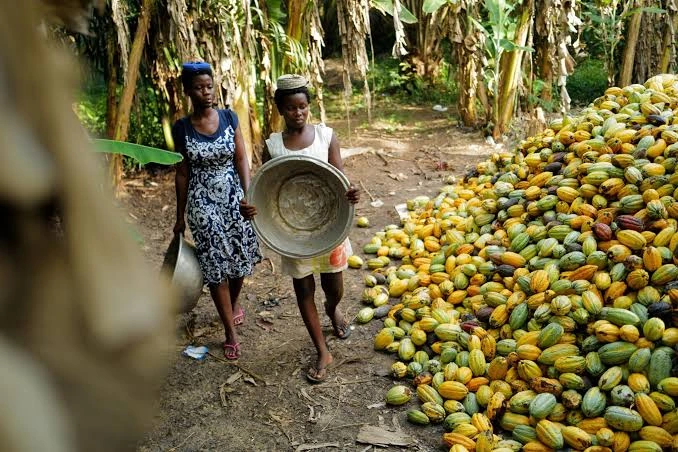
Simultaneously, the Atlantic port of Matadi and the smaller river port of Boma handled 1,120 tonnes of fermented and dried cocoa beans originating from the provinces of Mongala, Tshopo, and Ituri. European (mainly Antwerp and Amsterdam) and Asian (Ho Chi Minh City and Port Klang) buyers took the bulk of the volume. Industry sources indicate forward contracts for 2026 are already 40 % sold, reflecting strong confidence in Congolese fine-flavor cocoa that routinely scores above 85 points in international tastings.
Less visible but strategically vital, the DRC has consolidated its position as Africa’s fifth-largest palm oil producer (behind Nigeria, Côte d’Ivoire, Ghana, and Cameroon). On 25-26 November, three tankers left the port of Banana carrying a combined 9,500 tonnes of crude palm oil (CPO) produced by industrial plantations in Équateur, Tshopo, and the new agro-industrial park of Lokutu-Yalikandja operated by a Belgian-Congolese joint venture.
Production reached an estimated 325,000 tonnes in 2025, up 12 % year-on-year, thanks to rehabilitation of old Feronia/PHDC plantations and new smallholder outgrower schemes supported by the World Bank’s PRODER program. The country now exports roughly 55 % of its CPO, mainly to India, Pakistan, and increasingly to European refineries looking for RSPO-certified volumes.
These export successes are achieved in the face of monumental logistical hurdles. The eastern route for Kivu coffee relies on ageing push-boats on Lake Kivu, poorly maintained RN2 and RN3 roads, and a railway between Kinshasa and Matadi that still runs at less than 30 % of its original capacity. River transport on the Congo River itself remains hostage to chronic dredging delays and unofficial “taxes” at dozens of checkpoints.
Yet private operators and cooperatives have adapted: armed escorts for high-value coffee convoys, pre-financed fuel depots, satellite tracking of barges, and even the occasional use of small aircraft to fly green bean from Beni directly to Entebbe before onward shipment via Mombasa when ground routes are cut.
Ministry of Agriculture officials speaking off-record say the country is on track to export approximately 28,000–30,000 tonnes of coffee, 18,000–20,000 tonnes of cocoa, and over 180,000 tonnes of palm oil by the end of 2025 – modest figures globally, but representing hard currency desperately needed to offset falling mineral prices.
While armed conflict continues to dominate international headlines about the DRC, these 25-26 November shipments are a reminder that, beneath the chaos, agricultural value chains are quietly rebuilding. For American baristas enjoying a bright Kivu single-origin pour-over, for European chocolatiers crafting 70 % dark bars, and for Asian food manufacturers filling supermarket shelves with cooking oil, eastern Congo’s fields and plantations remain stubbornly, defiantly productive.