Arabfields, Mira Sabah, Special Economic Correspondent, Nairobi, Kenya — In the volatile world of commodity trading, few markets capture the blend of agricultural unpredictability and global economic pressures quite like cocoa. As the sun-drenched plantations of West Africa gear up for what promises to be a bumper main crop harvest, the once-soaring prices of cocoa beans are taking a sharp nosedive. Last week, both the New York and London cocoa futures markets closed lower, reflecting a confluence of factors: an optimistic production outlook from the region’s dominant growers, persistent weakness in demand, and lingering quality concerns that are casting shadows over trader sentiment. This downturn isn’t just a blip, it’s a stark reminder of how supply gluts can swiftly eclipse demand woes in the chocolate-making staple’s ecosystem.
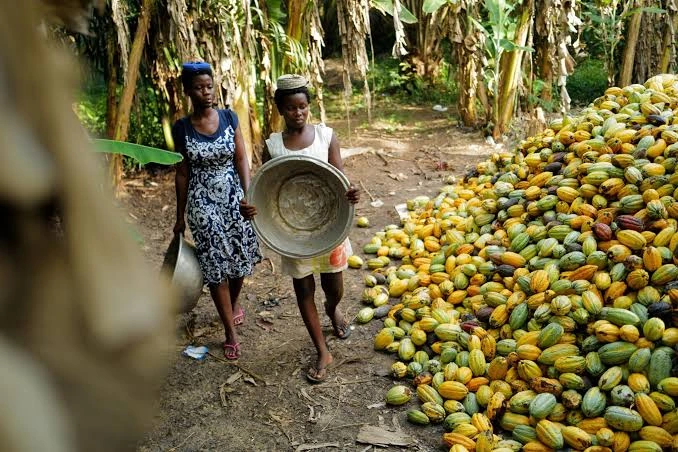
Cocoa, the golden pod behind everything from everyday candy bars to luxury confections, has long been a barometer for West African economies. Ivory Coast and Ghana, which together account for over 60% of global cocoa production, are at the epicenter of this story. Recent weather patterns, light rains interspersed with pockets of heat in Ivory Coast’s key growing regions, have painted a rosy picture for the upcoming main crop season. These conditions are ideal for pod development, fostering expectations of a substantial yield that could flood markets with supply. But abundance, in this case, is proving to be a double-edged sword, driving prices downward as buyers anticipate cheaper beans ahead.
West Africa’s cocoa belt is buzzing with anticipation. In Ivory Coast, the world’s largest producer, the main crop, typically harvested between October and March, is shaping up to be particularly robust. Agronomists and local farmers report that the recent mix of precipitation and warmth has bolstered tree health and pollination rates, potentially pushing output well beyond last season’s figures. This isn’t isolated to Ivory Coast; Ghana, its close neighbor and fellow cocoa powerhouse, is echoing similar positive vibes, with early indicators suggesting a harvest that could stabilize or even exceed projections.
Beyond West Africa, the supply narrative grows even stronger. Reports from Asia, particularly Indonesia, the third-largest producer, and Central American nations like Ecuador are highlighting increased production potential. Favorable monsoon remnants in Southeast Asia have nourished cocoa farms, while volcanic soils in Ecuador continue to yield high-quality beans amid expanding acreage. These peripheral boosts compound the West African optimism, creating a global supply surplus that traders are pricing in aggressively. According to market analysts, this could lead to a year-over-year production increase of up to 10-15% in non-West African regions alone, further pressuring the delicate balance of the cocoa ledger.
Yet, this bounty comes with caveats. Whispers in trading circles point to structural challenges that could temper the windfall. In both Ivory Coast and Ghana, there’s growing talk of potential marketing halts. Low prices, hovering near multi-year lows, have frustrated regulators and cooperatives, who fear that unchecked exports could undermine farmer incomes and long-term sustainability efforts. If these halts materialize, they might create short-term bottlenecks, but for now, they’re adding to the bearish mood, as speculators bet on delayed but inevitable oversupply.
If supply is the bull in the cocoa shop, demand is the timid mouse scurrying for cover. The market’s malaise is deeply rooted in softening consumption signals, particularly from the processing heartlands. In Ivory Coast, the cocoa grind, a critical barometer of demand, plummeted by a staggering 25.4% year-on-year at the onset of the 2025/26 season. Clocking in at just 44,075 metric tons in October, this figure underscores a broader hesitancy among grinders to commit amid uncertain price trajectories. Processors, who convert raw beans into cocoa liquor, butter, and powder, are reportedly holding back, wary of locking in costs that could render their end products uncompetitive in a price-sensitive retail environment.
This demand weakness isn’t confined to Africa. Europe and North America, the voracious consumers of processed cocoa, are grappling with inflationary headwinds and shifting consumer preferences. Chocolate manufacturers face rising energy and labor costs, squeezing margins and prompting inventory drawdowns rather than aggressive buying. Meanwhile, health-conscious trends, think plant-based alternatives and reduced sugar intakes, are nibbling at traditional chocolate sales. Add in economic slowdowns in major markets like the Eurozone, where disposable incomes are stretched thin, and it’s no wonder that the cocoa pipeline feels more like a trickle than a torrent.
On a brighter note for arrivals, Ivory Coast’s ports are seeing a pickup in bean inflows. Between November 10 and 16, approximately 105,000 tons of cocoa were delivered, marking an improvement over the 94,000 tons from the same period last season. This uptick suggests that the early-season sluggishness was more logistical than fundamental, with farmers now mobilizing to capitalize on whatever premiums are available. However, volume alone doesn’t tell the full story, quality remains a thorn in the side of this recovery.
Amid the harvest hype, a darker undercurrent is bubbling up: concerns over bean quality. Traders in Abidjan and Accra are voicing alarms about subpar cocoa arriving at ports, plagued by issues like mold, improper fermentation, and pest damage. These defects not only diminish the beans’ market value but also complicate processing, as contaminated lots can lead to off-flavors in finished products. In Ivory Coast, where smallholder farmers dominate (over 90% of production), quality control is notoriously fragmented. Limited access to drying facilities and training exacerbates the problem, especially during humid spells that accelerate spoilage.
The ripple effects are felt far beyond the farm gate. International buyers, including giants like Barry Callebaut and Cargill, are imposing stricter inspections, which could result in rejected shipments and discounted sales. This quality drag is fueling speculation that Ivory Coast and Ghana might enforce marketing pauses to weed out inferior stock, a move that could paradoxically stabilize prices in the short term by curbing supply. Yet, for farmers already squeezed by low prices, often below the living income differential thresholds set by global sustainability initiatives, this adds insult to injury, threatening livelihoods in communities where cocoa is the economic lifeline.
A glance at the weekly charts tells a tale of unrelenting pressure. New York cocoa futures, which track the ICE contract, have shed significant ground over the past sessions, with December 2025 lots dipping below key support levels around $7,000 per ton. London futures on the ICE platform mirror this slide, as arbitrageurs unwind positions in tandem with the transatlantic convergence. Technical indicators point to oversold conditions, hinting at possible rebounds if demand flickers back to life, but fundamental drivers suggest more pain ahead unless external shocks, like adverse weather, intervene.
For speculators and hedgers, this environment demands agility. The contango structure in the forward curve, where later months trade at premiums, reflects expectations of persistent surplus, discouraging storage plays. Volatility remains elevated, with implied options pricing baking in swings of 5-10% weekly, a far cry from the frenzy of 2024’s supply shortages that sent prices to records above $10,000.
Broader Implications: From Farm to Factory Floor
The cocoa market’s current contretemps extend tentacles into the global supply chain. Chocolate makers, from artisanal chocolatiers to multinational behemoths like Mars and Hershey, are recalibrating strategies. Some are diversifying into alternative cocoas or synthetics, while others lobby for subsidies to cushion the blow. For West African governments, the paradox of plenty poses policy headaches: boosting exports to capture foreign exchange while safeguarding farmer welfare through price floors or direct payments.
Sustainability looms large too. Initiatives like the Cocoa & Forests Initiative, backed by the World Cocoa Foundation, aim to marry productivity with environmental stewardship, but low prices erode incentives for agroforestry or certification programs. Climate change adds another layer, with erratic rains threatening future yields despite this season’s reprieve.
Looking Ahead: Storm Clouds or Silver Linings?
As the 2025/26 season unfolds, the cocoa market stands at a crossroads. A robust West African crop, buoyed by favorable weather, promises to keep supply ample and prices subdued, at least through the first half of the year. Yet, demand’s fragility, exemplified by the Ivory Coast grind’s nosedive, and quality hiccups could prolong the slump, testing the resilience of producers and processors alike.
For investors eyeing this space, opportunities lurk in the volatility: long positions in out-of-the-money calls for weather wildcards, or shorts on grind-dependent processors. For the everyday stakeholder, from the Ivorian farmer bundling pods at dawn to the consumer eyeing holiday treats, the message is clear: in cocoa’s capricious realm, today’s glut could be tomorrow’s goldmine.
This analysis draws on recent market dispatches, underscoring the interplay of meteorology, economics, and human endeavor in shaping one of agriculture’s most flavorful futures.