Arabfields, Jamel derbal, Senior Correspondent, Innovation & Sustainability, Singapore — Sri Lankan agricultural officials and farming experts are looking to strengthen rice production by drawing on lessons from Chinese agricultural practices, as concerns over food security and farm productivity remain high.
The focus was highlighted at a China-aid training alumni workshop in Sri Lanka, where former participants in Chinese agricultural training programmes gathered to share practical experience on improving rice yields. The meeting brought together officials, researchers and agricultural practitioners who have seen first-hand how technology, better farm management and targeted support can influence rural production.
For Sanjeewa Wimalagunarathna, president of the China Aid Training Alumni Association in Sri Lanka, the value of such exchanges goes beyond technical knowledge. He has previously spoken about the importance of China’s experience in using technology and rural development policies to improve living standards.
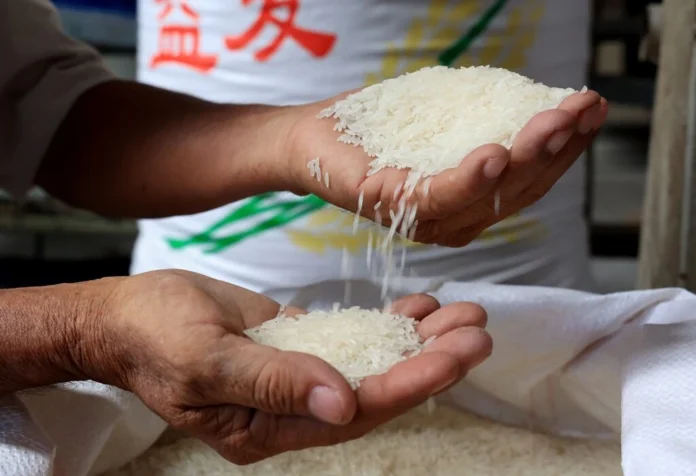
Sri Lanka’s interest comes as the country continues to strengthen its agricultural sector after several years of economic pressure. Rice remains central to household consumption and rural livelihoods, making productivity gains particularly important for keeping supplies stable and limiting pressure on food prices.
The workshop placed particular attention on practical approaches that farmers can adapt to local conditions. Discussions around improved cultivation methods, agricultural technology and knowledge sharing are expected to help bridge the gap between research and what happens in farmers’ fields.
China’s experience has attracted attention partly because of the scale of its agricultural transformation. Its rural development model has combined technology, improved infrastructure, farmer training and more targeted agricultural policies. For Sri Lankan officials and specialists, the objective is not to reproduce that model exactly, but to identify methods that can work within the country’s own farming system.
The timing is significant. Sri Lanka’s economy has been recovering from its severe financial crisis, but households remain sensitive to food prices and income pressures. Greater domestic agricultural productivity could reduce some dependence on imports while providing more predictable earnings for farming communities.
The human dimension is particularly important in rice-growing areas, where farmers often operate on relatively small holdings and have limited room to absorb higher costs. A better harvest can mean more food for a family, stronger income and greater resilience when prices for fertiliser, fuel or transport rise.
The cooperation also reflects a broader relationship between China and Sri Lanka. Bilateral trade reached $6.16 billion in 2025, an increase of 15 percent from the previous year, while cooperation has expanded across infrastructure, education, technology, healthcare and agriculture.
Looking ahead, the impact of agricultural training is likely to depend on whether the knowledge exchanged during programmes reaches farmers on the ground. If trained officials and specialists can transfer new techniques through extension services and demonstration projects, productivity improvements could become more visible over the next several growing seasons.
Technology is likely to play a growing role. Better access to information, improved crop management, more efficient use of inputs and stronger monitoring of yields could help farmers make decisions based on conditions in their fields rather than relying solely on traditional practices.
There is also potential for cooperation to become more focused on specific production challenges. Instead of broad training alone, future programmes could increasingly concentrate on water management, mechanisation, climate resilience, seed quality and reducing post-harvest losses.
For Sri Lanka, those improvements could have effects beyond the farm. Higher yields would strengthen food availability, improve farmers’ incomes and potentially reduce pressure on consumers. For China, continued agricultural cooperation would reinforce a long-running development partnership with an important South Asian neighbour.
The results will not appear overnight. Farmers need time to test new methods, adapt them to local conditions and determine whether the additional investment produces higher returns. But if the current exchange of expertise develops into sustained field-level cooperation, Sri Lanka could gradually turn lessons learned through China-aid training into measurable gains in rice productivity.
For farmers facing the daily uncertainty of weather, costs and market prices, the ultimate measure of the partnership will be simple, a healthier crop, a more reliable harvest and a better return at the end of the season.