Arabfields, Sophia Daly, Financial Analyst specialized in Agriculture and Futures Markets — The global banana export market is facing renewed volatility in 2026 as shipping disruptions, rising freight costs and changing demand patterns put pressure on producers, exporters and consumers.
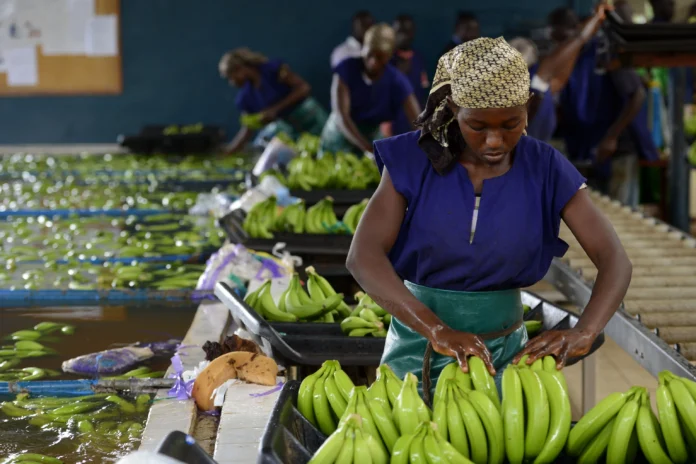
For banana growers, the consequences are often felt long before the fruit reaches supermarket shelves. In major producing regions, delays at ports and disruptions along key maritime routes have left exporters struggling to move highly perishable cargo within narrow delivery windows.
India’s banana trade has provided one of the clearest examples of the pressure facing the industry. Domestic prices for export-grade bananas fell sharply during the first quarter of 2026 after shipping disruptions reduced access to key Middle Eastern markets. Prices dropped from around 18 to 20 rupees per kilogram in February to about 8 to 9 rupees by mid-March, a decline of more than 50%.
The fall was particularly painful for farmers who had prepared their crops for export markets and suddenly found themselves competing for buyers at home.
Bananas account for a significant share of India’s fresh fruit exports, while an estimated 75% to 80% of the country’s banana shipments are traditionally directed toward Middle Eastern markets. When shipping routes were disrupted, large volumes of export-quality fruit remained in domestic supply chains, increasing availability and pushing prices lower.
For growers and agricultural workers, the disruption has translated into uncertainty over income.
“Every delay matters when you are dealing with a product that cannot wait indefinitely,” said a trader involved in the fruit supply chain, reflecting a concern shared across exporting countries where refrigerated transport and shipping schedules have become increasingly unpredictable.
The pressure is not limited to India. Banana-producing countries across Latin America and Asia are navigating a market shaped by higher logistics costs, weather risks and stronger competition among exporters.
Global banana trade showed signs of recovery in 2025, supported by rising exports from countries including Colombia and the Philippines, which together added an estimated 900,000 tonnes to international supply. Higher production was also reported in Ecuador, India and Vietnam.
That increase in available supply has helped prevent a broader shortage, but it has also made prices more sensitive to sudden changes in shipping conditions and consumer demand.
Brazilian exports, for example, weakened during the middle of 2026 as international competitiveness declined. The country shipped around 3,200 metric tonnes in July, down 27% from the previous month, highlighting how quickly market conditions can change for exporters competing against larger suppliers.
Shipping remains one of the biggest risks for the industry.
Bananas depend on reliable refrigerated transport and carefully timed deliveries. Longer voyages, higher insurance costs and congestion at ports can quickly reduce profitability, particularly for smaller exporters with limited capacity to absorb additional expenses.
Disruptions affecting major maritime routes have also raised concerns about the future cost of moving fresh produce. Container shipping rates increased sharply during periods of geopolitical instability in 2026, while some vessels were forced to use longer routes, adding both time and fuel costs.
For supermarkets and consumers, the impact may eventually appear in higher retail prices. For farmers, however, the immediate effect can be the opposite, with export disruptions creating local oversupply and driving farm-gate prices down.
This divide illustrates one of the banana industry’s biggest challenges. Higher transport costs do not necessarily translate into higher incomes for producers.
Looking ahead, market conditions are likely to remain unstable through the coming months. Continued disruptions to maritime trade could keep freight and insurance costs elevated, while producers may face further pressure from weather events and plant disease risks.
At the same time, stronger production in major exporting countries could provide a buffer against severe shortages. If shipping conditions improve, the additional supply could help stabilise international markets and support a gradual recovery in export volumes.
The longer-term outlook will depend heavily on whether exporters can diversify their markets and shipping routes. Producers that rely heavily on a small number of destinations remain particularly vulnerable when regional disruptions occur.
For the people working across the banana supply chain, from plantation workers and packers to truck drivers and port employees, the stakes remain immediate.
A missed shipping window can mean fruit sold at a discount, wages under pressure and months of investment producing smaller returns than expected.
As global trade routes continue to face geopolitical and climate-related challenges, the banana market is increasingly becoming a test of how resilient agricultural supply chains can be. The fruit may remain one of the world’s most affordable staples, but getting it from tropical farms to consumers is becoming a more expensive and unpredictable business.
If current shipping pressures persist, exporters are likely to accelerate efforts to diversify destinations and improve storage and logistics capacity. That could gradually reshape the global banana trade, favouring producers and companies able to respond quickly to disruptions while leaving smaller growers exposed to the next sudden shock.