Arabfields, Farah Benali, Economic Correspondent, China — China’s southern Guangxi region is accelerating the use of artificial intelligence across agriculture, manufacturing and cross-border trade, positioning itself as an emerging technology hub connecting Chinese businesses with Southeast Asian markets.
The strategy is gaining momentum as companies across the Association of Southeast Asian Nations (ASEAN) seek digital solutions to improve productivity, reduce operating costs and modernise traditional industries.
One of the companies driving the expansion is Runjian Co Ltd, which recently secured an overseas contract worth $200 million for artificial intelligence token services. The deal highlights growing demand for Chinese computing infrastructure and AI applications among businesses looking to move beyond basic digitalisation.
According to Zhao Hua, vice-president of Runjian, Chinese companies can provide mature technology and computing capabilities, while Southeast Asian economies offer considerable opportunities as manufacturers, agricultural businesses and energy companies increasingly adopt intelligent systems.
Runjian operates a computing facility in Nanning that provides AI processing services to international customers through application programming interfaces. The company says its infrastructure can process around 200 billion tokens per hour, with a medium-term target of 2 trillion.
The facility also incorporates green energy, advanced cooling systems and high-voltage power infrastructure. These technologies have reduced overall operating costs by more than 20%, while increasing computing capacity by 700%, according to the company.
The expansion is supported by Guangxi’s growing digital infrastructure. Its international communications gateway has 15 cross-border optical cables, providing latency of between 20 and 30 milliseconds to major Southeast Asian markets, including Singapore, Malaysia, Thailand and Vietnam.
Beyond digital services, artificial intelligence is beginning to transform agricultural production in the region.
In Chongzuo, farmers are using smart irrigation systems and connected monitoring equipment to improve sugarcane cultivation. The technology has helped increase land utilisation to 95% while reducing water and fertiliser consumption by more than 20%.
The benefits are particularly relevant for agricultural producers facing rising input costs and increasingly unpredictable weather conditions. Digital monitoring allows farmers to identify problems earlier and make decisions based on real-time information rather than relying entirely on traditional farming practices.
In Hengzhou, a major jasmine-producing area, approximately 12,000 hectares of farmland have been integrated into a digital management platform. Farmers can photograph their crops using mobile phones, allowing AI systems to identify pests and diseases with reported accuracy of 99%.
Livestock and aquaculture businesses are also adopting similar technologies. Guangxi Yangxiang Group has introduced an intelligent pig-farming system combining visual recognition and precision feeding, allowing a single employee to oversee approximately 4,000 pigs.
In Dongxing, artificial intelligence is being used to monitor water quality in shrimp farms. The system has reportedly increased production to 20 times the level of traditional farming methods while reducing water consumption by 90%.
These developments are creating opportunities for technology providers while potentially improving the competitiveness of small and medium-sized agricultural businesses.
The impact is also extending to cross-border trade. At Youyiguan Port, one of the main commercial gateways between China and Vietnam, smart inspection systems and automated logistics are helping accelerate the movement of goods.
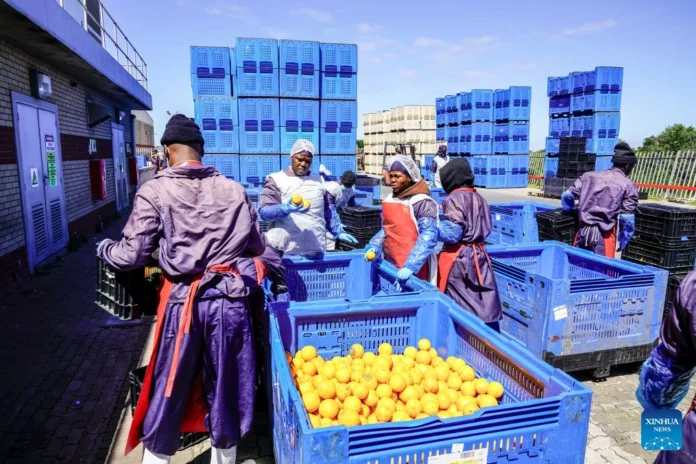
During the first eight months of 2026, the port recorded imports and exports worth 513.6 billion yuan, representing an annual increase of 31.2%. Fruit imports from ASEAN countries reached 894,000 tonnes, valued at 19.27 billion yuan.
Durian shipments accounted for a substantial share of the traffic, with 620,000 tonnes passing through the port. The figures underline the growing importance of regional agricultural trade and the need for faster customs procedures and reliable transport infrastructure.
Authorities have introduced digital vehicle dispatching and automated queue management, reducing waiting times by 20% and improving customs clearance efficiency by 40%. Meanwhile, local testing laboratories have shortened fruit inspection procedures from as long as five days to less than 36 hours.
For traders transporting perishable products, these improvements can make a significant difference. Shorter delays reduce the risk of spoilage, improve delivery schedules and help exporters respond more quickly to demand in Chinese markets.
Guangxi is also investing 1.06 billion yuan in a smart freight corridor equipped with satellite navigation and 5G technology. The infrastructure is designed to handle up to 2,880 containers a day, reflecting expectations of continued growth in China-ASEAN trade.
Over the next three years, artificial intelligence adoption across Southeast Asia is likely to accelerate, particularly in agriculture, logistics and manufacturing. Companies able to provide affordable computing services and practical industrial applications could benefit from increasing demand among regional businesses.
However, the pace of adoption will depend on infrastructure investment, access to skilled workers, data security and the ability of smaller companies to finance new technologies.
For farmers, factory workers and cross-border traders, the real test will be whether artificial intelligence delivers measurable improvements in income, productivity and working conditions.
As China strengthens its economic links with ASEAN, Guangxi is seeking to establish itself not simply as a technology exporter, but as a regional platform where digital innovation can support trade, agricultural development and industrial modernisation.