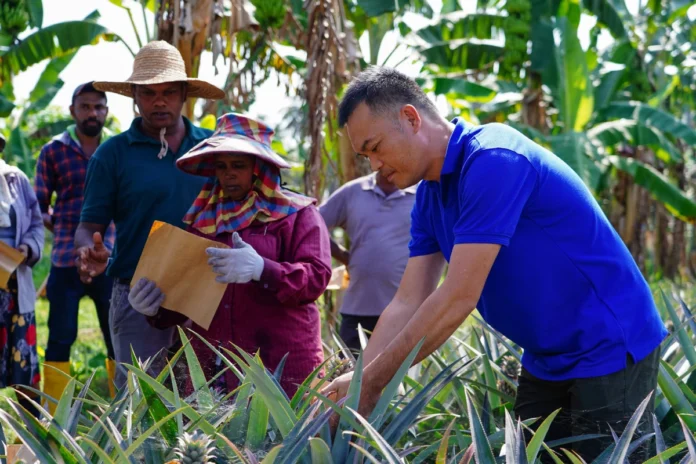
Arabfields, Farah Benali, Economic Correspondent, China — China’s efforts to modernise its rural economy are beginning to deliver measurable productivity gains, although significant differences in efficiency remain across provinces, according to a new economic assessment published in 2026.
The research, which examines rural industrial integration across 30 provincial-level administrative regions, highlights a gradual shift from investment-driven expansion towards more efficient use of agricultural resources, labour and public funding. Its findings point to improving economic performance, but also underline the challenges facing regions that have yet to translate investment into higher rural incomes and sustainable growth.
The study found that China’s rural industrial integration efficiency increased from 0.446 in 2012 to 0.663 in 2023, following a period of considerable fluctuations. Performance weakened between 2015 and 2018, reaching a low of 0.423 before recovering steadily over the subsequent five years.
The recovery reflects the growing importance of agricultural processing, rural tourism, digital commerce and stronger connections between farming and other economic activities. These developments are creating additional opportunities for rural communities, particularly in areas where agricultural production is increasingly linked to manufacturing, distribution and consumer services.
For farmers and small rural businesses, the transition represents more than an improvement in economic indicators. Greater integration can provide access to wider markets, create employment beyond traditional farming and offer new sources of household income. Agricultural producers can potentially earn more by supplying processing companies or participating in tourism and other rural commercial activities rather than relying exclusively on the sale of raw products.
Productivity growth has also emerged as an important indicator of progress. The research recorded an average annual total factor productivity growth rate of 6 per cent based on its arithmetic calculation, while the compounded annual growth rate was approximately 3 per cent. Overall, 22 of the 30 provinces examined recorded positive cumulative productivity growth during the study period.
Nevertheless, the findings suggest that investment alone cannot guarantee better economic results. Some provinces have made progress in adopting technology but continue to experience weaknesses in management, resource allocation and the implementation of local development policies.
Regional differences remain visible. Coastal provinces, including Jiangsu and Shanghai, generally maintained strong efficiency performance, supported by established industrial networks and developed infrastructure. Meanwhile, Sichuan, Chongqing and Guizhou recorded notable improvements, indicating that inland regions can also strengthen their position through better organisation and investment in productive activities.
The researchers identified rural education and transport infrastructure as two particularly important factors associated with higher integration efficiency. Their analysis found a positive relationship between improvements in rural human capital and economic performance, while better transport connectivity was also associated with stronger results.
These findings carry important implications for China’s agricultural development strategy. Improved roads and logistics networks can reduce transportation costs, connect farmers with processing facilities and facilitate access to urban markets. At the same time, education and vocational training can help rural workers acquire the technical and managerial skills required by an increasingly sophisticated agricultural sector.
Environmental pressures, however, remain a significant concern. The study incorporated agricultural pollution and the conversion of cultivated land away from grain production into its assessment, highlighting the need to balance commercial expansion with food security and environmental protection.
Looking ahead, China’s rural industrial sector could continue to record productivity improvements over the coming years if investment is increasingly directed towards skills development, logistics and more effective management. Based on the approximately 3 per cent compounded annual productivity growth recorded during the study period, maintaining a similar pace would imply cumulative productivity gains of around 16 per cent over five years.
Such a projection is conditional rather than a formal forecast, as future performance will depend on economic conditions, government policies, technological adoption and regional implementation capacity.
The findings also suggest that provinces currently lagging behind could benefit from adapting successful approaches developed in more efficient regions. However, differences in industrial structures, agricultural resources and local economic conditions mean that a uniform development model may not deliver the same results everywhere.
For China’s rural population, the next phase of development will therefore depend not simply on building more agricultural enterprises, but on ensuring that existing investments generate tangible benefits for farmers, workers and local businesses.
As the country continues to reshape its agricultural economy, improving productivity while protecting rural livelihoods and natural resources is likely to remain central to its long-term development ambitions.