Arabfields, Meriem Senouci, Correspondent, Hanoï, Vietnam — Vietnam is stepping up efforts to transform its agricultural, forestry and fisheries sectors through a new international partnership designed to strengthen climate resilience, improve supply-chain transparency and attract investment in sustainable production.
The initiative, known as the Partnership for Climate-Resilient Agri-Food, Forestry and Fisheries Value Chains (P-CRAFT), was officially announced on November 17 during the COP31 climate conference in Türkiye. It brings together 16 partners, including governments, international development organisations, private companies and investment institutions.
The partnership reflects Vietnam’s growing ambition to position itself as a major player in sustainable global food supply chains while addressing the mounting pressures of climate change on agricultural production.
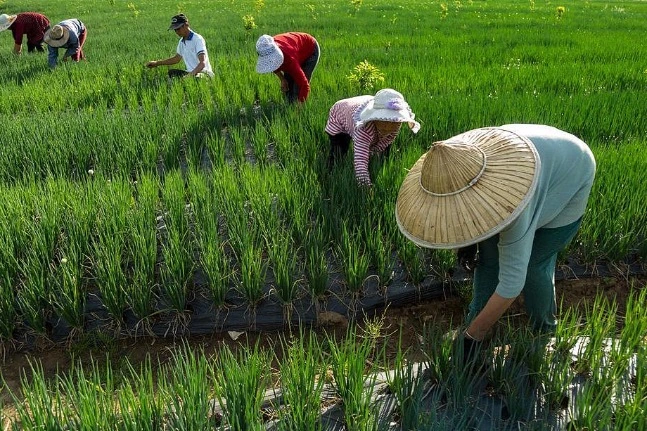
For millions of farmers and workers across the country, the transition carries significant economic implications. Agricultural communities, particularly those operating in the Mekong Delta and other climate-vulnerable regions, face increasing risks from rising temperatures, irregular rainfall, saltwater intrusion and extreme weather events.
Speaking at the launch, Deputy Prime Minister Ho Quoc Dung highlighted the interconnected challenges of food insecurity, biodiversity loss, environmental degradation and climate change. He stressed the importance of international cooperation in translating climate commitments into practical solutions at the local level.
Vietnam enters the initiative with an established position in international agricultural trade. The country has signed 18 free trade agreements, while its agricultural, forestry and fisheries products reach more than 190 countries and territories. This extensive commercial network provides opportunities to expand exports, but also increases pressure on producers to meet increasingly demanding standards for food safety, traceability and environmental sustainability.
P-CRAFT is structured around three strategic priorities. The first focuses on improving transparency throughout agricultural supply chains through digital information systems and electronic traceability. The objective is to help businesses and consumers access more reliable information about production origins while improving opportunities for smallholder farmers and small and medium-sized enterprises.
The second priority centres on climate-resilient production. Partners intend to promote low-emission farming practices, sustainable land management, ecosystem-based adaptation and biodiversity conservation. These measures could help farmers reduce exposure to climate-related losses while improving productivity over the longer term.
Financing represents the third major component. The partnership plans to mobilise public, private and multilateral resources through green finance, concessional lending and blended investment mechanisms. Climate insurance and payments for ecosystem services are also expected to provide additional support for farmers and businesses investing in more sustainable production methods.
The involvement of international organisations and private companies is expected to strengthen the programme’s technical and financial capacity. Partners include the Food and Agriculture Organization, the United Nations Development Programme, the International Fund for Agricultural Development, the World Wide Fund for Nature, Bayer and Nestlé, alongside several other institutions.
For smaller producers, access to these resources could prove particularly important. Many farmers face difficulties financing modern irrigation systems, improving storage facilities or adopting digital technologies. Without targeted financial support, the cost of meeting international sustainability requirements could become an additional burden for rural businesses.
The programme is scheduled to begin implementing its activities in 2027 through voluntary partnerships, technical cooperation, knowledge-sharing networks and investment promotion mechanisms.
Its first phase will be particularly important in determining whether the initiative can move beyond international commitments and deliver measurable improvements in agricultural productivity, environmental protection and rural incomes.
Looking ahead, Vietnam’s extensive export network and participation in 18 free trade agreements provide a favourable foundation for expanding sustainable agricultural trade. If P-CRAFT succeeds in attracting investment and improving production standards, the country could strengthen its competitiveness in international markets over the next three to five years.
Digital traceability is also likely to become an increasingly important commercial advantage. As international buyers place greater emphasis on product origin, environmental performance and supply-chain transparency, Vietnamese exporters that adopt these systems early could be better positioned to secure long-term contracts.
However, implementation will depend on effective coordination between governments, businesses, financial institutions and local communities. Access to affordable financing, technical expertise and appropriate infrastructure will remain essential, particularly for small-scale producers.
Vietnam has made clear that it intends to remain an active partner in the initiative, with its Ministry of Agriculture and Environment responsible for coordinating implementation.
The broader challenge will be ensuring that the benefits of the transition reach farmers and rural enterprises, rather than being concentrated among larger exporters and industrial producers. For Vietnam, the success of P-CRAFT will ultimately be measured not only by the volume of international investment attracted, but also by its ability to build more resilient agricultural communities and secure the country’s long-term position in global food markets.