Arabfields, Imed Aissaoui, Oran, Algeria — Algeria’s saffron producers are expecting a stronger harvest this season as favourable weather conditions and growing farming expertise boost prospects for one of the country’s emerging high-value agricultural products.
The 2026 harvesting campaign officially began in Khenchela on November 10, with early assessments pointing to higher productivity and good-quality saffron. Producers are increasingly looking beyond domestic markets, hoping to turn the crop, often referred to as red gold, into a source of export revenue and rural employment.
Samir Ghodbane, secretary-general of the Algerian Association for the Promotion of Saffron and an organic saffron producer in Khenchela, said initial indicators suggested an excellent season compared with previous years. He attributed the improvement to favourable climatic conditions and the experience accumulated by farmers and investors over more than a decade of cultivation.
The economic potential is considerable. Saffron prices in Algeria can reach 2,000 dinars per gram, making the crop an attractive option for farmers seeking alternatives to conventional agricultural activities. However, profitability depends heavily on production quality and the ability to sell the entire harvest.
Quality is already emerging as one of the sector’s strongest selling points. Analyses of saffron produced in Khenchela have recorded crocin concentrations of up to 20%. Crocin is the natural compound responsible for saffron’s distinctive red-orange colour and is an important indicator of its commercial quality.
The figures reflect broader progress in Algeria’s saffron sector. Data reported in January 2026 indicated that more than 222 farmers were involved in saffron cultivation across the country. Average production was estimated at between two and three kilograms per hectare, although yields could rise to between five and seven kilograms under favourable conditions.
These figures suggest considerable room for expansion if farmers gain access to improved planting materials, technical support and modern processing facilities.
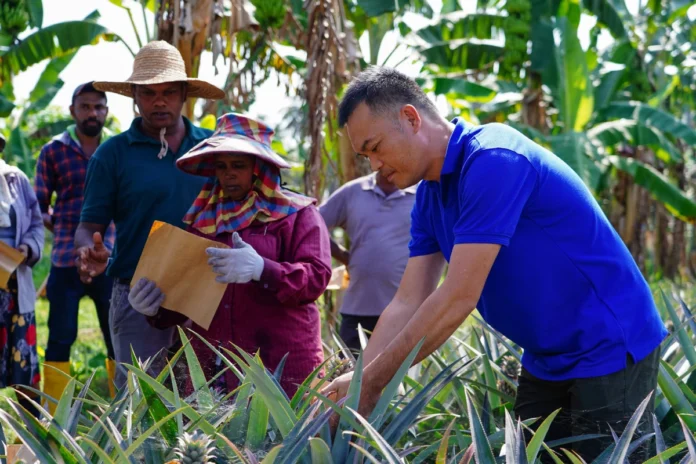
Behind the commercial figures lies a labour-intensive harvesting process that provides an important source of work for rural communities, particularly women. Saffron flowers must be collected carefully, often early in the morning, before their delicate red stigmas are separated by hand.
The work requires patience and precision. Each flower generally contains three to five stigmas, which must be extracted without damaging the valuable threads. The product is then dried naturally or mechanically under controlled conditions to preserve its colour, aroma and other properties.
For women involved in rural agricultural work, the harvesting season represents an opportunity to earn additional income while contributing to a specialised agricultural activity that remains largely dependent on manual labour.
Algeria has also begun laying the foundations for a more structured industry. A national development strategy launched in 2026 has brought together agricultural producers, researchers and public institutions to strengthen cultivation techniques and encourage investment. Three experimental stations in Algiers, Constantine and Ghardaia are supporting research into production methods and the crop’s adaptation to different climatic conditions.
Early results from experimental cultivation have been encouraging. At the National Higher School of Agronomy in Algiers, researchers reported collecting an average of 1,700 flowers daily over approximately 10 days. Individual bulbs can produce up to five flowers, offering opportunities to improve yields as cultivation techniques develop.
The figures provide a basis for cautious optimism about the industry’s prospects over the next few agricultural seasons. If the current average yield of two to three kilograms per hectare improves towards the five-to-seven-kilogram range recorded under favourable conditions, Algeria could significantly increase its production without necessarily expanding cultivated land at the same pace.
However, achieving that potential will depend on more than favourable weather. Producers will need better storage, processing, packaging and certification systems to compete with established international suppliers. Access to export distribution networks will also be essential if farmers are to secure prices that reflect the quality of their products.
Ghodbane has called for greater involvement of scientific research in developing the sector, alongside simpler labelling and marketing procedures. He also sees opportunities to supply pharmaceutical laboratories, both in Algeria and abroad, where saffron’s natural compounds could offer additional commercial applications.
For now, the challenge is to transform promising harvests into a reliable business. A high-quality product and attractive market prices provide a useful starting point, but consistent production, recognised quality standards and dependable commercial outlets will determine whether saffron can become a sustainable agricultural industry.
With more than 222 producers already involved nationwide and research institutions increasingly supporting the sector, Algeria has begun building the foundations for that transition. If current production trends continue and investment in processing and marketing gathers pace, saffron could become a more significant contributor to rural employment and the country’s efforts to diversify agricultural exports beyond hydrocarbons.