Arabfields, Sophia Daly, Financial Analyst specialized in Agriculture and Futures Markets — Farmers across Algeria are wrapping up what officials are calling the most abundant wheat and barley harvest since the country gained independence, a feat made possible by a rare convergence of heavy rainfall, state support, and on-the-ground determination. With the 2026 season nearing its final stages, early projections indicate that production of durum wheat alone could surpass 24 million quintals, enough not only to cover domestic needs but also to generate a significant surplus.
For Ghani Ben Ali, head of the joint professional council for the cereal sector, this year’s output is nothing short of exceptional. In a recent interview, he credited the results to a combination of timely rains that replenished parched fields and a sweeping state mobilization that placed the harvest at the top of the national agenda. “We are seeing the highest yields of durum wheat and barley since independence,” he said, stressing that the government, local authorities, and agricultural bodies worked in close coordination to ensure that machinery, storage, and transport were in place.
The season holds particular significance for the western regions and the high plateaus, which have been struggling with drought for the past five years. This year, those areas finally bounced back, registering strong returns and easing concerns about food security. Ben Ali noted that all provinces recorded positive results, though the abundance of grain has occasionally overwhelmed storage facilities, a logistical puzzle that authorities are still working to solve.
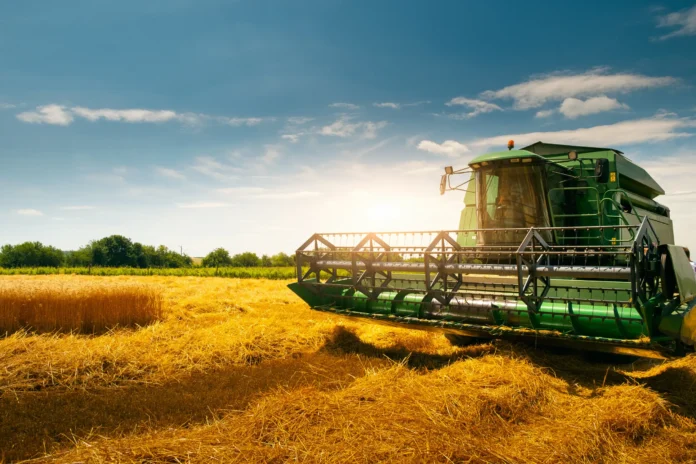
At the heart of the operation has been a push to modernize equipment and expand cultivation. New harvesters were deployed through the start-up Agrodrive, while the state invested in auxiliary silos across the country, including in southern provinces. Despite some delays in transporting machinery to remote areas and a shortage of spare parts, officials say the final phase of the harvest is proceeding smoothly, with only a handful of wilayas left to finish.
The human dimension of this success is impossible to overlook. Private harvester owners stepped up to cover vast areas, and farmers who had endured years of meager yields found new hope in their fields. Ben Ali also emphasized the role of the agricultural mutual fund and expanded credit facilities, which helped producers secure seeds and fertilizers. He renewed his call for broader crop insurance to protect farmers against the climatic and market risks that remain ever present.
Looking beyond the immediate celebration, the council head pointed to a more complex challenge: the country’s continued reliance on soft wheat imports. Algeria still consumes between 50 and 70 million quintals of soft wheat each year, and domestic production of soft wheat seeds, while improving, is far from meeting demand. Ben Ali urged a national conversation about consumption habits, arguing that durum wheat offers greater nutritional benefits and that shifting preferences could reduce health costs in the long run.
Data from the 2026 season reinforce the need for forward-looking policy. With durum wheat production exceeding the 24-million-quintal threshold and barley surpassing 9 million quintals, the country has achieved a level of self-sufficiency that was unimaginable just a few years ago. Yet Ben Ali insists that sustaining this trajectory will require continuous state support and better integration of professional councils into decision-making. “We have the field experience,” he said. “We need to be part of the conversation before the decisions are made.”
As the last combines roll across the plains, the mood among producers is cautiously optimistic. The record yields have not only filled silos but also restored a sense of pride in a sector too often associated with uncertainty. For the farmers of the high plateaus, who watched their land recover after half a decade of dryness, this harvest is more than a statistic. It is a testament to resilience, and to the quiet, persistent work that transforms rain into bread.