Arabfields, Maleeka Kassou, East, West & Central Africa Agriculture Correspondent — In the early hours of the morning, under a humid sky in central Benin, farmer Issa Koudjo walks through his cassava field with cautious optimism. “Yields are better than before,” he says, pointing to thicker stems and fuller roots. “But we still need more support to go further.”
His words echo a broader national reality. Agriculture remains the backbone of Benin’s economy, employing more than 70 percent of the workforce and contributing roughly a quarter of gross domestic product in 2026. Yet the sector, long dominated by subsistence farming and raw commodity exports, is undergoing a significant transformation driven by policy reforms, investment, and technology.
Over the past decade, the country has combined steady economic growth, estimated at around 7 percent in 2026, with a renewed focus on modernizing agriculture. The strategy aims not only to increase production but also to restructure value chains, improve farmer incomes, and reduce vulnerability to climate shocks.
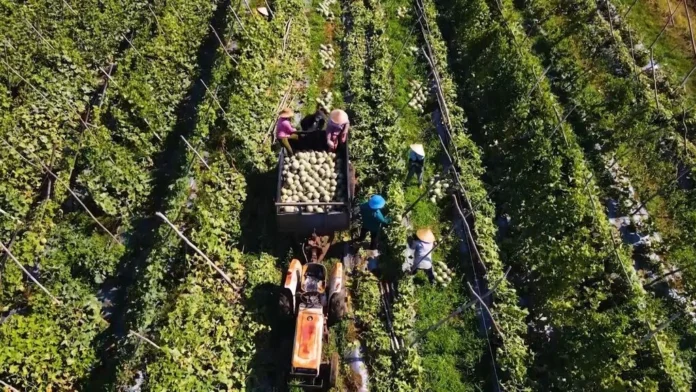
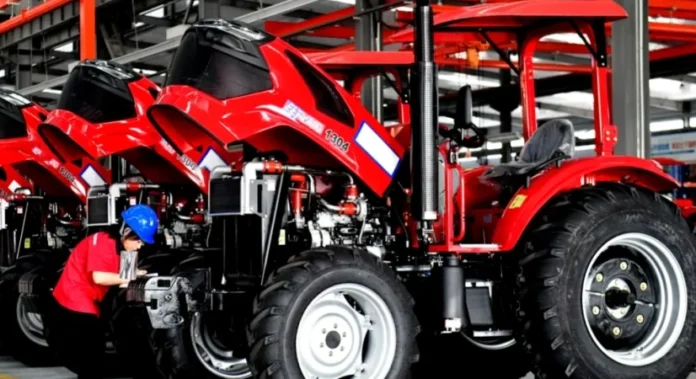
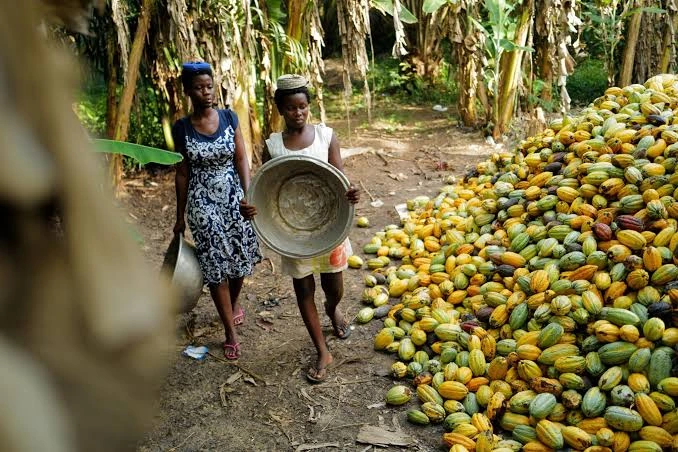
At the heart of this shift is a push toward higher productivity. New programs emphasize improved seeds, access to quality inputs, and mechanization. Officials have set ambitious targets, including tripling yields in key crops such as cassava and maize, while doubling output in export-oriented sectors like cashew and rice. For farmers like Koudjo, these changes are tangible but uneven. “We see progress,” he says, “but access to equipment and financing is still limited.”
The introduction of digital tools is also beginning to reshape farming practices. Precision agriculture technologies, including sensors and data-driven crop monitoring, are being tested to optimize production and reduce losses. While adoption remains in its early stages, experts say such innovations could play a decisive role in improving efficiency across rural areas.
Still, structural challenges persist. Much of Benin’s agriculture depends on rainfall, leaving producers exposed to increasingly unpredictable weather patterns. Limited access to credit and fragmented market structures continue to constrain smallholders, who form the majority of the sector.
To address these vulnerabilities, authorities are rolling out new financial mechanisms designed to stabilize incomes. Planned measures include agricultural insurance schemes, savings systems, and pension-like protections aimed at shielding farmers from economic shocks. The goal is to create a more resilient rural economy while encouraging long-term investment in productivity.
The transformation is also tied to a broader industrial ambition. By expanding local processing capacity, Benin hopes to reduce its reliance on raw exports, particularly in cotton, which still accounts for a large share of export earnings. Increasing domestic processing could generate jobs and retain more value within the country.
Looking ahead, projections suggest that if current reforms are sustained, agricultural output could grow significantly over the next decade, driven by mechanization, irrigation expansion, and improved market access. The government’s long-term plans envision a sector that is not only more productive but also more integrated into regional and global value chains.
For now, progress remains a work in progress. Back in his field, Koudjo reflects on the changes underway. “We are moving forward,” he says, pausing as he surveys his land. “But the transformation is not finished yet.”