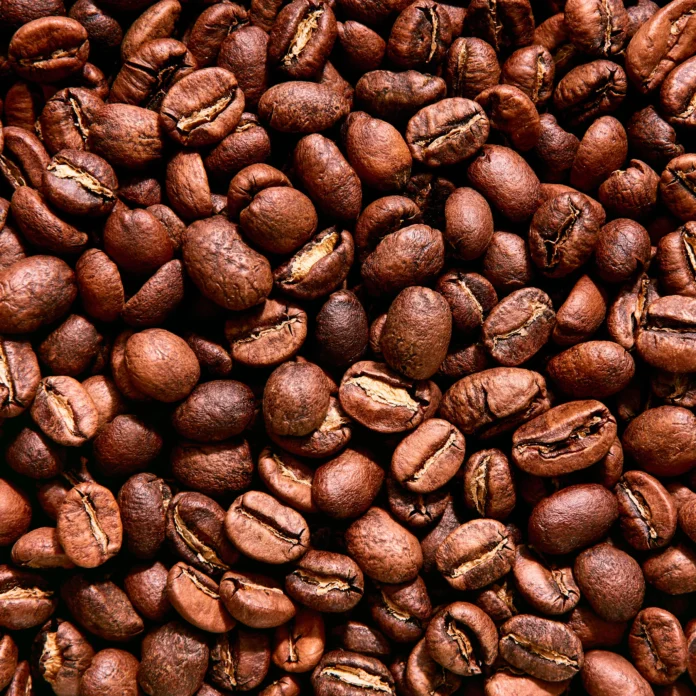
Arabfields, Mira Sabah, Special Economic Correspondent, Nairobi, Kenya — In the lush highlands of western Kenya, a quiet agricultural revolution is brewing, one cup at a time. On November 28, 2025, Kenya’s government made headlines by urging China to remove tariffs on its flagship exports: coffee, tea, and avocados. The appeal is part of a broader strategy to make Kenyan produce more competitive on the global stage at a time when coffee prices are soaring and demand for premium, sustainably grown beans has never been higher.
Yet beyond the diplomatic maneuvering in Nairobi and Beijing, real change is happening on the ground. In Bungoma County, farmer Alex Wachie has become an unlikely poster child for what sustainable coffee farming can achieve when tradition meets modern technique and international support.
Five years ago, Alex Wachie’s small coffee plot was struggling. Low yields, pest pressure, and fluctuating prices left little margin for his family. That changed when he joined the TRACE Kenya programme (2020, 2025), a Danish-funded initiative implemented by Solidaridad East and Central Africa that trains farmers in organic practices, soil health, and climate-smart agriculture.
“Before TRACE, I was using chemicals heavily and still getting poor harvests,” Wachie told local reporters. “Now I use compost, intercropping, and biological pest control. The soil is alive again, and the coffee tastes better.”
The results speak for themselves: higher yields, larger and more uniform cherries, and beans that fetch premium prices at cooperative auctions. Wachie’s farm is now fully certified organic, a rarity in a country where conventional farming still dominates.
One of the most visible changes on farms like Wachie’s is the widespread adoption of top-working or grafting. Old, low-yielding coffee trees, some decades old, are cut back to stumps and grafted with scions (young shoots) from high-performing, disease-resistant varieties such as Batian, Ruiru 11, or SL28. The process itself is remarkably straightforward, as demonstrated in the training materials used across Bungoma and neighboring counties: the farmer cuts the old tree down to a clean stump about knee-high, inserts a healthy scion from an improved variety into a split made in the stump, and then wraps the joint tightly with grafting tape or plastic so it heals properly. Within 18, 24 months, the rejuvenated tree is back in full production, often yielding two to three times more than before, with better cup quality and stronger resistance to coffee berry disease and leaf rust.
Across Kenya, tens of thousands of hectares have already been grafted under government and donor-supported programmes. The technique costs a fraction of planting new seedlings and delivers results fast, exactly what smallholders need when every shilling counts.
Kenya currently produces around 34,000, 40,000 tonnes of coffee annually, a sharp decline from its historical peak of over 130,000 tonnes in the 1980s. Aging trees, climate change, and urban encroachment on farmland have all taken their toll. Yet there are signs of a turnaround.
The government’s tariff plea to China is only one piece of the puzzle. Nairobi is also banking on the African Continental Free Trade Area (AfCFTA) to triple intra-African trade in agricultural goods by 2025. Coffee, with its high value-to-weight ratio, is a natural candidate. Countries like Algeria, Morocco, and South Africa are already importing more Kenyan beans, often at prices higher than traditional European buyers pay.
At the same time, demand for certified sustainable and organic coffee is surging in Europe, North America, and Asia. Consumers are willing to pay 20, 50 % premiums for beans they can trace from farm to cup, a market niche Kenya is increasingly well-positioned to fill.
Alex Wachie’s story is being repeated on thousands of small farms from Mt Elgon to Nyeri. Armed with compost pits, grafting knives, and newfound market access, Kenyan coffee farmers are proving that sustainability and profitability are not mutually exclusive.
If the diplomatic push in Beijing succeeds, and if programmes like TRACE continue to scale, the aromatic hills of Kenya may soon reclaim their place among the world’s elite coffee origins, not just in legend, but in the cup.