Arabfields, Farah Benali, Economic Correspondent, China — Sichuan is reshaping its agricultural economy as farmers turn to technology, higher-value crops and land consolidation to raise incomes while maintaining the province’s position as one of China’s major grain-producing regions.
Before sunrise in Xiaojin County, Tibetan farmer Li Deqin moves between rows of Damask roses, collecting petals while they are still covered in dew. A decade ago, her family relied mainly on potatoes and wheat. Today, the rose harvest can bring the household between 20,000 yuan and 30,000 yuan during a season.
“For us, it means having our own income and having a voice,” Li said.
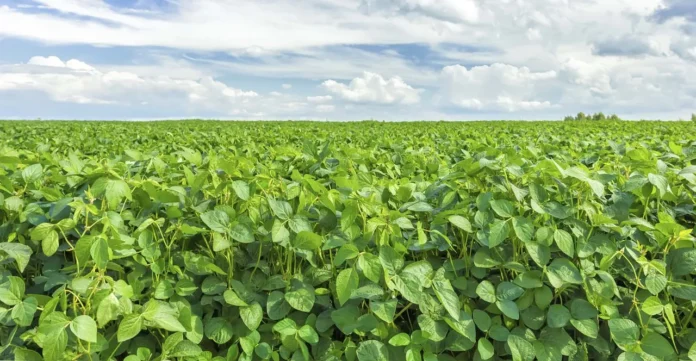
Her experience reflects a wider change across Sichuan, where agricultural growth is increasingly being driven by productivity rather than by expanding farmland. The province produced a record 73.25 billion kilograms of grain last year, according to the figures provided for 2026, keeping annual output above 70 billion kilograms for six consecutive years.
With available arable land under pressure, authorities are seeking further gains from each hectare. The approach combines modern machinery and digital technology on the plains with land consolidation and specialised crops in mountainous areas.
Sichuan’s geography makes that transition particularly important. Much of the province consists of hills and mountains, where small and scattered plots have historically made mechanised farming expensive and difficult. In some communities, farmers are now transferring fragmented parcels to collective land management schemes that combine them into larger fields.
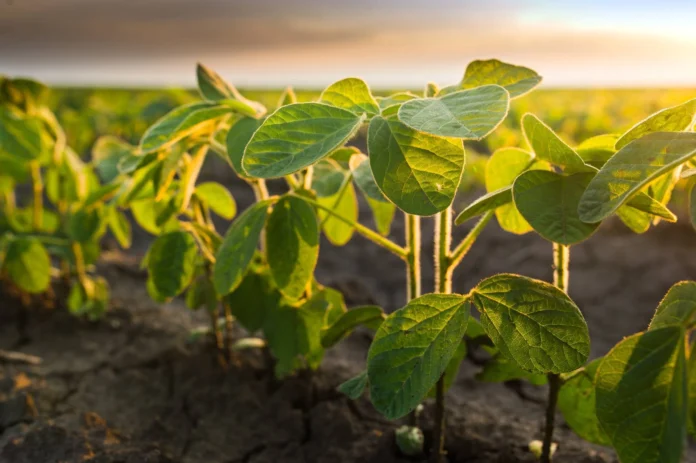
In Tucheng village, farmer He Kai has seen wheat yields rise to more than 450 kilograms per mu, roughly double previous levels, after land consolidation and improved irrigation. Maize yields have also exceeded 600 kilograms per mu following the installation of drip irrigation.
The changes are allowing farmers to reduce labour requirements while making marginal farmland more productive. For rural households facing a shortage of younger workers, that can be as important as higher yields.
On the Chengdu plain, the emphasis is increasingly on automation. In Yongfeng village, rice scientist Ma Jun is testing drones guided by artificial intelligence to monitor crops and identify problems across trial fields.
Agricultural authorities are expanding the use of Beidou satellite positioning, unmanned machinery, artificial intelligence and Internet of Things sensors to manage irrigation and monitor pests. Between 2021 and 2025, more than 1.18 million hectares of farmland in Sichuan were upgraded to meet higher agricultural standards.
The province aims to take annual grain production beyond 37.5 million tonnes by the end of the decade. Reaching that target will depend less on putting new land into production than on improving yields, reducing losses and making technology affordable for ordinary farmers.
But grain is only one part of the strategy. In mountainous Xiaojin, roses are turning difficult terrain into a commercial opportunity.
Over the past 15 years, village official Chen Wanghui has helped build a cooperative around the crop, developing products ranging from essential oils and flower tea to cosmetics. Some are now sold overseas, including in Japan and Bulgaria.
The model illustrates why local authorities are promoting what they call characteristic agriculture. Crops that would struggle to compete with large-scale grain farming can generate higher returns when they are processed, branded and sold as specialised products.
Women have been among the biggest beneficiaries. Rose cultivation has created work close to home and provided an additional source of household income, reducing the pressure for family members to leave rural communities in search of jobs.
In Pujiang county, meanwhile, officials are attempting to increase the value of another major agricultural product, citrus fruit, by changing the way it is grown.
A programme replacing chemical fertilisers and pesticides with organic alternatives initially faced resistance from farmers concerned that lower chemical use could reduce yields. Authorities responded by subsidising organic inputs and offering farmers who meet the required standards a guaranteed purchase price at least 0.3 yuan per jin, or 500 grams, above the conventional price.
The policy is also designed to help local citrus producers obtain export certification, potentially giving farmers access to higher-value overseas markets.
That focus on prices is crucial. Higher production alone does not guarantee higher rural incomes, particularly when farmers remain dependent on selling unprocessed commodities. Sichuan’s agricultural policy is therefore increasingly centred on processing, branding, logistics and tourism, with the aim of keeping more of the value generated by agriculture within rural communities.
Authorities want farmers’ disposable income to double from 2025 levels over the coming decade. Achieving that goal would require continued productivity gains, but also stronger rural businesses capable of capturing more revenue beyond the farm gate.
The next few years will test whether the model can work at scale. If investment in high-standard farmland continues and digital tools improve yields without sharply increasing production costs, Sichuan could raise grain output while using roughly the same agricultural base. At the same time, specialised crops such as roses and premium citrus could provide a second source of growth for communities where conventional farming has limited potential.
For farmers such as Li, the transformation is measured in more practical terms. It is the income from a basket of flowers, the ability to keep family members close to home and the prospect of giving children more choices than previous generations had.
As another harvest leaves Xiaojin, the province’s agricultural transition is becoming visible in both its fields and its households. Sichuan’s challenge is no longer simply to produce more. It is to make each hectare, each crop and each rural worker generate greater economic value while ensuring that the gains reach the people who remain at the centre of the countryside.