Arabfields, Imed Aissaoui, Oran, Algeria — Algeria has long demonstrated remarkable capabilities in agricultural production, transforming its natural resources and human capital into a competitive advantage that supports national self-sufficiency and economic diversification. In 2026, the sector continues to evolve as a vital component of the economy, contributing substantially to gross domestic product while employing millions and fostering innovation in response to global and domestic demands. Recent advancements in irrigation infrastructure, technological adoption, and targeted government policies have enabled notable gains in output across key commodities, positioning the country to address food security challenges with greater effectiveness.
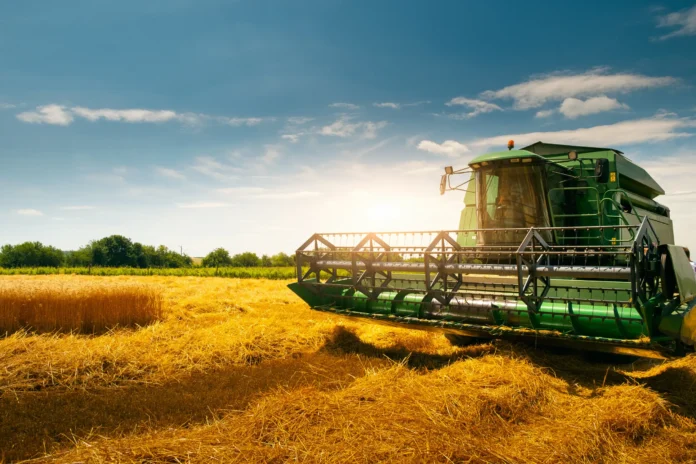
The agricultural value added in Algeria reached approximately 34.79 billion United States dollars in 2026, reflecting steady expansion from 33.50 billion dollars the previous year and underscoring a compound annual growth rate projected around 3.85 percent through the early 2030s. This growth trajectory aligns with broader efforts to reduce reliance on hydrocarbon revenues and to strengthen non-extractive industries. Cereals and grains maintain dominance, accounting for over 57 percent of the agricultural market share, driven by extensive cultivation of wheat and barley across millions of hectares in the northern regions and high plateaus. Wheat production for the 2025/2026 season stands at roughly 3 million metric tons, with forecasts indicating potential increases to 3.2 million metric tons in subsequent cycles under favorable climatic conditions and expanded desert irrigation schemes. Barley output has similarly risen, reaching about 1.35 million metric tons, benefiting from abundant spring rainfall in dedicated growing areas and marking a 13 percent improvement over prior estimates.
Such production levels have enabled Algeria to cover a significant portion of domestic cereal needs, thereby moderating import requirements that nonetheless remain elevated at around 14.6 million metric tons for the 2025/2026 marketing year. Strategic initiatives, including subsidized seeds, fertilizers, and guaranteed purchase prices, have supported cultivation on approximately 3 million hectares dedicated to wheat and barley, enhancing yields while optimizing resource use. These measures have proven instrumental in advancing toward self-sufficiency goals, with durum wheat approaching full domestic coverage and parallel progress anticipated for barley and maize by the late 2020s.
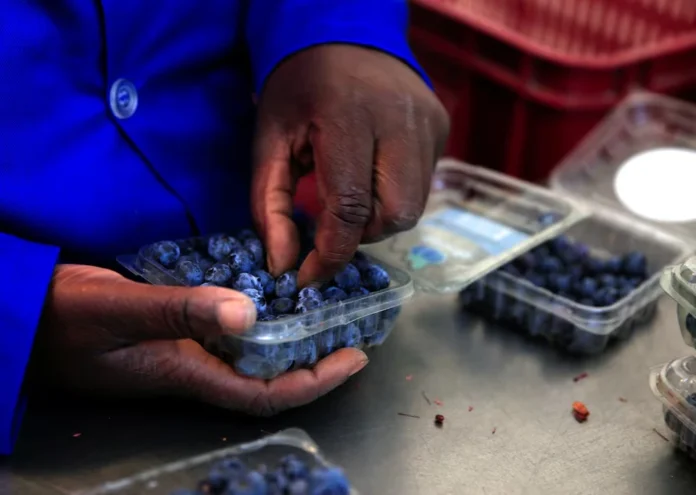
Horticultural production further highlights Algeria’s strengths, particularly in high-value fruits that leverage the Mediterranean climate of coastal zones. Citrus fruits, notably clementines and oranges, have experienced substantial increases in output, driven by quality-focused cultivation practices and state-supported programs that emphasize both volume and market competitiveness. Dates from Saharan oases continue to rank prominently among national outputs, contributing to export potential and value addition through processing. Olive production has achieved record levels, with olive oil expected to surpass 150,000 tons in the 2025/2026 season, representing a 76 percent year-on-year rise and establishing a historic high. This expansion not only bolsters domestic supply but also opens avenues for stronger export ambitions in regional and international markets. Grapes and other fruits have similarly recorded exceptional yields, affirming the sector’s capacity to deliver sufficient quantities of high-quality produce while maintaining affordability for consumers.
Livestock farming complements crop production as an essential element of Algeria’s agricultural landscape, providing dairy, meat, and poultry products that support food security and rural livelihoods. Although precise aggregate figures vary with seasonal factors, the sector benefits from integrated farming systems that link forage crops such as barley and oats with animal husbandry. Poultry production, in particular, has expanded in response to rising feed availability and domestic demand, contributing to reduced pressure on cereal imports allocated for human consumption.
Economically, agriculture sustains around 2.6 million workers, representing a meaningful share of the national workforce and playing a critical role in rural development and poverty alleviation. The sector’s contribution to gross domestic product hovers near 13 to 15 percent, generating value estimated in the range of 35 to 37 billion dollars annually and serving as the second most important pillar after hydrocarbons. This economic footprint extends beyond direct output to encompass downstream activities such as processing, storage, and logistics, which are increasingly prioritized to minimize post-harvest losses and enhance product quality.
Challenges persist, including the need to strengthen storage and processing infrastructure to preserve crop integrity and reduce wastage, as well as the imperative to adopt modern technological solutions for yield optimization and efficient management of water and soil resources. Water scarcity, soil salinization in certain areas, and climate variability remain structural concerns, yet government investments in desalination, precision irrigation, greenhouse expansion, and solar-powered systems are mitigating these risks. Technological innovation, including agri-fintech platforms and data-driven farming practices, is gradually reshaping production economics and creating opportunities for vertically integrated operators.
Looking ahead, future prospects for Algeria’s agriculture appear promising, grounded in current data trends and policy momentum. Projections indicate that the agricultural market could reach 42 billion dollars by 2031, supported by continued infrastructure development and international partnerships that facilitate mechanization and export capacity. Cereal production is expected to stabilize or modestly increase, with wheat potentially advancing toward fuller self-sufficiency levels and barley maintaining its upward trajectory through expanded cultivation in Saharan zones, where over one million hectares of new farmland are targeted by 2028. Olive oil output may consolidate its gains, potentially supporting diversified exports and value-added processing industries. Fruits and vegetables are forecasted to record the fastest growth rates, with a compound annual expansion near 6.6 percent, fueled by greenhouse clusters and improved cold-chain logistics that enhance access to premium markets.
Sustainability will play a central role in these developments, as Algeria balances quality enhancement with resource conservation. Investments in climate-smart practices, renewable energy integration in farming operations, and research into resilient crop varieties are likely to yield productivity gains of up to 20 to 30 percent in targeted segments through precision agriculture and artificial intelligence applications. Employment in the sector could expand modestly if rural infrastructure improves and youth engagement in agribusiness increases. Overall economic diversification efforts suggest that agriculture’s relative contribution to gross domestic product may hold steady or rise slightly as non-hydrocarbon activities gain prominence, thereby reinforcing food security and reducing vulnerability to external shocks.
In conclusion, Algeria’s agricultural production exemplifies a strategic blend of traditional strengths and forward-looking adaptations. By capitalizing on its diverse agro-ecological zones, from Mediterranean coasts to Saharan expanses, the country has built a resilient foundation capable of meeting domestic needs while exploring export opportunities. Sustained policy support, infrastructural upgrades, and technological integration will determine the pace of future progress, yet the trajectory observed in 2026 points toward an increasingly robust and self-reliant sector that contributes meaningfully to national prosperity and stability. Continued focus on innovation and sustainability will ensure that this vital industry remains a cornerstone of Algeria’s economic architecture for decades to come.