Arabfields, Maleeka Kassou, East, West & Central Africa Agriculture Correspondent — In the spring of 2025, a little-known start-up from Benin stunned judges at the Pan-African Innovation Awards by taking first prize with a deceptively simple mobile application: a farmer snaps a photograph of a diseased cassava leaf with an ordinary smartphone, and in less than ten seconds the app returns an accurate diagnosis, the scientific name of the pathogen, the recommended treatment, and the nearest vendor stocking the required input. No laboratory, no extension officer, no week-long wait. The technology that once seemed reserved for corporate agribusiness in California or the Netherlands had just landed in the hands of a woman tilling two hectares in the hills of Zou Department.
This Beninese breakthrough is only the opening act of a much larger transformation already gathering momentum across the continent. Where platforms such as Ghana’s Esoko and Farmerline began fifteen years ago by delivering SMS-based market prices and weather alerts, the new generation of applications is moving from information delivery to real-time artificial-intelligence diagnosis and prescription. By combining lightweight convolutional neural networks trained on millions of locally collected images with the near-universal penetration of inexpensive Android devices, these tools are quietly dismantling some of the oldest structural barriers that have kept African smallholder yields stubbornly low for decades.
Within the next five years, analysts who track agricultural digitization expect at least a dozen countries from Senegal to Kenya to have nationally endorsed plant-health apps pre-installed or heavily promoted on the phones distributed through government and NGO programs. The cost of the underlying models continues to collapse; training a cassava-specific diagnostic network that achieves ninety-two percent accuracy now costs less than two thousand dollars when researchers piggy-back on open-source datasets from Brazil, India, and Nigeria. Telecom operators, hungry for data revenue in maturing voice and SMS markets, are already offering zero-rated access to agriculture apps, effectively making the service free for the end user.
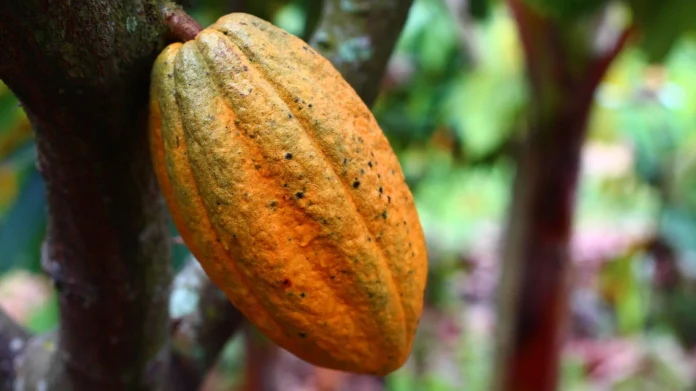
By 2030, the same phones will do far more than identify disease. Computer-vision algorithms will measure leaf color and canopy density to estimate nitrogen deficiency before symptoms become visible to the human eye. Embedded spectral analysis using the phone’s own camera flash will detect subtle shifts that indicate fungal infection up to ten days earlier than a trained agronomist could. Early trials in Côte d’Ivoire have shown that farmers who receive these alerts increase both the precision and the timing of fungicide application, cutting input costs by twenty-three percent while raising cocoa yields by nearly a fifth. Multiply that effect across thirty million smallholder cocoa, coffee, and cassava farmers and the macroeconomic impact rapidly moves from marginal to transformative.
The second wave, already visible in prototypes from Uganda and Rwanda, integrates the diagnostic engine with drone or satellite imagery at the village-cluster level. A farmer who photographs a single diseased plant triggers an automated low-altitude drone flight the following morning (operated by a youth cooperative that charges twenty dollars per hundred hectares). The drone’s multispectral images confirm whether the problem is localized or spreading across an entire watershed, allowing the cooperative to advise dozens of neighboring farmers in a single afternoon. By 2032, falling hardware prices and shared village-level drones will make this loop routine in most medium-to-high potential zones.
Perhaps the most profound shift will arrive around 2033–2035 when generative AI models trained in local languages and dialects begin offering spoken advice that sounds indistinguishable from the most knowledgeable elder in the village. A Fulani herder in northern Cameroon or a Swahili-speaking vegetable grower on the slopes of Kilimanjaro will speak to their phone in the normal way they speak to neighbors, describe what they see in the field, and receive step-by-step spoken guidance that takes into account current input prices scraped in real time from the nearest market town, the five-day weather forecast, and the specific soil type pulled from national open-soil maps. The conversational layer will hide the extraordinary complexity underneath: large language models fine-tuned on decades of extension manuals, research-station trial results, and millions of anonymized farmer queries from across the continent.
The economic consequences will be staggering. The African Development Bank currently estimates that post-harvest losses and avoidable yield gaps caused by pests and diseases cost the continent roughly thirty billion dollars annually. Cutting even one-third of that waste through early diagnosis and precision treatment would free up ten billion dollars a year (enough to finance universal rural electrification or continental highway upgrades). More importantly, the productivity leap will occur exactly where it matters most: among the hundreds of millions of farmers who cultivate less than two hectares and feed seventy percent of the population.
None of this will happen without friction. Data privacy concerns, the risk of over-reliance on chemical recommendations, and the danger that proprietary models lock farmers into expensive input purchases are real. Yet the trajectory already visible in the Beninese prize-winner and its fast-following cousins across a dozen countries suggests that the technological genie is out of the bottle. By the middle of the next decade, the smartphone in a rural African farmer’s pocket will be the most powerful agricultural tool ever invented (more revolutionary than the plow, the tractor, or hybrid seed), because for the first time it will put expert-level knowledge directly in the hands of the person who wakes at dawn to tend the crop. The quiet revolution that began with a single photograph of a sick cassava leaf in 2025 is only the first frame of a story whose ending, for once, looks unambiguously brighter than its beginning.