Arabfields, Maleeka Kassou, East, West and Central Africa Agriculture Correspondent — Cameroon is stepping up efforts to use soil data to improve agricultural productivity, as pressure from climate change, rising input costs and uneven soil fertility continues to challenge farmers across the country.
The government has begun deploying digital tools and field-based soil analysis to build a more detailed picture of the country’s agricultural land. Under an agreement involving the Ministry of Agriculture and Rural Development and the Ministry of Posts and Telecommunications, equipment and digital platforms developed through the National Telecommunications and ICT Development Acceleration Project are being transferred to the agriculture ministry.
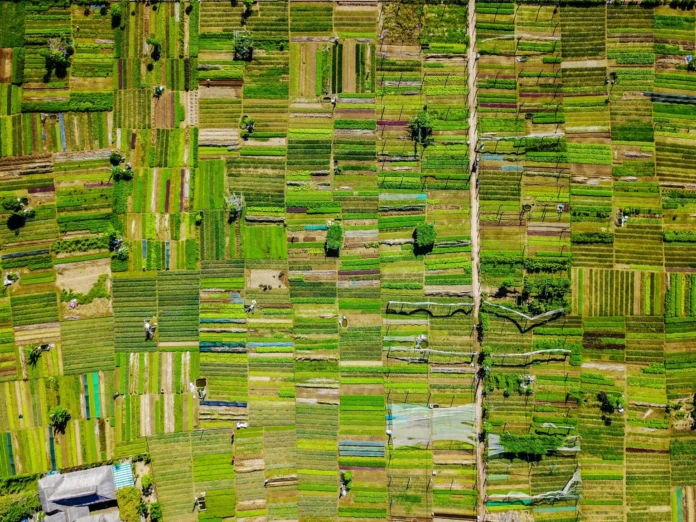
The programme is expected to involve the collection and laboratory analysis of 27,300 soil samples covering about 1.4 million hectares in five priority regions, the Far North, North, Adamawa, Northwest and Southwest. The resulting database is intended to help authorities identify differences in soil fertility, guide crop selection and improve the use of fertilisers.
For farmers, the issue is practical rather than technological. A wrong assessment of soil conditions can mean spending money on fertiliser that delivers limited results, while choosing an unsuitable crop can reduce yields and increase financial pressure on already vulnerable households.
“Fertility cannot be guessed, it has to be measured,” Agriculture Minister Gabriel Mbairobe said, underlining the government’s effort to move from broad agricultural estimates towards more precise information.
The initiative comes at a difficult time for Cameroon’s food sector. The Food and Agriculture Organization estimates that more than 2.8 million people are facing severe food insecurity in 2026. Agricultural production has also been affected by conflict, high input costs and climate shocks. In Yaounde, locally produced maize prices were about 40% higher year-on-year in January, according to FAO data, after rising by more than 20% between October and January.
These pressures increase the value of accurate information about land. Farmers facing expensive fertilisers need to know where inputs are most necessary, while policymakers need better information to target agricultural programmes and anticipate production risks.
Recent research in Cameroon also points to substantial differences in soil quality between farming systems. Studies published in 2025 found that cocoa agroforestry systems generally contained higher levels of soil organic carbon and nutrients than conventional croplands, suggesting that land management practices could play an important role in maintaining productivity and resilience.
Research published in January 2026 in the Sudano-Sahelian zone provides another indication of the potential gains. In an experimental maize field in the Far North, conventional NPK and urea fertilisation produced a yield of 3,165 kilograms per hectare. Basalt combined with urea produced 2,931 kilograms per hectare, while trachyte combined with urea reached 2,764 kilograms per hectare. The unfertilised control produced only 646 kilograms per hectare.
The figures do not mean that technology alone will solve Cameroon’s agricultural problems. Rather, they show why detailed information about soil composition, nutrients and local conditions could help farmers choose more efficient strategies.
The government’s digital soil mapping programme could therefore become increasingly important as climate risks intensify. FAO expects rainfall in parts of southern Cameroon to be above average during key periods of the 2026 growing season, increasing the risk of flooding, while northern areas face the possibility of higher temperatures, below-average rainfall and dry spells.
If the new database is regularly updated and effectively shared with farmers, researchers and agricultural extension services, its impact could extend beyond mapping. It could support more targeted fertiliser recommendations, better crop planning and improved monitoring of land degradation.
The next challenge will be turning data into decisions that farmers can actually use. A sophisticated digital map has limited value if its information does not reach rural producers in a timely and affordable way.
For Cameroon, the success of the initiative will ultimately be measured not by the number of samples collected, but by whether better knowledge of the soil translates into higher yields, lower input waste and more resilient farms.
With agricultural production under pressure in 2026, the shift towards data-driven soil management could become one of the country’s more important tools for protecting food supplies and improving the efficiency of farming in the years ahead.