Arabfields, Farah Benali, Economic Correspondent, China — China is accelerating an ambitious transformation of its agricultural sector, a strategy that could have lasting consequences for global food production, international trade, and supply chains. What was once viewed as a country focused mainly on securing its own food supply is increasingly emerging as a future agricultural powerhouse with global influence.
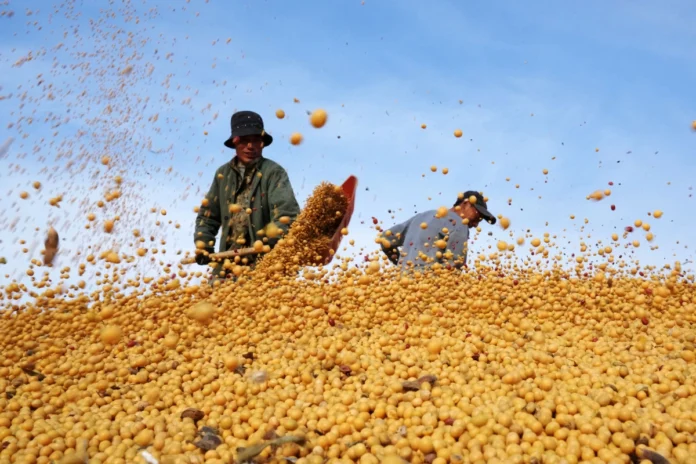
Across rural China, farmers are witnessing rapid changes. Modern machinery, artificial intelligence, biotechnology, and large-scale digital farming systems are replacing traditional methods. Agricultural workers interviewed in several provinces describe a countryside where technology now plays a central role in everyday farming, improving productivity while reducing labor shortages.
Government investment has continued to expand throughout 2026. National agricultural output is estimated to have exceeded 720 million metric tons of grain this year, supported by greater automation and improved crop genetics. At the same time, China has strengthened research into high-yield seed varieties and climate-resilient farming, seeking to reduce dependence on foreign suppliers while improving long-term food security.
Agricultural experts believe the country’s strategy extends beyond domestic needs. Chinese companies have increased investments in overseas farmland, logistics infrastructure, food processing facilities, and agricultural technologies, reinforcing Beijing’s presence throughout international food markets. These moves are designed not only to secure stable imports but also to position Chinese firms as influential players in global agricultural trade.
The transformation is already affecting producers around the world. Farmers in Europe, South America, and parts of Africa are closely monitoring China’s growing production capacity and expanding commercial partnerships. Some see new export opportunities, while others worry about stronger competition as Chinese agricultural exports become more diversified.
For rural communities inside China, the transition has created both optimism and uncertainty. Younger farmers are increasingly returning to family farms equipped with drones, automated irrigation systems, and digital monitoring platforms. Older generations, however, continue adapting to technologies that are changing decades of agricultural traditions.
Analysts expect China’s agricultural modernization to accelerate over the next several years. If current investment levels continue, the country could significantly increase exports of processed agricultural products while strengthening its position in advanced farming technologies. Such developments may influence global commodity prices, reshape supply chains, and encourage other major economies to expand their own agricultural innovation programs.
While challenges including climate change, water management, and demographic pressures remain significant, many economists believe China’s long-term strategy is laying the foundation for a new balance of power in global agriculture. The coming decade could see food production become not only an economic priority but also a defining element of international competition.