Arabfields, Sophia Daly, Financial Analyst specialized in Agriculture and Futures Markets — Global coffee markets are experiencing a period of profound recalibration. After years of historically high prices that squeezed both roasters and consumers, the industry is now navigating a landscape defined by record-breaking production, shifting trade policies, and the persistent threat of climate disruption. The latest data from the United States Department of Agriculture paints a picture of abundance, yet a conversation with farmers and traders on the ground reveals a more nuanced and precarious reality.
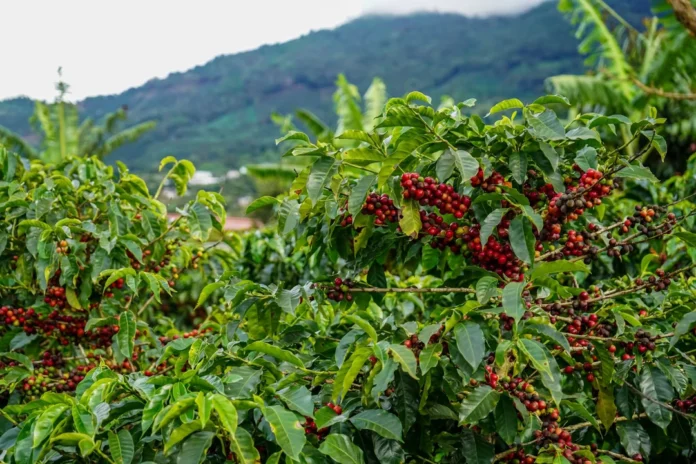
According to the USDA’s biannual report released late Wednesday, global coffee production is forecast to reach an all-time high of 189.6 million 60-kilogram bags in the 2026/27 season . This marks a significant 6% increase from the previous season and represents the fourth consecutive year of growth. Much of this surge is driven by a remarkable recovery in Brazil, where production is expected to jump by 14% to a record 71.9 million bags. Arabica production, in particular, is set to soar by over 12% to reach an unprecedented 105.8 million bags, ending a five-year period of weather-related underperformance.
Yet, for farmers like João Silva, who tends to a small plot in the cerrado region of Minas Gerais, the promise of a record harvest comes with its own set of anxieties. “The rains came at the right time this year, which was a relief after the droughts we suffered,” he explains, referring to the improved conditions that have boosted yields. “But we are all watching the sky. The weather has become our biggest enemy, not the market price.” His concern is echoed by traders in London and New York, who are increasingly focused on the potential impact of the El Niño weather phenomenon, which is now more than 80% likely to persist into the second half of the year.
The potential for a strong El Niño to disrupt flowering in Brazil and cause drought in Southeast Asia is the primary factor tempering the bullish sentiment generated by the supply glut . A recent report from StoneX warns that if the phenomenon intensifies towards the end of the year, it could severely impact the crucial coffee bean filling stage in Brazil’s most vulnerable regions . “We need a couple of very strong crops from Brazil and Vietnam to rebuild stability,” Giuseppe Lavazza, chairman of the Italian roaster Luigi Lavazza SpA, recently told Bloomberg. “Maybe the first good crop is arriving, but we don’t yet have evidence it will be as good as was expected”.
The current market dynamics have created a stark divergence between the two main coffee varieties. While the outlook for Arabica is bright, Robusta production is expected to edge down slightly from last year’s record, though it will remain at historically high levels . This divergence is also evident in inventory data: ICE-monitored Arabica inventories recently fell to a 2.25-year low, while Robusta stocks have climbed to a four-month high, reflecting different supply pressures for the two beans.
Further complicating the picture is the global trade landscape. The removal of U.S. tariffs on Brazilian imports earlier this year helped ease coffee prices, but the recent announcement of new Section 301 tariffs has injected fresh uncertainty into the market . While Brazilian farm products like coffee have reportedly been exempted, the overall shift towards more protectionist trade policies creates a complex environment for exporters and importers alike.
Despite the surge in production, global consumption is also heading for a record high, expected to reach 179.7 million bags . This demand is driven by a recovery in traditional markets like the EU and the United States, which together account for 40% of global consumption, and by explosive growth in emerging markets. China, for instance, is forecast to consume 6.9 million bags in 2026/27, a 37% increase from five years ago, making it the world’s fifth-largest consumer . This robust demand is expected to provide a firm floor under prices, even as supply expands. The global coffee market, currently valued at over $200 billion, continues to offer livelihoods for about 25 million farmers worldwide, making its stability a matter of significant economic and social importance.
Looking ahead, the market is poised for a delicate balancing act. The USDA forecasts that ending stocks will rise slightly to 26.3 million bags, but this buffer remains historically low and highly vulnerable to disruption . The World Bank projects that coffee prices, which have fallen significantly from their 2025 peaks, will continue to ease throughout 2026 before stabilizing in 2027, but they warn that the forecast is subject to considerable risks. In the near term, the slow pace of Brazil’s harvest, which is currently behind both last year’s pace and the five-year average, could provide some support to prices.
For now, the global coffee market appears to be at a pivotal junction. The record supply offers a glimpse of potential relief for consumers, but underlying structural issues, from a prolonged period of instability and climate change to logistical bottlenecks and geopolitical tensions, ensure that a return to a stable, predictable market remains a distant prospect. As one seasoned trader put it, the new constant in the coffee world is uncertainty.