Arabfields, Adel Serai, Economic Analyst Arabfields — The global cocoa industry is facing a growing challenge as manufacturers increasingly turn to chocolate-flavored alternatives that contain less cocoa or substitute key ingredients altogether.
The shift comes after several years of extreme volatility in cocoa markets. Although cocoa prices have fallen sharply from the record highs reached in late 2024, the industry continues to deal with supply uncertainties, rising production costs and changing consumer habits. In response, some food manufacturers are reformulating products to reduce their dependence on cocoa while maintaining a chocolate-like taste.
Across supermarkets in Europe, North America and parts of Asia, consumers are encountering more products marketed as chocolate-flavored snacks, coatings and desserts. These items often contain lower cocoa content and rely on alternative vegetable fats, flavorings and sweeteners to recreate the familiar taste profile.
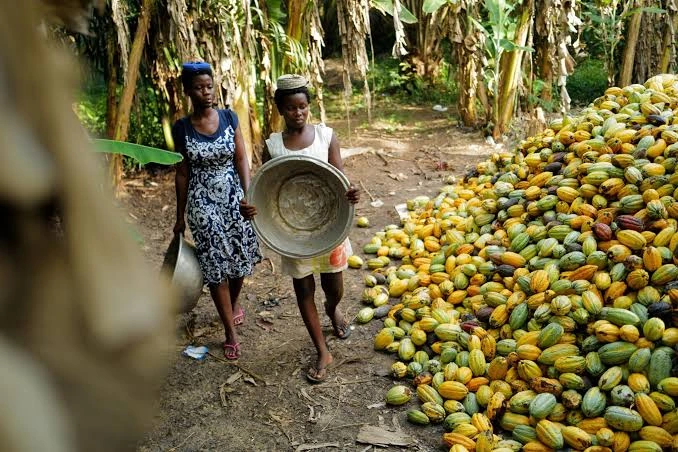
For cocoa farmers, particularly in West Africa, the trend is generating concern. Côte d’Ivoire and Ghana remain the world’s largest cocoa-producing countries, and millions of rural households depend directly on cocoa cultivation for their income. Industry groups warn that a sustained decline in cocoa usage could weaken demand for cocoa beans and place additional pressure on farming communities.
“We are already dealing with unpredictable weather and fluctuating prices,” said Koffi Yao, a cocoa farmer in western Côte d’Ivoire. “If manufacturers start using less cocoa, farmers could face another source of uncertainty.”
Market data illustrate the changing environment. Global cocoa prices, which reached nearly $13,000 per metric ton at their peak in late 2024, have retreated to below $4,000 per ton during 2026 as supply expectations improved and demand softened. At the same time, consumer spending on confectionery has remained resilient despite higher retail prices, encouraging manufacturers to explore lower-cost formulations.
Industry analysts estimate that worldwide consumption of chocolate confectionery will average around 1.3 kilograms per person in 2026. However, an increasing share of new product launches now feature reduced cocoa recipes or alternative chocolate-style formulations designed to limit exposure to raw material costs.
Food manufacturers argue that reformulation is not solely about cost reduction. Some companies say alternative ingredients can improve shelf life, stabilize production and help maintain affordable prices for consumers. Nevertheless, critics fear that widespread adoption could gradually dilute demand for natural cocoa products.
Consumers themselves appear divided. While some remain attached to traditional chocolate and are willing to pay a premium for authentic cocoa content, others are increasingly focused on affordability as inflation continues to affect household budgets.
Looking ahead, market forecasts suggest that the growth of chocolate-like products will continue over the next several years. If cocoa production in major exporting countries recovers as expected and supply conditions improve, demand for traditional chocolate could stabilize. However, if manufacturers achieve strong sales with lower-cocoa alternatives, the sector may witness a lasting shift in product composition.
For the cocoa industry, the coming years may determine whether alternative chocolate products remain a niche response to market pressures or become a permanent feature of the global confectionery landscape.